
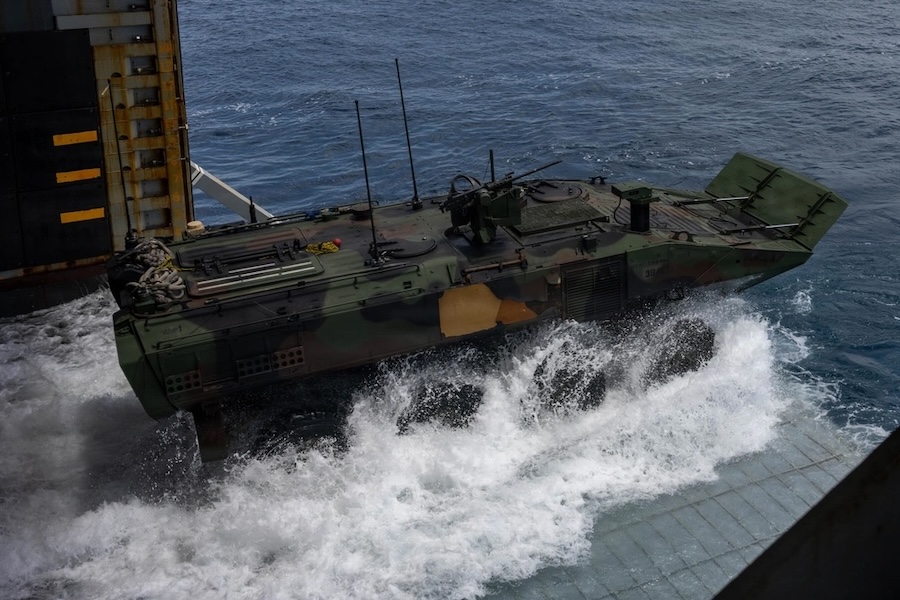
The Marine Corps is introducing the sensors to improve crew visibility in conditions that can limit conventional cameras. Thales said Minerva is designed to maintain image quality in darkness, dust, smoke, glare and adverse weather.
“Marines depend on cutting-edge and robust technology to make rapid decisions in highly demanding and dynamic environments,” said Chris Beauparant, Vice President, Sensors and Missile Systems, Thales Defense & Security, Inc. “The Minerva camera delivers a significant operational advantage by giving crews a more complete picture of the battlefield, helping them identify hazards sooner, maneuver more effectively, and operate with greater confidence.”
Minerva combines thermal and visible imaging in a single compact sensor built for combat vehicles. The system is intended to help crews detect obstacles faster, maintain situational awareness and navigate during both day and night operations.
Thales designed the camera for integration into existing platforms rather than development of a separate vehicle imaging architecture. Its military-grade design supports continuous operation in demanding environments while providing real-time imagery to crews.
“By leveraging a mature, proven solution, the Marine Corps can quickly field these enhanced capabilities without the time, cost, and risk associated with developing a new system.” The company said the approach allows the service to introduce the new imaging capability while retaining existing vehicle platforms.
The Marine Corps order also places Minerva alongside another U.S. Army modernization effort. The camera has been selected for evaluation and testing under the XM30 program, which is focused on next-generation combat vehicles with improved crew protection and situational awareness.
Thales has more than 30 years of experience in cooled and uncooled thermal imaging technologies. The company said its combat imaging systems are used by more than 50 armed forces worldwide.