The stakes attached to that kind of monitoring are not abstract. Nino DiCosmo, President of Maritime, Space & Mission Systems at L3Harris, framed the contract as touching two of the Navy’s most consequential concerns at once. “These systems directly impact operational capability and crew safety,” he said.
DiCosmo went further, positioning the deal within the broader strategic weight the two submarine classes carry for the United States. “This contract reflects our commitment to delivering reliable solutions that support two of the service’s highest-priority submarine platforms that serve as the backbone of America’s strategic deterrence,” he said.
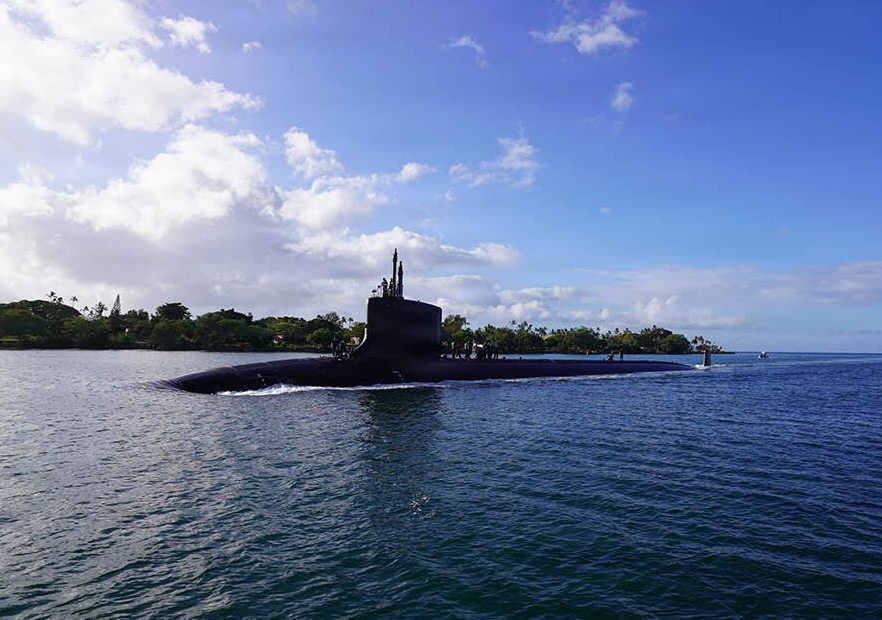
That framing is not incidental. The Virginia-class fast-attack submarine remains central to the Navy’s undersea warfare capability, while the Columbia-class, still in development, is being built to eventually replace the Ohio-class as the sea-based leg of the U.S. nuclear triad, making reliability in a system like battery monitoring a matter of national strategic consequence rather than routine maintenance.
L3Harris arrives at this contract with a submarine pedigree that predates both programs by decades. The company’s work with the Navy’s submarine force traces back through the Ohio- and Los Angeles-class fleets, platforms that defined American undersea deterrence for much of the Cold War and beyond, before extending into today’s Virginia-class boats.
That accumulated experience, according to the company, is precisely what has positioned it as a contributor to the Columbia-class program now taking shape. Rather than entering as a new supplier on an unfamiliar platform, L3Harris is extending a maritime relationship with the Navy that has evolved across successive generations of submarine technology.
The Electric Boat contract, then, reads less as a standalone award than as continuity, another link in a supply chain the Navy has leaned on across multiple submarine classes as it works to keep two of its most sensitive platforms mission-ready.