The awards were issued on July 22–23, 2026, as option modifications to multiyear contracts. Production will take place at Leonardo DRS Naval Electronics facilities in Johnstown, Pennsylvania, and Largo, Florida.
Electronics support shipboard missile operations
The contracts cover Programmable Power Supplies, Launch Control Units and Module Transformer Platform/System Transformer Platform systems. These components support key launcher functions aboard U.S. Navy destroyers and allied naval vessels.
Leonardo DRS supplies ruggedized electronics and power systems designed to operate in demanding naval environments. The hardware supports the launcher’s reliability and continued readiness.
“Leonardo DRS Naval Electronics is proud to continue providing the U.S. Navy and allied partners with critical MK 41 vertical launch system electronics hardware, supporting the program for over 15 years,” said Cari Ossenfort. She is senior vice president and general manager of the company’s Naval Electronics business unit.
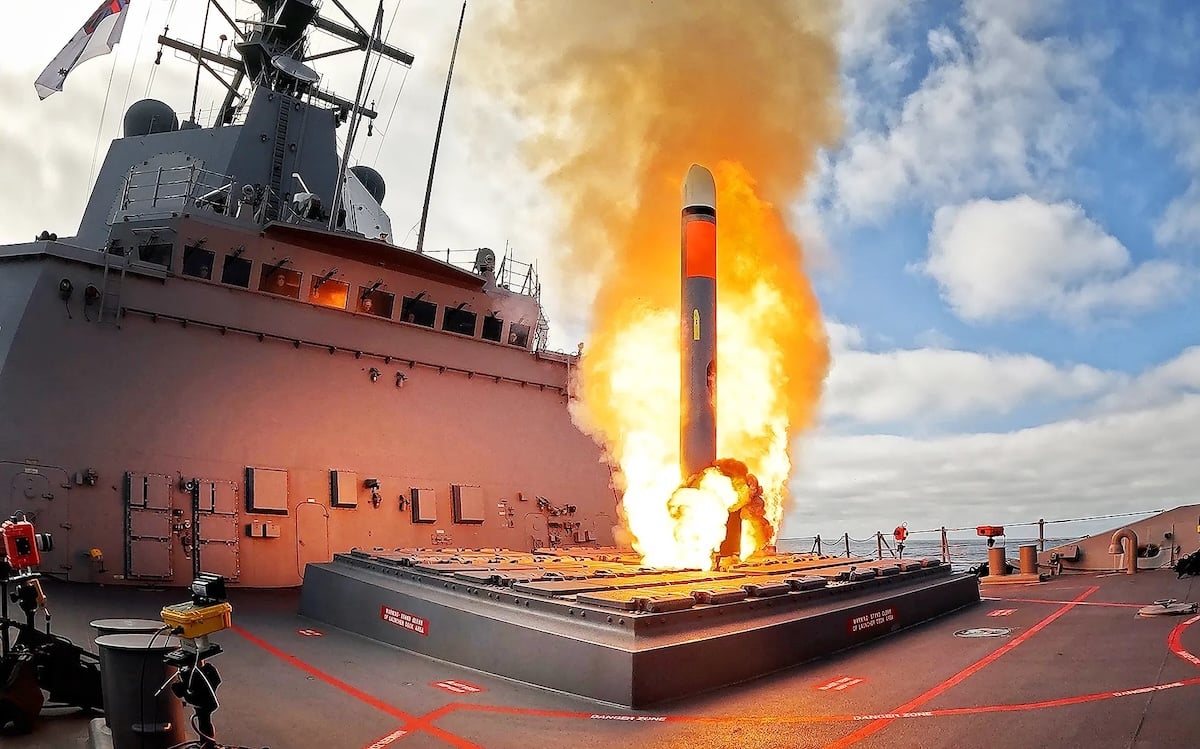
The latest awards extend that supply relationship on a system designed to launch several missile types from a common architecture. The MK 41 supports air defense, surface warfare, anti-submarine warfare, ballistic missile defense and land-attack missions.
Modular launcher accommodates a range of weapons
Installed below deck, the MK 41 has recorded more than 4,300 successful missile firings, according to manufacturer Lockheed Martin. Its supplied material reports deployment on more than 180 ships across more than 26 ship classes.
The system is built around eight-cell modules that can be combined to meet a ship’s mission and hull requirements. Lockheed Martin lists 13 deployed configurations, ranging from a single eight-cell module to a 16-module arrangement with 122 cells.
The modules come in strike and tactical lengths. The strike module is approximately 25 feet, or 7.6 meters, long and can accommodate larger missiles for long-range strike and sea-based midcourse ballistic missile defense.
The tactical module measures approximately 22 feet, or 6.7 meters. It accommodates the same missile types except for Tomahawk cruise missiles and missiles designed for ballistic missile defense.
Weapons already integrated with the MK 41 include the Evolved Sea Sparrow Missile, Tomahawk, Standard Missile 2, Standard Missile 3, Standard Missile 6 and Vertical Launch ASROC. Lockheed Martin says the launcher can communicate simultaneously with weapon control systems and missiles across its mission areas.
The launch control system uses an open, distributed architecture to support the integration of new technologies. Open weapon-control, mechanical and electrical interfaces provide flexibility for adding missiles to the system.
Lockheed Martin identifies the Long Range Anti-Ship Missile, Common Anti-Air Modular Missile, ASTER, Future Cruise/Anti-Ship Weapon and Barak as possible future integrations. Its material does not describe those weapons as already integrated.
The MK 41 has maintained a common mechanical structure since the mid-1980s, while its electronics have been continuously upgraded. Those upgrades support new weapons, address component obsolescence and incorporate commercial off-the-shelf technology.