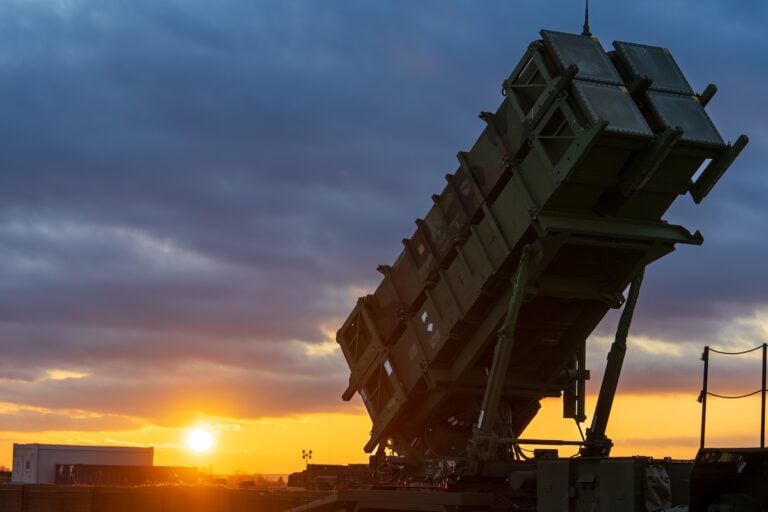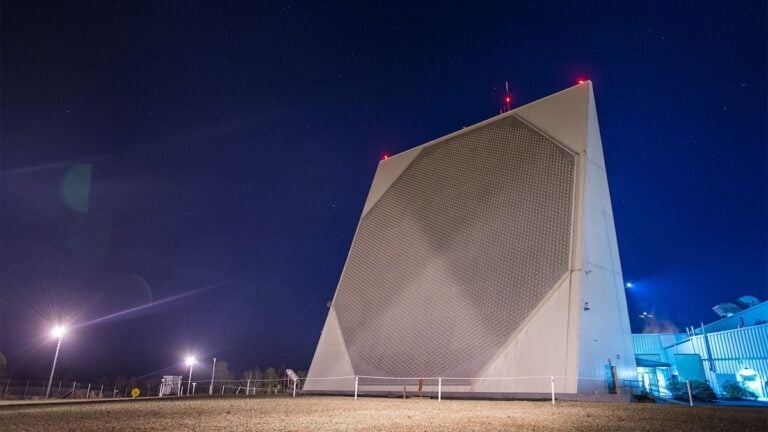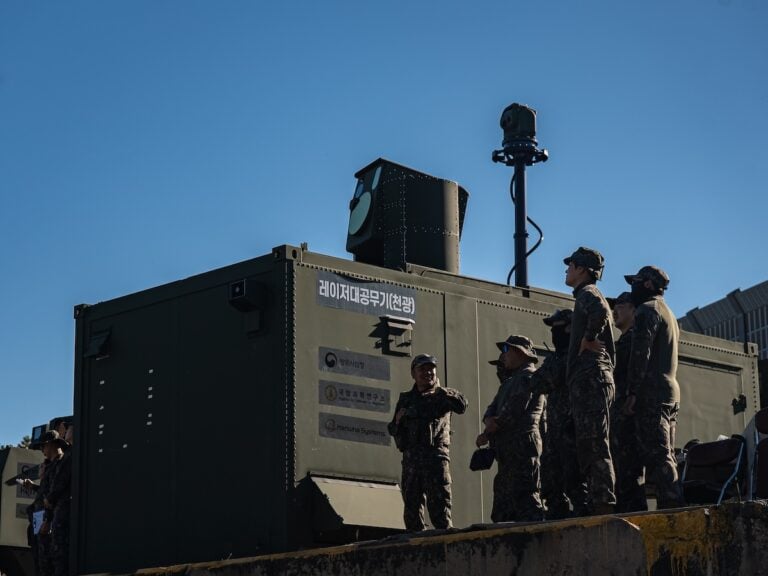

The Missile Defense Agency awarded Lockheed Martin the seven-year undefinitized contract action in June, putting into effect a framework agreement signed in January. The earlier agreement established the objective of increasing annual THAAD capacity more than fourfold over the seven-year period.
Chief Executive Jim Taiclet highlighted the production ramp during Lockheed Martin’s second-quarter 2026 earnings call. “In late June, the Missile Defense Agency awarded a seven-year contract for $35 billion to quadruple production of THAAD interceptors,” he said.
The THAAD program is one of several missile production lines that Lockheed Martin is being asked to expand at rates above its previous plans. Taiclet said the company is simultaneously preparing to triple PAC-3 MSE output and accelerate PrSM production.
“Remember, we’re being asked to triple PAC-3 MSE production, quadruple THAAD production, and scale up PrSM production faster than we ever thought we would,” Taiclet said. He said Lockheed Martin was seeking to push production rates “as high as we can, as fast as we can, as efficiently as we can.”
The industrial buildout for THAAD was already underway before the June contract award. In May, Lockheed Martin broke ground on an 87,000-square-foot Munitions Production Center in Troy, Alabama, that will support THAAD interceptor production and future work on the Next Generation Interceptor.
The new building will nearly double the production space at the Troy site. Lockheed Martin said the project is part of more than $9 billion in planned investment through 2030 to expand or modernize more than 20 U.S. facilities supporting higher munitions output.
“We have already invested well over a billion dollars in this expansion,” Taiclet said at the Troy groundbreaking in May. He said the spending was intended to strengthen deterrence and increase the availability of weapons for U.S. forces and allies.
Lockheed Martin also has more than 340,000 square feet of dedicated THAAD operations space across nine U.S. sites. The program is supported by nearly 750 U.S.-based suppliers across 42 states, according to the company.
The company has also opened a Munitions Acceleration Center in Camden, Arkansas, to prepare workers for increased production of THAAD, PAC-3 and other weapons. Lockheed Martin said the center will use advanced manufacturing, robotics and digital technologies as the company expands output.
Taiclet told analysts that Lockheed Martin is using its balance sheet and cash generation to finance new and expanded facilities. During the earnings call, he also cited the opening of a missile assembly building in Courtland, Alabama, which will support integrated air and missile-defense work including THAAD.
The June THAAD award was one of the first major multiyear procurement contracts executed under the U.S. government’s new acquisition approach for munitions, according to Lockheed Martin. The company said the longer-term commitment provides the demand visibility needed to invest in capacity, suppliers and production infrastructure.
Tim Cahill, president of Lockheed Martin Missiles and Fire Control, said the arrangement would “strengthen the defense industrial base, expand production and deliver capabilities” at greater speed and scale.
Taiclet said the government is also giving Lockheed Martin greater flexibility on requirements and other elements of the production ramp. He said senior Pentagon leadership has repeatedly emphasized faster execution.
“The government’s giving us a lot more flexibility than they traditionally would have done,” Taiclet said. “That’s what I hear from the deputy secretary every time we get together and beyond. Faster, faster.”
The THAAD expansion also sits alongside continued investment in the weapon system itself. A separate Missile Defense Agency contract awarded in 2025 has a ceiling value of $2.8 billion and supports further THAAD development for an initial five years, with options extending the period to as long as 10 years.
Lockheed Martin said that development work is intended to improve THAAD against increasingly complex missile threats. The company said the system has recorded 17 successful intercepts in 17 flight-test attempts and has demonstrated integration with PAC-3 MSE.
Chief Financial Officer Evan Scott said the rapid production increase could create some near-term margin pressure as the company adds capacity and moves through early program milestones. Over time, Lockheed Martin expects THAAD production margins to be consistent with its historically strong munitions business, with a goal of improving beyond previous levels.
For Lockheed Martin, the move from a January framework agreement to the $35 billion June procurement action gives the THAAD expansion a longer-term contractual base. The company is now combining that demand signal with new facilities, supplier investment and manufacturing upgrades to move annual production toward 400 interceptors.