
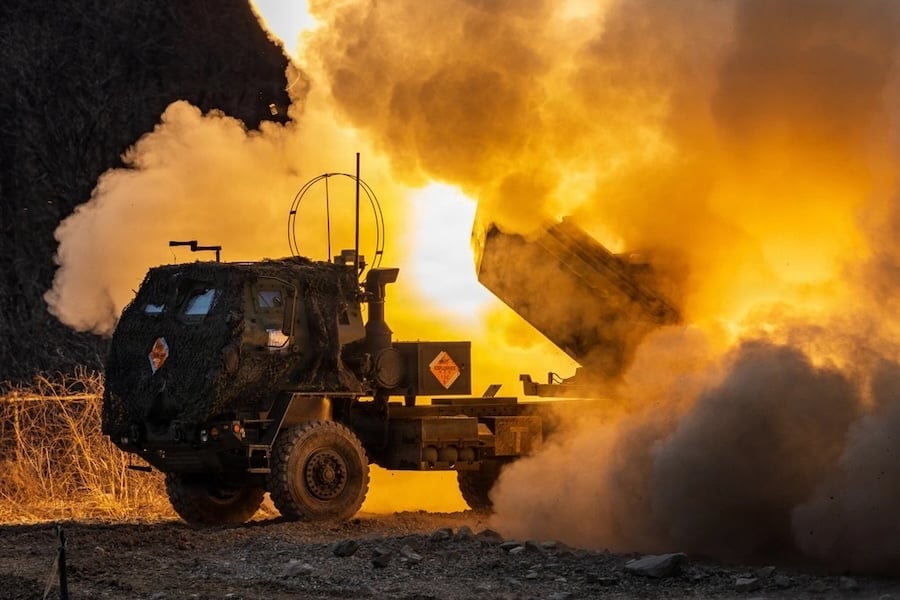
The largest U.S. defense company is a strategic supplier to American allies in the region. Its latest technology overview links the need for greater strike reach with protection against drones, including coordinated swarms that threaten forces and critical assets.
Counter-drone systems combine sensors, software and weapons
Lockheed Martin’s counter-unmanned aerial systems strategy centers on connecting detection, identification, tracking and engagement capabilities within a layered architecture. The company says an open design allows customers to integrate different technologies and adapt their systems as threats evolve.
Sanctum uses artificial intelligence, cloud computing and combat-proven systems to address individual drones and coordinated swarms. Its modular architecture is designed to scale with mission requirements and work with existing infrastructure.
The company is also developing reusable systems to counter drone swarms at a lower cost per engagement. Its MORFIUS X-Rotor uses airborne high-power microwave technology and, according to Lockheed Martin, can neutralize more than 50 enemy drones in one flight.
MORFIUS X-Rotor can be recovered in the field and reused. It is designed to work independently of a particular sensor or command-and-control system, giving customers flexibility in how they integrate it.
The system builds on earlier MORFIUS variants that have flown since 2017. Lockheed Martin says it uses the same family of microwave effectors, which have demonstrated an ability to defeat difficult targets while minimizing collateral damage.
Distributed launchers add options on land and at sea
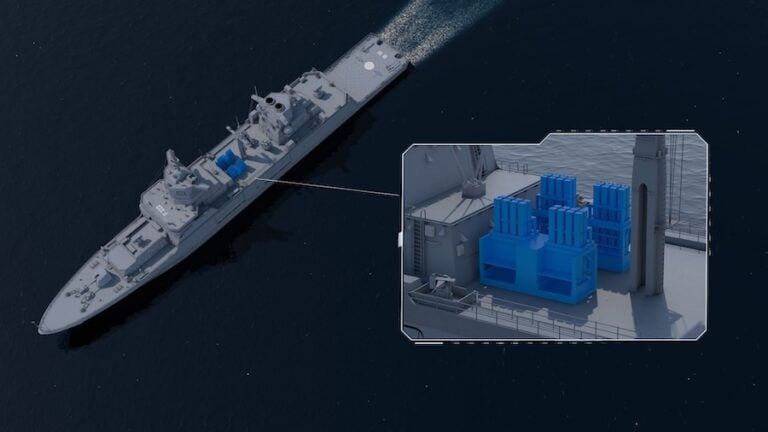
Alongside counter-drone technology, Lockheed Martin is advancing launch platforms that give forces more ways to distribute precision weapons. Its GRIZZLY containerized launcher is intended to supplement conventional artillery, point-defense systems and missile launchers.
During the year, GRIZZLY demonstrated loading and launching HELLFIRE and Joint Air-to-Ground Missiles in 45-degree, vertical and counter-drone configurations. Lockheed Martin says the use of established weapons and launcher designs can shorten acquisition cycles and reduce logistics requirements.
The launcher is designed for mobile, low-observable weapon delivery during distributed expeditionary operations. That configuration offers forces another means of positioning firepower without relying solely on traditional launch platforms.
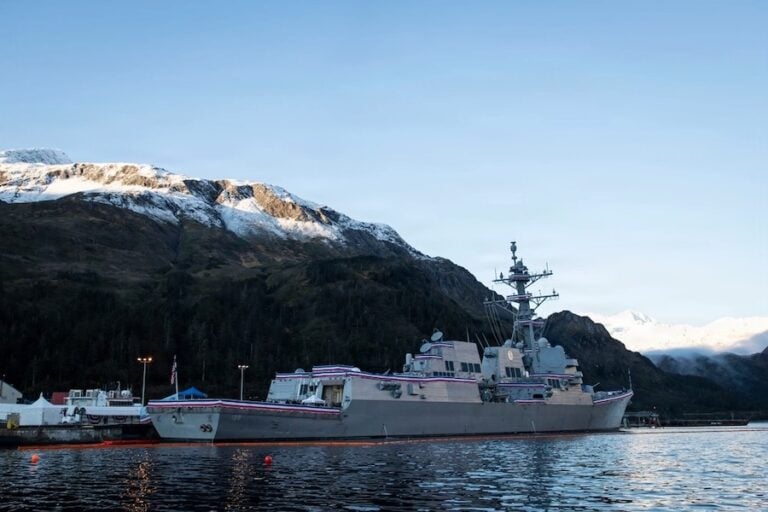
A partnership with Saildrone has taken that approach onto an unmanned maritime platform. During RIMPAC 2026 near Hawaii, a Surveyor-class Saildrone equipped with a JAGM Dual Launcher fired two live rounds.
The vessel used the Adjunct Remote Engagement System for fire control and command and control. Lockheed Martin says the demonstration established that the launcher could operate from an unmanned surface vessel and use JAGM’s dual-mode seeker to provide all-weather counter-drone precision at sea.
The collaboration pairs Lockheed Martin’s missile and launch technology with a commercial vessel supplied by another manufacturer. The company presents it as a route to faster integration and scalable protection for high-value maritime assets.
Australia links long-range fires with domestic production
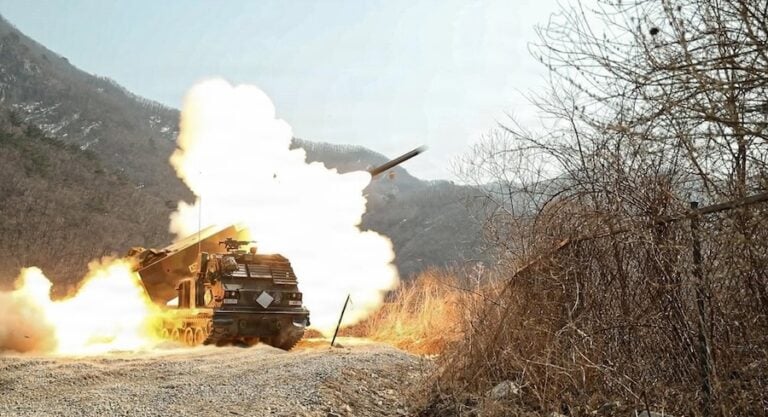
Australia’s long-range fires program provides another example of Lockheed Martin’s role in strengthening allied capabilities. The Australian Army has selected HIMARS and Precision Strike Missile Increment 2 for its second Long-Range Fires Regiment under LAND 8113 Phase 2, according to the company.
The selection builds on the Army’s existing HIMARS launchers. Combining mobile launchers with GMLRS and the longer-range Precision Strike Missile is intended to extend operational reach and support integrated land, maritime and joint fires.
Domestic production is developing alongside those operational requirements. Australian-manufactured GMLRS rockets were successfully test-fired from HIMARS in April 2026, marking a step toward a more resilient precision-strike supply chain.
Lockheed Martin Australia is working with AW Bell and Moog Australia to manufacture critical GMLRS components locally. The partnerships also connect Australian suppliers with the company’s global defense supply chains.
Its wider industrial relationships include Thales and Marand across manufacturing, technology and sustainment. Lockheed Martin says this industrial base is intended to support Australian defense requirements while adding production and maintenance capacity for allied forces.
HIMARS FLEX broadens the launcher’s planned capabilities
Lockheed Martin is developing HIMARS FLEX to increase the launcher’s loadout and accommodate a wider range of munitions. The design also introduces autonomous functions while retaining C-130 transportability.
The FLEXFires technology ecosystem adds modular loadout capability to the existing XM1140 chassis. The launcher can be configured with one pod or two, with the dual-pod arrangement doubling its loadout.
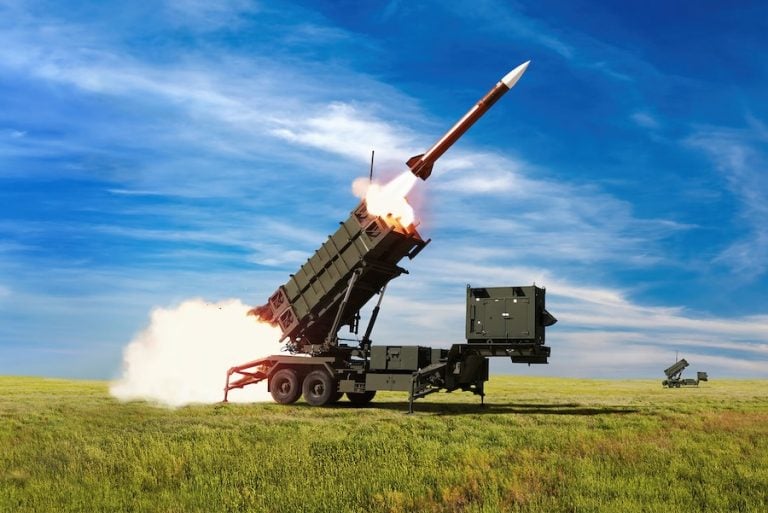
The company says the architecture will support rapid reconfiguration for air and missile defense payloads, including PAC-3, IFPC and future options. Those capabilities remain part of a system currently in development.
Across these programs, Lockheed Martin is pursuing greater strike reach and stronger defenses against unmanned threats. Its partnerships with platform developers and local manufacturers connect that development work with weapons integration, production and long-term support.