
The alliance said the exercise was planned well in advance and will be similar in scale to previous editions. It is not linked to current world events and is not directed against any country.
“NATO is a defensive Alliance,” Secretary General Mark Rutte said. “This exercise helps us ensure a safe, secure, effective, and credible capability to preserve peace, prevent coercion and deter aggression.”
“It also sends a clear message of unity and resolve,” Rutte said. Steadfast Noon involves aircraft capable of carrying nuclear weapons and is hosted by a different ally each year.
The 2025 exercise involved more than 70 aircraft, 14 allies and roughly 2,000 personnel. Operations took place at Volkel in the Netherlands, RAF Lakenheath in the United Kingdom, Kleine-Brogel in Belgium and Skrydstrup in Denmark.
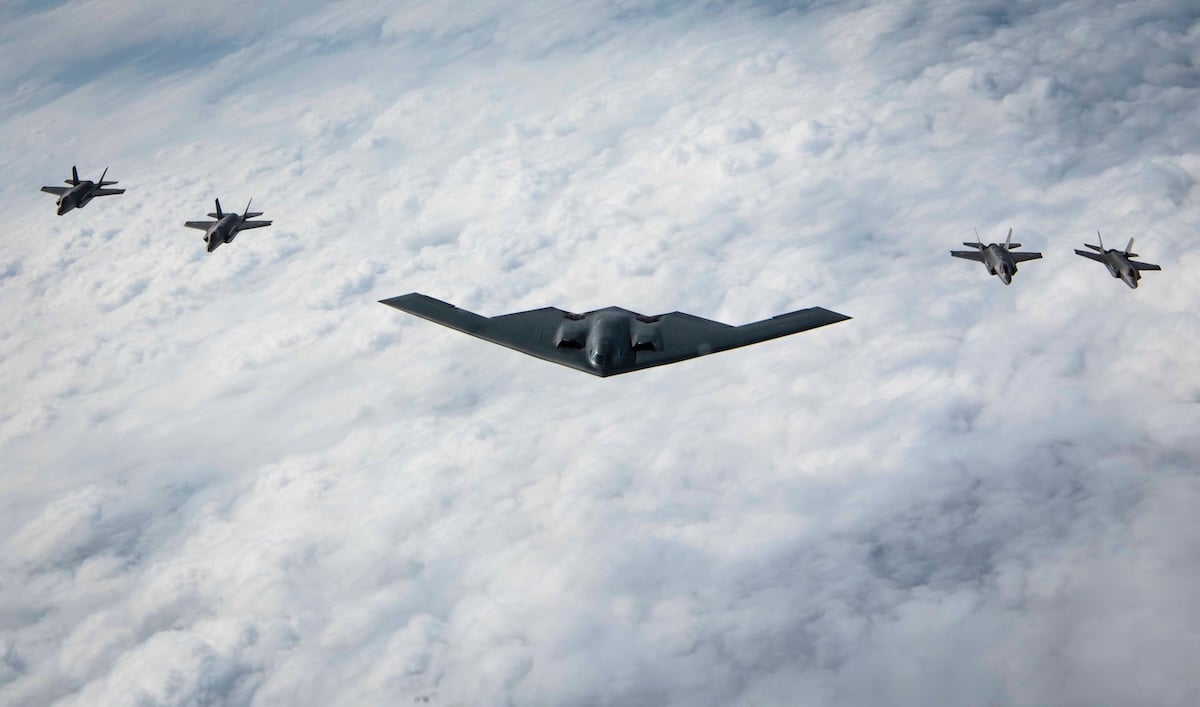
Thirteen aircraft types took part, including dual-capable F-35 fighters. E-3A Sentry surveillance aircraft and KC-135 Stratotanker refueling aircraft supported the nuclear training in conventional roles.
NATO’s announcement for 2026 identifies 17 participating nations but does not give aircraft or personnel totals. The figures and aircraft types from last year therefore describe the previous exercise.
NATO’s nuclear deterrence posture relies on U.S. nuclear weapons forward-deployed in Europe, alongside capabilities and infrastructure provided by participating allies. The United States retains absolute control and custody of those weapons.
Some allies voluntarily contribute dual-capable aircraft and train crews for nuclear missions. Allies also support deterrence through consultations, planning, exercises and conventional support to nuclear operations.
The Nuclear Planning Group is NATO’s senior forum for consultation and decision-making on nuclear deterrence. All allies except France participate, with political control maintained at all times.
NATO updated its nuclear policy in 2024, drawing on the 2022 Strategic Concept and guidance from allied leaders. Its deterrence posture combines nuclear, conventional and missile defense capabilities, complemented by space and cyber capabilities.
The United States, United Kingdom and France are NATO’s three nuclear-weapon states. The alliance identifies its strategic nuclear forces, particularly those of the United States, as the supreme guarantee of its security, while British and French forces also contribute to deterrence.
NATO says the purpose of its nuclear capability is to preserve peace, prevent coercion and deter aggression. It describes the circumstances in which it might use nuclear weapons as extremely remote.
The alliance says regular exercises help maintain the credibility, effectiveness and preparedness of those forces. It seeks conditions for a world without nuclear weapons but says it will remain a nuclear alliance for as long as such weapons exist.