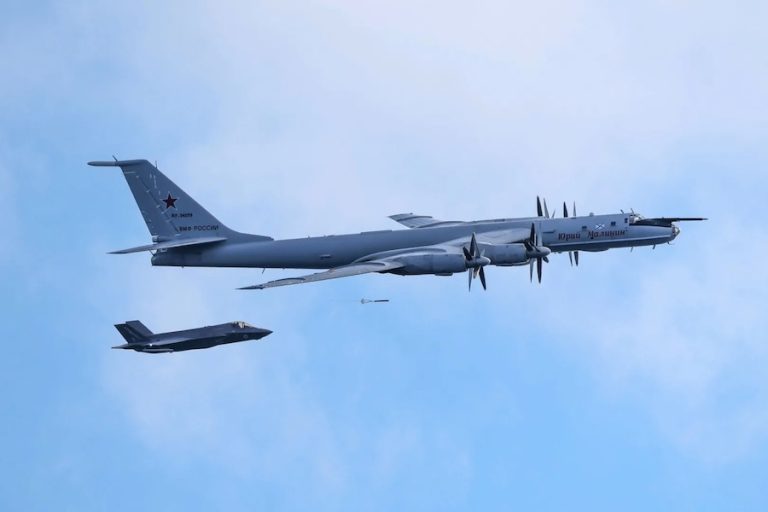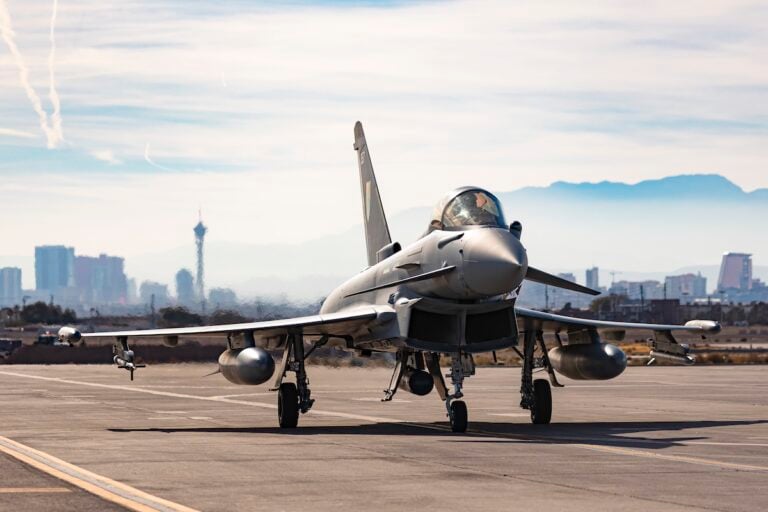
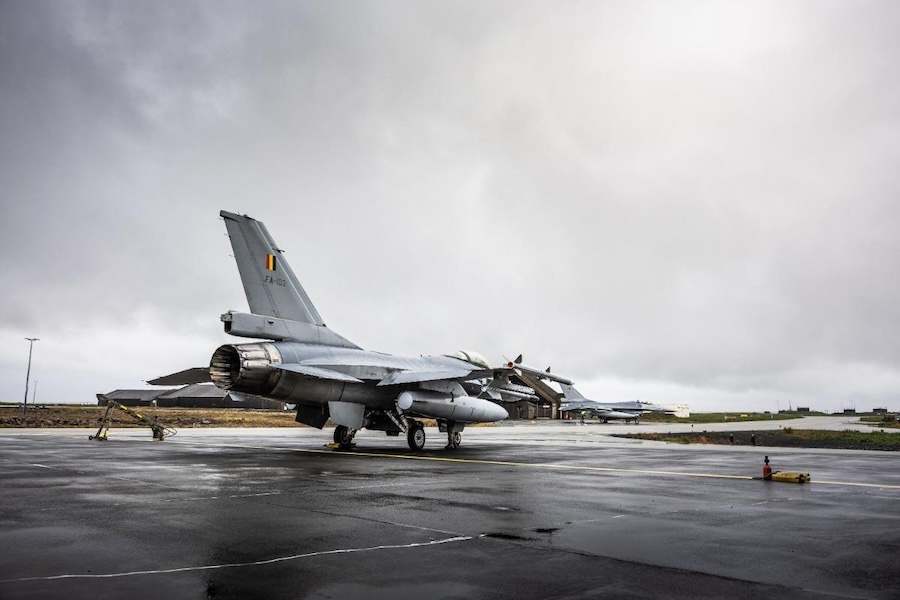
The Belgian detachment arrived in Iceland on 7 August and formally assumed responsibility for the mission on 17 August. NATO said the deployment follows recent activity in Lithuania, Estonia and Romania and reflects Allied Air Command’s broader shift from separate air-policing missions towards a single integrated air defence framework.
“Belgian F-16s have touched down in Iceland once again to help safeguard NATO’s airspace,” said Belgian Senior Captain Glenn Hanssen, commander of the Belgian Icelandic Air Defence detachment. “During this month-long deployment, they will strengthen NATO’s Arctic air defence and contribute to the Alliance’s collective security.”
Under the new approach, NATO Air Policing will become part of the Alliance’s wider Integrated Air and Missile Defence architecture. The framework is designed to combine capabilities previously operated through separate missions and provide a multi-layered, 360-degree response to threats across NATO territory.
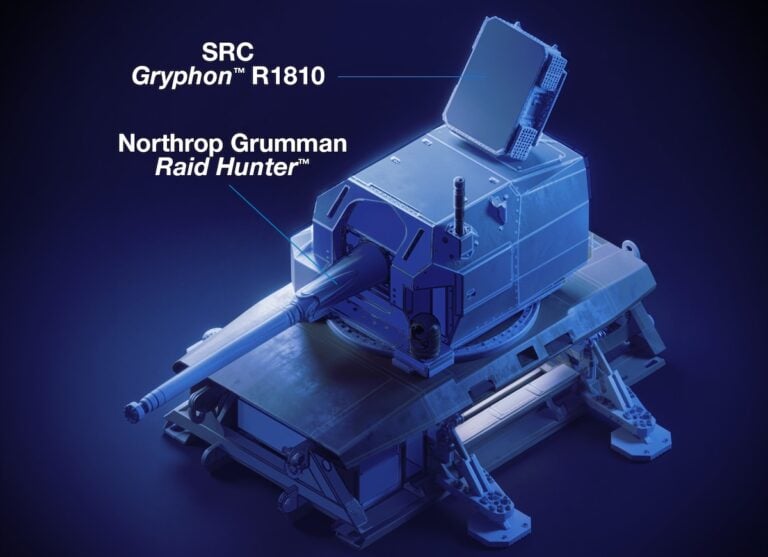
Those capabilities include Quick Reaction Alert fighters, sea- and surface-based air and missile defence systems and counter-uncrewed aerial systems. NATO said the architecture is intended to address threats ranging from crewed aircraft and drones to cruise and ballistic missiles.
“The Belgian Air Force’s assumption of this vital mission in Iceland marks a significant move to a single Integrated Air and Missile Defence posture,” said German Major General Frank Gräfe, Chief of Staff for NATO Allied Air Command. “Allied Air Command continues to strengthen NATO’s Air Defence umbrella with a multi-layered, 360-degree approach involving assets and capabilities across all operational domains, to address emerging and future threats – whether crewed or uncrewed, aircraft or other.”
The Iceland mission gives NATO a rotational fighter presence at Keflavik while maintaining surveillance and interception capability in the Arctic. Allied forces work with the Icelandic Coast Guard to sustain readiness in a region that remains an important part of the Alliance’s northern air defence posture.
NATO’s standing Air Policing mission dates to 1961, while rotational deployments to Iceland formally began in 2008. The mission combines national surveillance, command and control and fighter aircraft maintained at readiness under NATO-controlled arrangements.
The mission has continued to evolve following the activation of enhanced Vigilance Activity Eastern Sentry last September. NATO said the changing security environment requires a broader structure capable of integrating national and allied assets rather than treating individual air defence missions as separate activities.
The shift also expands the focus beyond the traditional Air Policing role of responding primarily to crewed and uncrewed aircraft. NATO’s new framework is intended to provide greater flexibility against a wider range of threats while linking sensors, command-and-control systems and defensive assets across operational domains.