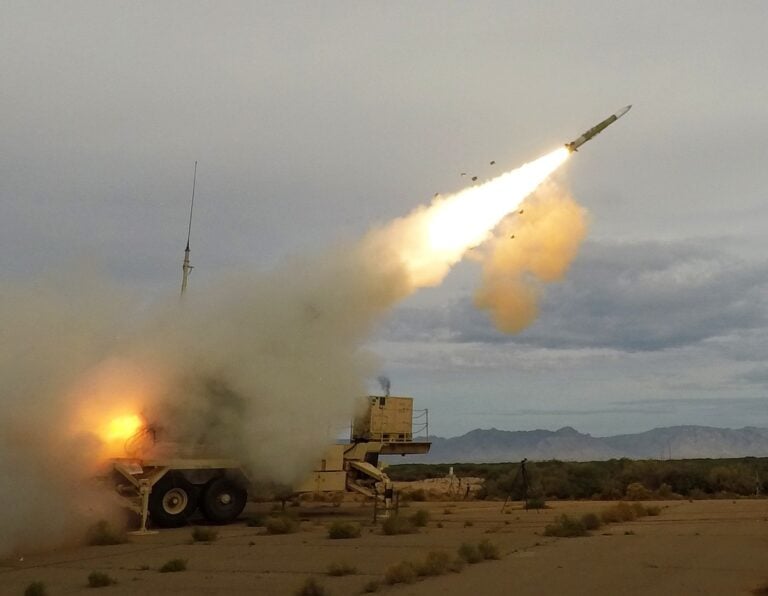
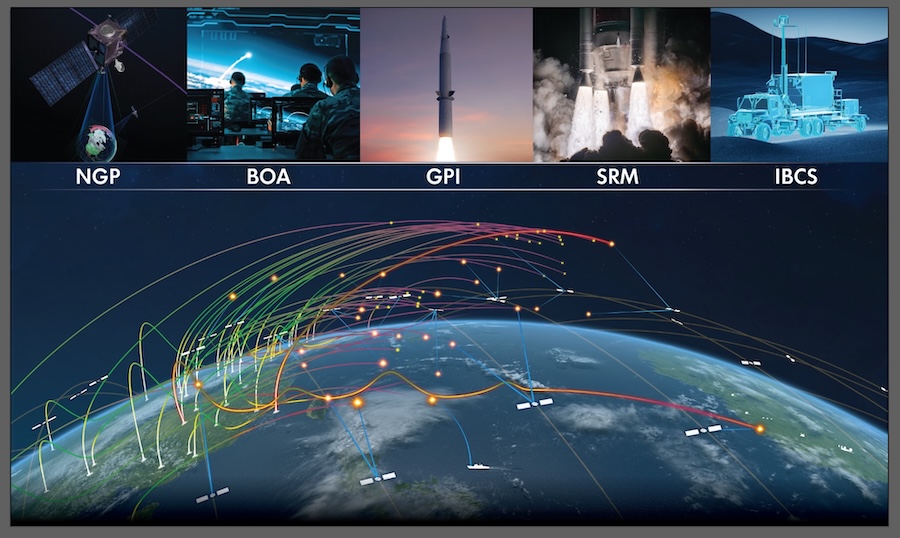
The company’s concept links existing capabilities with systems under development, allowing threats detected in space to be tracked across multiple domains and assigned to an appropriate interceptor. Northrop Grumman said the objective is to create a unified kill chain from initial warning through final engagement.
Artificial intelligence is intended to help classify threats and support decisions on which interceptor should respond. The software-driven architecture is designed to give operators a common view of the battlespace while connecting sensors and weapons that may operate in different domains.
“Northrop Grumman is bringing together next-generation sensors, advanced interceptors integrated with AI-enabled decision-making to help warfighters detect and understand threats sooner, make faster, more informed decisions and adapt as those threats evolve,” said Rob Fleming, corporate vice president and president, Northrop Grumman Space Systems. “By connecting these capabilities through a software-driven approach, we can give warfighters a clearer picture of the battlespace and more options to respond.”
The space layer includes Next Gen OPIR Polar satellites operating in highly elliptical orbits. Northrop Grumman said their modernized sensors are designed to detect faint heat signatures associated with evolving ballistic and hypersonic threats across the Northern Hemisphere.
Another element is the Ballistic Missile Defense System Overhead Persistent Infrared Architecture, or BOA. It receives raw infrared information from multiple satellite constellations and passes actionable data through command-and-control systems to support rapid decisions and engagements.
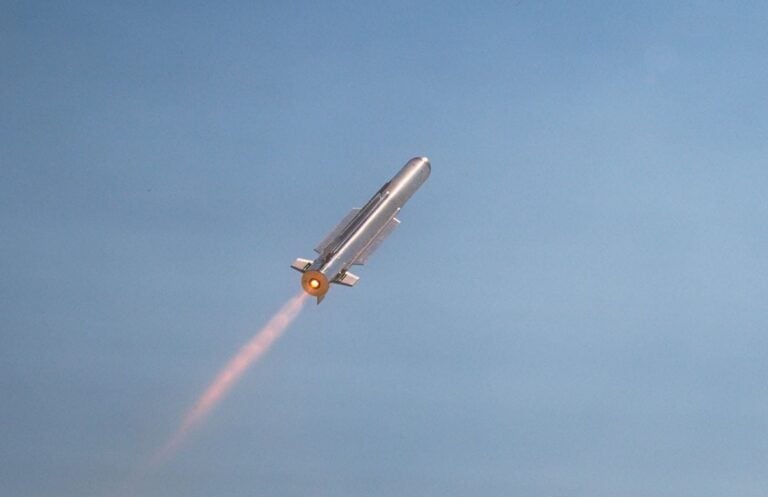
For hypersonic defense, Northrop Grumman highlighted its Glide Phase Interceptor. The system is being developed specifically to engage hypersonic threats during the high-energy and high-maneuverability portions of their flight.
The company is also expanding the propulsion manufacturing base needed to support missile programs. Northrop Grumman plans to increase annual solid rocket motor production from about 13,000 units in 2024 to 25,000 by 2029, after producing more than 1.3 million motors to date.
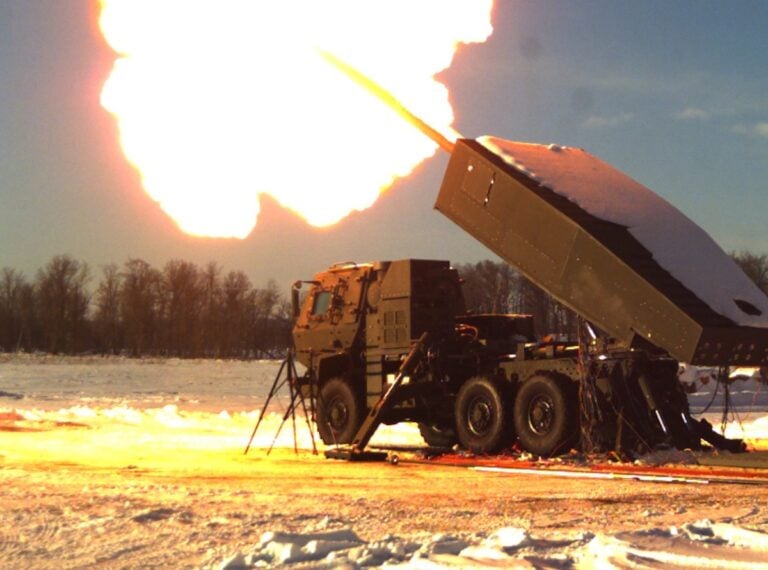
Command and control is built around the Integrated Battle Command System, which connects sensors and effectors that were not originally designed to operate together. Northrop Grumman said this allows different elements of the defensive architecture to operate through a common command-and-fire-control framework.
The company is also using additive manufacturing, modular avionics and digital engineering to reduce costs and accelerate production. Some interceptor components are 3D-printed onsite using titanium alloys, reducing lead times from months to weeks and eliminating some tooling requirements.
Northrop Grumman’s Modular Avionics Control Hardware provides another element of that production strategy. The flexible architecture can be configured for different launch-vehicle control systems, while digital twins and virtual testing are intended to reduce development risk and shorten schedules.
The company is extending the same approach to allied missile-defense programs in Europe and the Indo-Pacific. Northrop Grumman said it has formalized multinational cooperation agreements with the United Kingdom, Japan, Australia and several NATO members.
Northrop Grumman is also working with Japan’s Ministry of Defense on cost-effective responses to the growing hypersonic missile threat. Its broader international approach covers shared procurement, interoperable data standards and forward-deployed ground stations.
The company said joint acquisition could reduce unit costs, while open architectures would support integration between allied sensors and interceptors. Forward-deployed ground stations in Europe and the Indo-Pacific are intended to provide participating countries with real-time situational awareness and extend the defensive network beyond U.S. territory.