
Valiant Shield 2026 was led by U.S. Pacific Command and held from June 22 to July 1. The exercise took place across the Commonwealth of the Northern Mariana Islands, Palau, Hawaii, Guam and Japan.
The field-training exercise focused on improving readiness across the region. Multinational forces practised operating together across sea, air, space, land and cyber domains.
Northrop Grumman said its advanced sensors, command and control assets, and connected weapons allow U.S. and allied forces to see farther and act faster. The company said its systems integrate to create a multi-domain, networked infrastructure for faster, data-driven decision-making by commanders and forces.
“Northrop Grumman systems are battle tested and ready now. They are relied upon in combat because they consistently deliver the capabilities and options warfighters need to win,” said Steve O’Bryan, corporate vice president, Northrop Grumman.
“Our team is developing capabilities to outmatch emerging threats, too. Our investments to develop new capabilities help to ensure continued success for the Joint Force.”
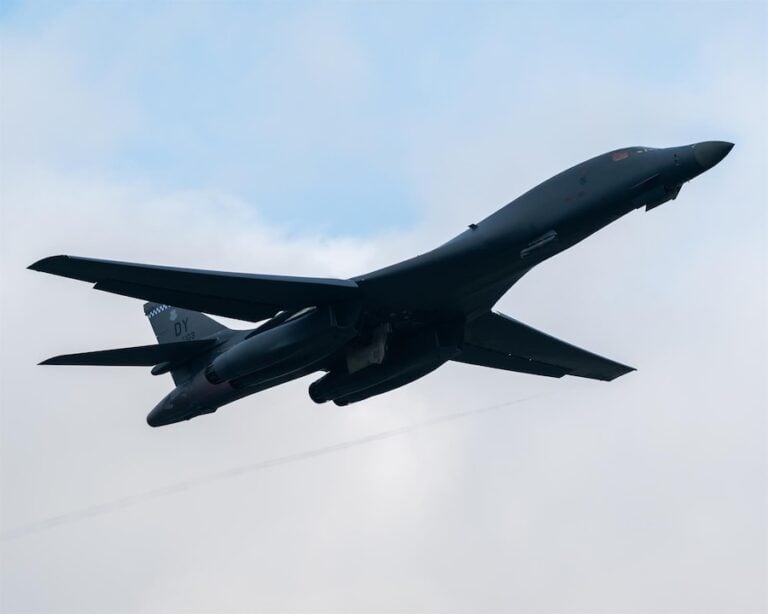
The company highlighted the B-2 Spirit as one of the systems involved in the exercise. Pacific Air Forces conducted a live-fire sinking exercise north of the Mariana Islands, where the B-2 deployed the Long Range Anti-Ship Missile.
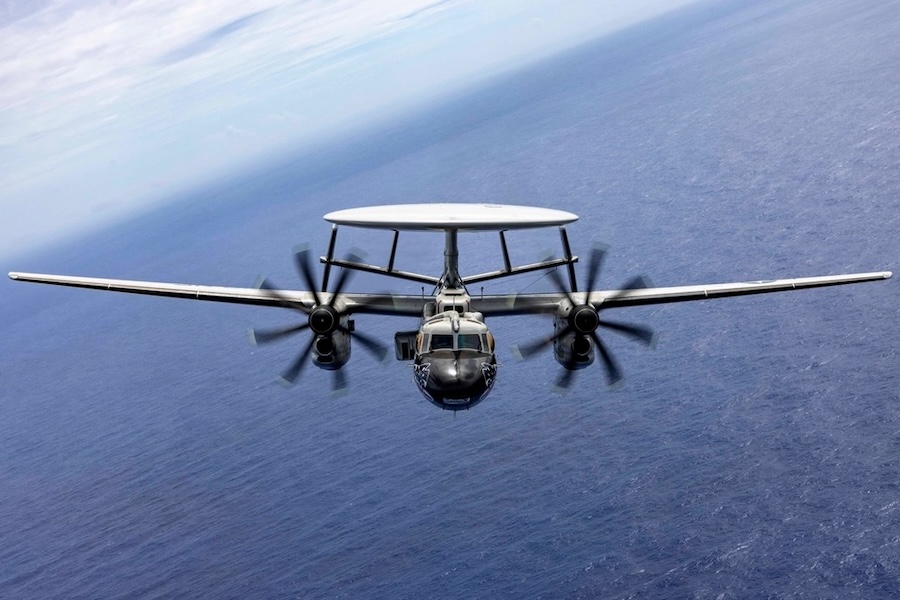
Northrop Grumman said the B-2 activity demonstrated an enhanced ability to achieve strategic objectives within range of potential threats. The company also highlighted the E-2D Advanced Hawkeye during the live virtual portion of Valiant Shield.
An international virtual E-2D performed airborne command and control in coordination with ground-based command and control nodes. Northrop Grumman said the activity demonstrated the value of international interoperability for INDOPACOM.
F-35 squadrons equipped with Northrop Grumman systems and sensors also took part in the exercise. In addition to traditional strike-fighter missions, the aircraft provided situational awareness and electronic warfare support to suppress enemy air defenses.
The company said F-35 sensors acted as the aircraft’s eyes and ears in the sky. The sensors collected information and shared it with joint command and control networks, enabling faster and more coordinated responses across the battlespace.
Northrop Grumman also highlighted its Integrated Battle Command System. The command and fire control system successfully integrated with Standard Missile-6 and Standard Missile-3 to support the defense of Guam.
The company said this integration helps ensure continued defense capabilities if primary options are unavailable. It also builds on recent live-fire and simulated exercises.
Northrop Grumman’s Maritime Targeting Cell also supported the exercise. The system integrated and fused data from multiple sources to support over-the-horizon targeting and enable engagement of targets at ranges well beyond the visible horizon.
The MQ-4C Triton provided high-altitude, long-endurance maritime intelligence, surveillance and reconnaissance. Northrop Grumman said Triton supported the U.S. Navy and Royal Australian Air Force by overseeing entire maritime theaters during 24-hour missions.