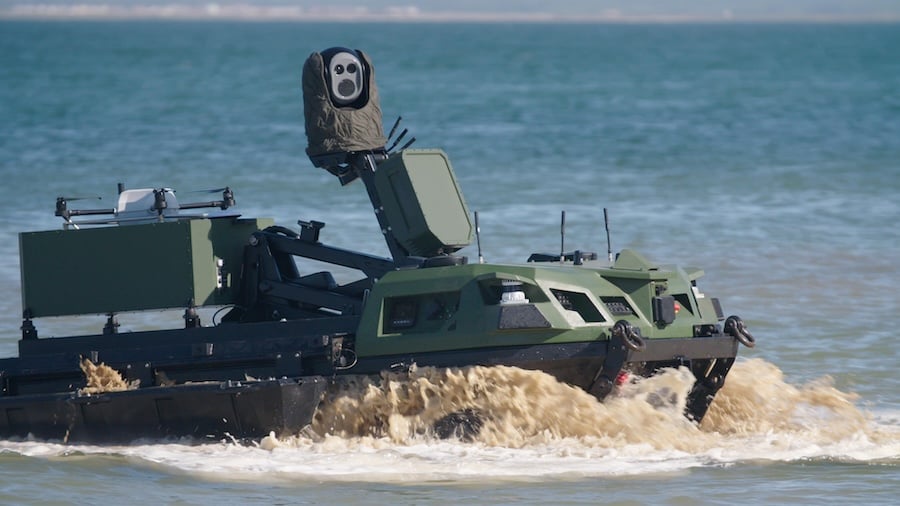
The multinational event is taking place from 31 August to 25 September on the Troia Peninsula and in surrounding waters. Naval forces, research institutions and defence companies are testing unmanned technologies in realistic air, surface, underwater and space-linked scenarios.
Rheinmetall has taken part in REPMUS since 2024, positioning itself as an integrator of multidimensional maritime systems. Its approach is designed to combine sensor data into a single operational picture rather than rely on individual platforms operating separately.
A containerised, relocatable control facility is the centrepiece of the company’s 2026 setup. It serves as a mobile command post for the German Navy during the four-week event and supports operations intended to protect port infrastructure.
The Rheinmetall Battlesuite provides the integration layer, using Tactical Core Middleware developed by blackned GmbH. Its open architecture allows sensors, effectors and mission modules from different technology partners to be added according to operational requirements.
This year’s work places particular emphasis on unmanned underwater sensors supplied by industry partners. Rheinmetall aims to create persistent situational awareness while enabling operators to manage multiple vehicle types and manufacturers from one user interface.
“REPMUS offers us an excellent opportunity to test our prototype development in realistic scenarios,” said Gregor Mannherz, head of the Rheinmetall delegation. “By collaborating with operational experts from our naval customers and government agencies, we can design our products and solutions more efficiently, thus accelerating development in a targeted manner.”
The trials are intended to validate collaborative operating concepts and improve interoperability between connected maritime systems. Rheinmetall said the work supports NATO partners’ defence capabilities and the protection of ports, coastal waters and global maritime supply routes.