Saab has not received an order and said it is awaiting the next stage of the procurement process. No potential contract value, delivery timetable or aircraft configuration was disclosed.
“We welcome today’s announcement by the Netherlands of its intention to procure GlobalEye,” said Micael Johansson, president and chief executive of Saab. “The system will provide enhanced situational awareness and early warning capabilities across multiple domains, while also strengthening NATO’s ability to operate in an increasingly complex security environment.”
“GlobalEye will enable the Netherlands to detect threats earlier, respond faster, and strengthen both national and collective defence,” Johansson said. “We stand ready to support this capability with Swedish innovation and expertise.”
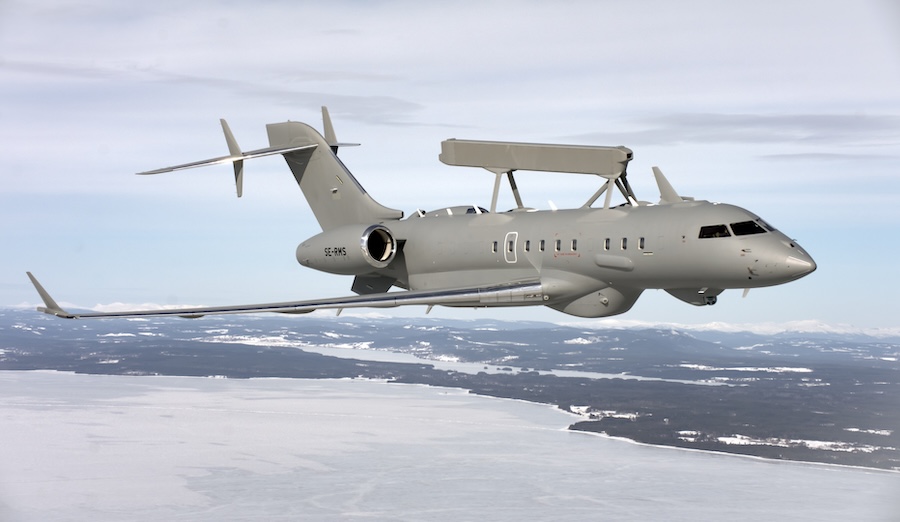
GlobalEye combines active and passive sensors to detect and identify objects at long range. The system monitors activity in the air, at sea and over land.
The aircraft distributes real-time information to air forces, armies and navies. That shared picture is designed to support earlier threat detection and faster operational decisions.
The letter of intent places GlobalEye at the centre of the Netherlands’ planned airborne surveillance procurement. A firm acquisition will depend on the remaining stages of the process and the signing of a contract.