
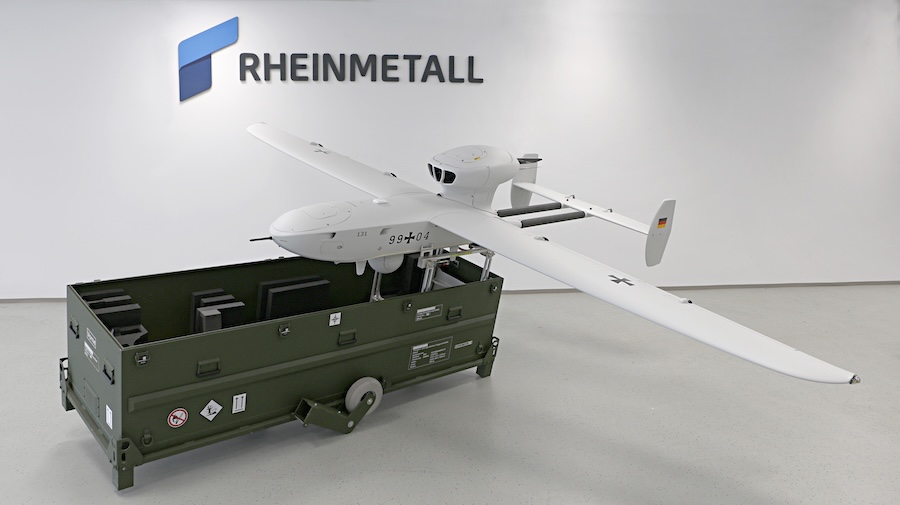
The interim approval allows the military unmanned aircraft to operate in regular restricted airspace under civil aviation safety standards instead of remaining confined to military areas. Rheinmetall said this would permit routine flights over densely populated European territory.
The certification process required LUNA NG to complete about 150 flights and approximately 200 flying hours under civil operating licences. The trials assessed the system’s technical maturity and compliance with aviation requirements.
“Certification is carried out according to the same standards as for large aircraft, such as an A320,” said Mike Schmidt, CEO of Rheinmetall’s Air Unmanned Space business unit. “A particular challenge in this case was that critical components, such as the autopilot or safety-critical navigation systems, had to be developed and certified in-house.”
“There are simply no certified systems for tactical unmanned aerial vehicles on the market,” Schmidt added. Rheinmetall therefore developed and certified the aircraft’s autopilot and safety-related navigation technology within the programme.
The Bundeswehr has also completed training for its first LUNA NG pilots and verifiers. Those personnel are now qualified to operate the system independently during testing and training activities.
Germany’s armed forces are introducing LUNA NG under the designation HUSAR, short for Highly Efficient Unmanned System for Medium-Range Reconnaissance. The platform is designed for sustained airborne surveillance, target classification and real-time detection of objects.
LUNA NG has an endurance of more than 12 hours, supporting long-range reconnaissance missions. The provisional certificate moves the programme closer to the full type approval required for broader operational use.