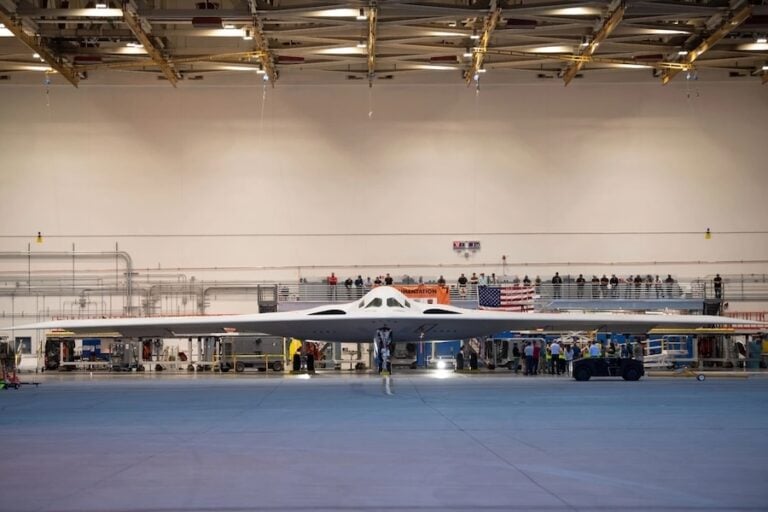

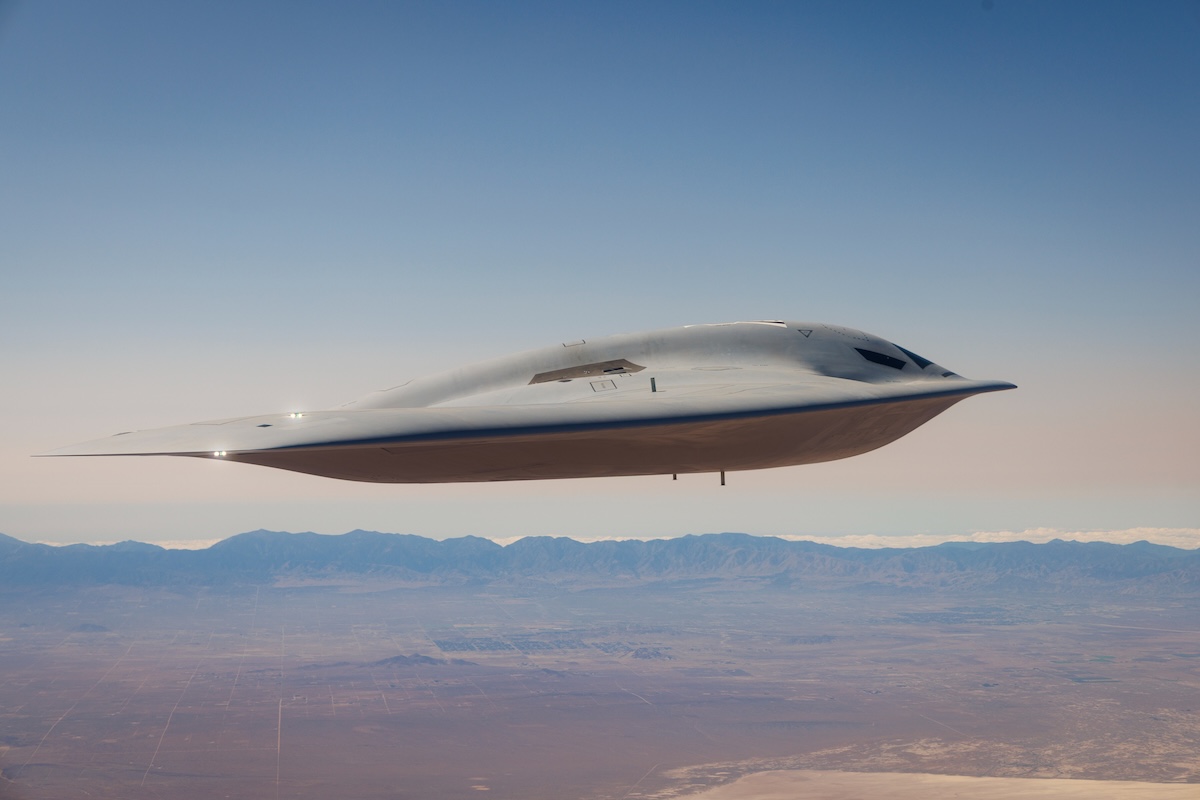
The partners broke ground on a new final assembly line at Air Force Plant 42 in Palmdale, California, on September 29. The expansion includes more than one million square feet of facilities under an agreement announced earlier this year.
The Air Force is applying $4.5 billion authorized and appropriated under fiscal year 2025 reconciliation legislation to accelerate production. The effort aims to shorten delivery timelines while maintaining cost, schedule and performance requirements.
“This groundbreaking represents more than construction; it represents a sustained commitment to delivering the capability our nation needs at the speed the security environment demands,” said Gen. Dale White, director of Critical Major Weapon Systems and Direct Reporting Portfolio Manager to the Deputy Secretary of War. “The B-21 Raider is foundational to the Air Force’s future long-range strike capability, and this investment strengthens the industrial capacity required to field that capability faster.”
“The B-21 team has established the foundation to accelerate production responsibly,” said Col. Nicholas Jordan, B-21 Systems program director at the Rapid Capabilities Office. “This investment in Palmdale will provide the infrastructure, workforce and manufacturing capacity needed to deliver the Raider to the Air Force at an increased rate.”
The B-21 isn’t the only thing taking off. We’re accelerating its production, with over 1M sq ft at Plant 42 dedicated to building the aircraft the @USAirForce needs for the future.
— Northrop Grumman (@northropgrumman) October 6, 2026
The bomber remains in flight testing, with aircraft still expected on the ramp at Ellsworth Air Force Base, South Dakota, in 2027. The Palmdale expansion will provide manufacturing capacity to support faster fielding.
What Northrop Grumman has disclosed about the B-21
The B-21 is a long-range penetrating strike aircraft designed to operate in highly contested environments. It combines stealth, resilient networking and a data-driven command-and-control architecture.
Northrop Grumman says the Raider can carry conventional and nuclear payloads. Its open systems architecture is designed to accommodate upgrades to weapons and mission capabilities over the aircraft’s service life.
The company describes the B-21 as a sixth-generation aircraft and part of a broader family of systems. It says the integration of data, sensors and weapons will support precision strikes, situational awareness and specialized missions beyond the bomber role.
According to Northrop Grumman, fuel-efficient engines and the aircraft’s airframe reduce reliance on tanker support compared with previous bombers. The company also says updated low-observable processes will make the Raider easier and less costly to maintain than earlier systems.
Multiple B-21 aircraft are undergoing flight tests, with most sorties achieving “code one” status, the company says. That means the aircraft returns without maintenance issues and is ready to fly again.
Ground tests are assessing how the bomber performs under extreme mission conditions. Northrop Grumman says the results have consistently exceeded predictions from digital modeling.
Manufacturing and preparations for service
Northrop Grumman says it has invested more than $5 billion in the program’s digital and manufacturing infrastructure. Its digital ecosystem has reduced software certification time by 50% and allows aircraft performance to be validated in real time during tests.
An agreement with the Air Force provides access to program data, including the B-21 digital twin. The company says that access supports affordability and faster upgrades.
On the production floor, technicians use digital and augmented reality tools to visualize tasks and resolve problems before working on the aircraft. Northrop Grumman says the approach improves efficiency and connects technicians more closely with design engineers.
The company is also developing training, sustainment and fleet management tools for the Air Force. It says test pilots have reported stable handling during aerial refueling, helping reduce training requirements and speed up refueling.
The program involves more than 8,000 industry and Air Force personnel and over 400 suppliers across 40 states. The Raider takes its name from the World War II Doolittle Raid, which involved 80 airmen and 16 B-25 Mitchell bombers.