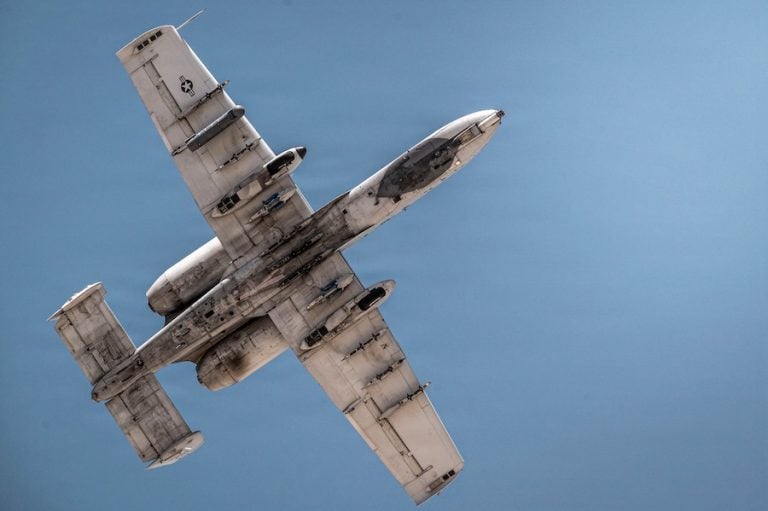

The 355th Operations Group, 357th Fighter Squadron, 357th Fighter Generation Squadron and 355th Training Squadron were inactivated during the ceremony. U.S. Air Force Col. Jose Cabrera, commander of the 355th Wing, presided over the event attended by airmen, families, retired pilots, civic leaders and members of the local community.
The 355th Operations Group was activated on May 1, 1992, to control the flying units assigned to the 355th Wing. From 1992 to 2026, the group operated the A-10 across its principal missions and deployed personnel to support military operations worldwide.
The group also managed all formal initial qualification and requalification training for A-10 pilots. “For decades, every single active-duty pilot, who flew into harm’s way, was built right there on this flightline,” Cabrera said.
“For nearly 50 years, the A-10 Thunderbolt has occupied a sacred place in American air power,” Cabrera said. “It was never just an airplane.”
The last commanders of the four units joined Cabrera in rolling and casing their respective guidons to mark the inactivations. “We say the word ‘attack’,” said U.S. Air Force Lt. Col. Rodney Dwyer, final commander of the 355th Operations Group and 355th Training Squadron.
“We have a great amount of pride when we say that word because it’s not just the challenge or response,” Dwyer said. “It’s a distinct mentality – that aggressive state of mind that means using the opportunity when conditions are chaotic.”
The audience responded with a collective “attack” after each commander relinquished their duties and cased their former guidon. Retired U.S. Air Force Lt. Gen. Glen “Wally” Moorhead, who flew the first A-10 into Davis-Monthan, also addressed the ceremony.
“Nov. 7, 1975 was when I first flew the A-10 at DM,” explained Moorhead. “In 1974, I was very fortunate to be selected as the last and youngest member of the A-10 testing at Edwards [Air Force Base] and with a follow-on assignment I knew I would come to be the first A-10 pilot at DM.”
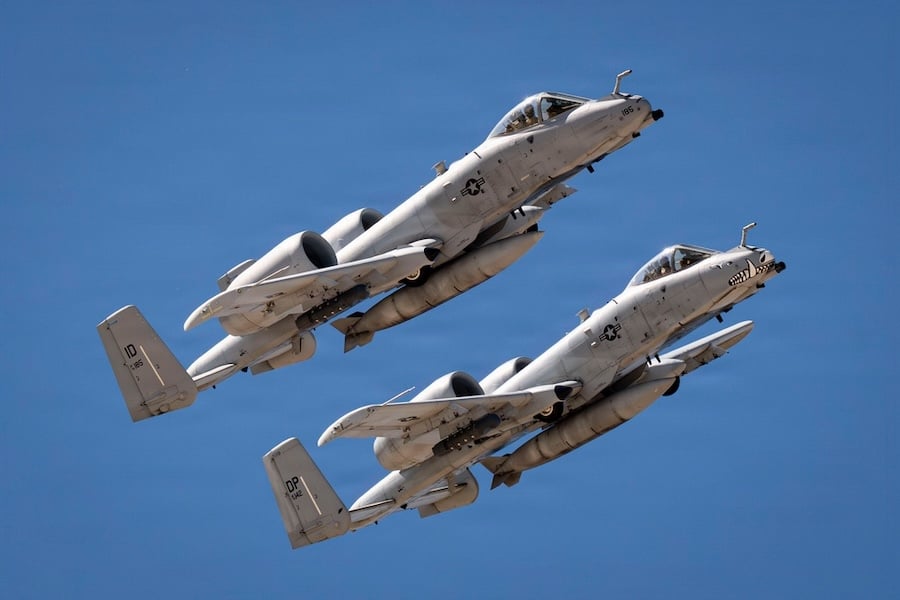
The ceremony recognized the history of the units and the personnel who risked their lives to support service members on the ground. It ended with a group photograph of former 355th Operations Group members and a two-ship A-10 flyover.
“This has been an incredible job and opportunity, but it’s also been heavy,” said U.S. Air Force Lt. Col. Ryan Rutter, final commander of the 357th Fighter Squadron. “I think about my time as a wingman, my job was to learn.”
“As an instructor pilot, it was to teach,” Rutter said. “And now my charge [as a commander] is to leave.”
Historical documents and memorabilia from all four units are being prepared for transfer to the National Museum of the U.S. Air Force at Wright-Patterson Air Force Base. The collection will preserve and present the A-10’s 50-year legacy at Davis-Monthan.