

Meink set out the plans during a keynote address at the 2026 Air, Space & Cyber Conference on September 14. His blueprint combines lower-cost autonomous aircraft, proliferated space systems and acquisition reform to counter threats developing faster than traditional procurement cycles.
The department’s core mission remains to “defend the homeland, deter all adversaries, and … if necessary … win in combat,” Meink said. He warned that the technology available to U.S. adversaries is changing faster than he expected when he took office 18 months ago.
“Today, we face a mix of rapidly changing technologies, adversaries moving aggressively to employ them, and a budget process for a different pace of warfare,” Meink said. He cited artificial intelligence and one-way attack drones as technologies reshaping current operations.
“In the European Theater, one-way attack drones have replaced artillery as the primary killer, while armor often sits idle,” Meink said. AI is also allowing countries with fewer resources to adapt and expand their combat capacity more quickly, he added.
The Air Force plans to respond with a larger mix of crewed and autonomous systems. “When we pair manned aircraft with low-cost autonomous systems, we will be able to unlock combat power at scale,” Meink said.
The service intends to place at least 500 Collaborative Combat Aircraft in service by 2032. Meink also announced that the FQ-42 and FQ-44 autonomous aircraft have been named Vengeance and Fury.
Those aircraft are expected to conduct many missions now assigned to crewed fighters. The Air Force is using open-system architectures to widen industrial competition, lower prices and speed up procurement.
Mass Modular Aircraft will form another element of the planned force. Meink described them as affordable, attritable platforms designed to deliver long-range combat power in large numbers.
With congressional funding, the Air Force plans to field 100 MMAs by 2029 and expand the fleet to 500 by 2032. Meink said each aircraft would cost half as much as a CCA and one-tenth as much as a fifth-generation fighter.
Special operations forces are also expected to gain the ability to employ thousands of autonomous one-way attack weapons by 2032. “Because of the steps we’re taking today, we’ll have a radically different looking Air Force by 2032,” Meink said.
Meink also made the department’s first acknowledgement that the Space Force has deployed weapons in orbit. “We are increasing readiness against existing threats, and the United States has on-orbit space control weapons capable of defending the Joint Force against hostile adversary action,” he said.
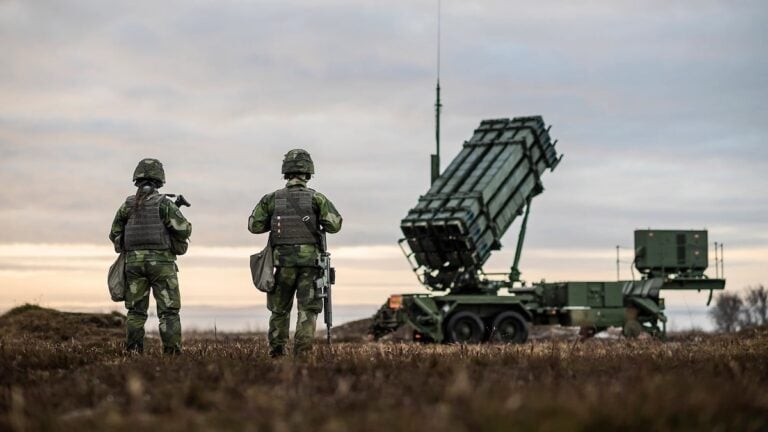
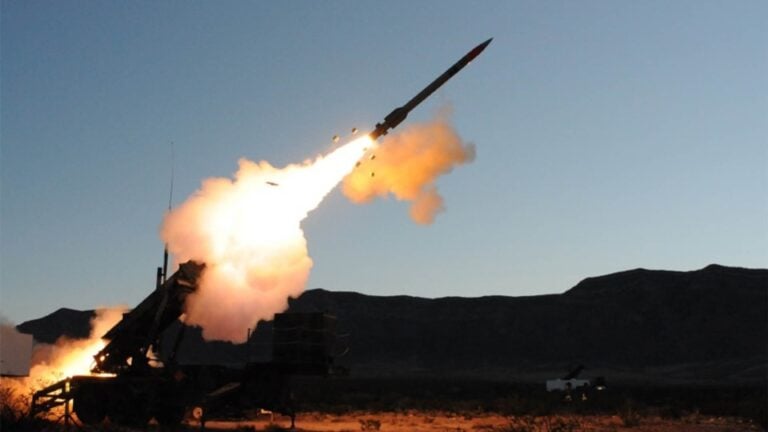
The department is placing renewed emphasis on point defense following advances by adversaries and operational experience in Iran. The effort is intended to close gaps in the protection of bases, airfields and other facilities against drones and airborne threats.
In space, the department is expanding proliferated satellite constellations and developing new defensive systems. Meink said the Space-Based Interceptor program progressed from its initial contract to flight-ready hardware in less than one year.
The Space Force is also working on its Space Data Network and will begin launching the Air Moving Target Indication constellation this month. Meink said the combined investments are intended to help both services adapt their force structure to current and future threats.
The modernization program also extends to training and daily operations. Basic Military Training now exposes recruits to flight lines, ranges and operational environments earlier, while hundreds of AI tools support tasks including sortie scheduling and data fusion.
Acquisition reform is another part of the plan. The department has created 26 Portfolio Acquisition Executive positions and delegated broad decision-making authority to accelerate delivery within defined mission areas.
Meink said most of those executives now hold Milestone Decision Authority for their programs. The change is intended to reduce layers of approval and place accountability closer to individual acquisition portfolios.
The secretary also challenged defense companies to contain costs while maintaining performance. “Many of the weapons, components, or systems we have to buy have outrun the cost curve. They perform extremely well, but the costs are growing faster than the rate of inflation,” he said.