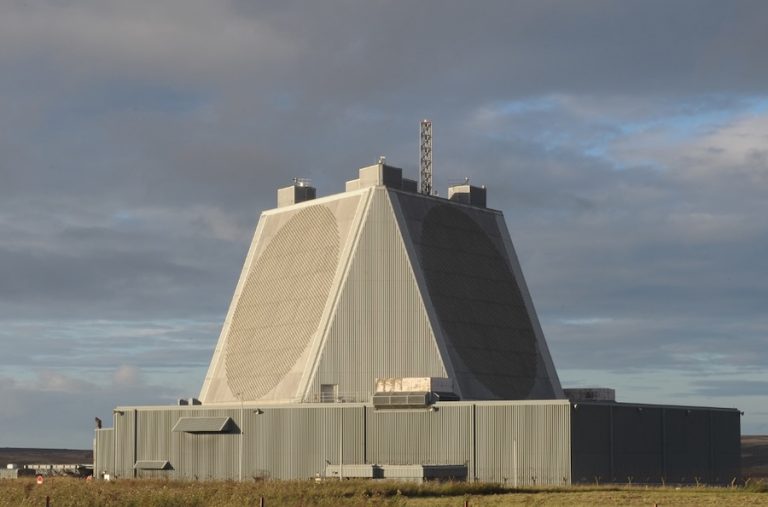

The Texas site will complete the Deep Space Advanced Radar Capability network operated by the United States in partnership with the United Kingdom and Australia. The three sensors will provide overlapping, round-the-clock coverage of geostationary orbit in all weather conditions.
The project remains subject to final planning approvals and the award of a construction contract. Once fielded, DARC will give the three allies a shared capability to monitor deep space and protect infrastructure that supports military and civilian services.
“Selecting Texas as the preferred location for the final DARC site keeps us on track to deliver a truly global deep-space sensing network with our closest allies,” said Chief of Space Operations Gen. Douglas Schiess. “This capability will improve visibility in our contested domain and reinforce our shared capacity to protect the space systems on which our nations rely.”
DARC is designed to identify, track and characterize objects and activity at geostationary distances. Compared with existing ground-based optical systems, it will offer greater sensitivity, accuracy, capacity and tracking agility.
The radar will operate continuously during the day, at night and in poor weather. It is also designed to detect smaller objects and provide operators with persistent coverage of activity in deep space.
“DARC is a strong example of how we are translating operational requirements into fielded capability through deliberate acquisition and close collaboration with our allies,” said Dr. Erich “HB” Hernandez-Baquero, assistant secretary of the Air Force for space acquisition and integration. “Completing the network architecture at the Texas site will improve resilience and provide the sustained sensing needed for long-term space domain awareness.”
The program is being delivered under a 22-year trilateral memorandum of understanding between the United States, the United Kingdom and Australia. The U.S. Space Force is responsible for leading the effort.
The first DARC sensor was completed in Western Australia in December 2024 and entered early-use operations in 2025. A second site in Pembrokeshire, Wales, remains the preferred U.K. location and is awaiting planning approval.
Guardians from Mission Delta 2 and the 20th Space Surveillance Squadron currently operate the Australian radar under an early-use agreement. The units will also support the integration of the three sensors into a single global network.
“The full DARC network will give operators a more persistent and responsive ability to detect and track activity in deep space,” said Col. Barry Croker, commander of Mission Delta 2. “That shared awareness is essential to supporting the mission and protecting the space-enabled services essential to U.S. forces and our allies.”
Civil construction at Lake Kickapoo is projected to finish in 2029. Technical testing and evaluation will follow before the site is accepted for operations in 2030.