The display opened with four F-5 Tiger II aircraft. One of the aircraft was piloted by NASA Administrator Jared Isaacman.
NASA then presented several jets from its fleet, including an F-15D and an F/A-18B. The aircraft appeared in special anniversary markings showing stars and stripes.
They were followed by MH-65E Dolphin and MH-60T Jayhawk helicopters from the U.S. National Guard. Three aircraft from the same formation, an HC-130J, C-27J and HC-144, also took part.
The U.S. Army was represented by parachutists from the Golden Knights team. The U.S. Navy was represented by its Leap Frogs parachute team.
A formation of eight Army helicopters later flew over the capital. The aircraft included AH-64 Apache, UH-60 Black Hawk and CH-47 Chinook helicopters.
The U.S. Air Force display began with transport aircraft and aerial refueling tankers. The flypast included C-17 Globemaster III, KC-135, KC-46 and C-5 Galaxy aircraft.
Aircraft assigned to units under Special Operations Command from Cannon Air Force Base in New Mexico followed. The formation included two AC-130J Ghost Rider aircraft, two CV-22 Osprey tiltrotors and two OA-1K light attack and reconnaissance aircraft.
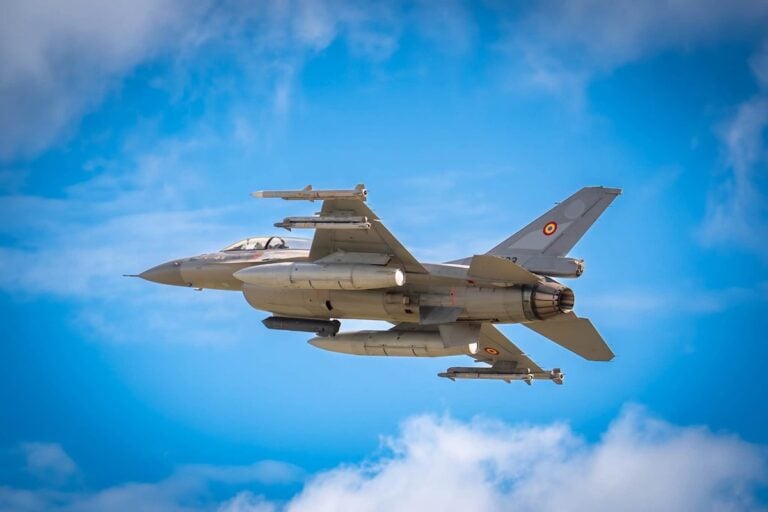
A fighter formation then crossed the National Mall. It consisted of two F-15 aircraft and two F-16 aircraft.
Helicopters from Marine Helicopter Squadron One at Joint Base Andrews in Maryland appeared next. The squadron, which routinely transports the president and other senior officials, displayed VH-3 Sea King, VH-60 White Hawk, VH-92 Patriot and UH-1N Huey helicopters.
Other U.S. Marine Corps helicopters also took part in the display. They included four MV-22 aircraft, two AH-1Z attack helicopters and two CH-53 heavy transport helicopters.
The Marine Corps segment continued with a formation of KC-130 Super Hercules, F/A-18C and F-35C aircraft. The sequence highlighted fixed-wing and rotary-wing aviation used by the service.
After 4 p.m., U.S. Navy aircraft joined the program. The Navy segment included MH-60R and MH-60S helicopters, a P-8 Poseidon patrol aircraft, a pair of F/A-18 Super Hornet fighters and another F-35C.
The Super Hornets carried out several maneuvers over the National Mall area. Their display served as an introduction to the U.S. Navy Blue Angels aerobatic team, which performed with six F/A-18E/F Super Hornet aircraft.
The displays continued with a U.S. Marine Corps demonstration team using MV-22 Osprey tiltrotors. An F-35B also demonstrated its hover capability.
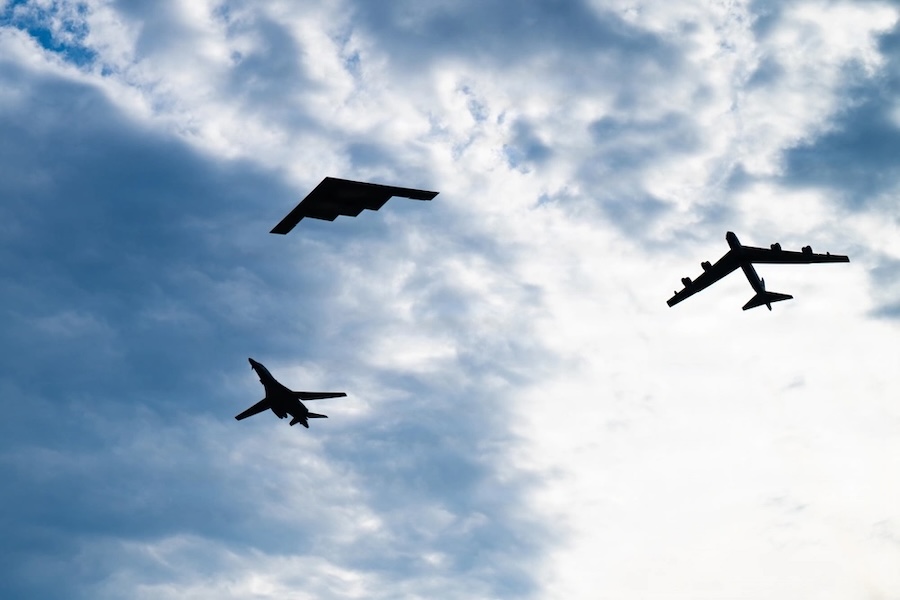
Around 6 p.m., all three strategic bomber types in service with the U.S. Air Force flew over Washington. The formation included the B-52 Stratofortress, B-1B Lancer and B-2 Spirit.
Additional F-35 Lightning II aircraft then appeared over the National Mall. This time, the aircraft were the F-35C variant used by the U.S. Navy and U.S. Marine Corps.
The U.S. Air Force Thunderbirds also performed over the National Mall with eight F-16C Fighting Falcon fighters. It was the team’s first performance over the U.S. capital since its creation in 1953.
At around 7:30 p.m., the new presidential aircraft, the VC-25B Bridge, was shown publicly for the first time. The aircraft had entered service only a few days earlier and flew with four F-22 fighters.
The display was interrupted shortly afterward because of approaching thunderstorms. Flights over the National Mall resumed at 9:45 p.m.
The resumed program allowed a B-1 bomber to conduct an afterburner flypast. The parade concluded with a large fireworks display.