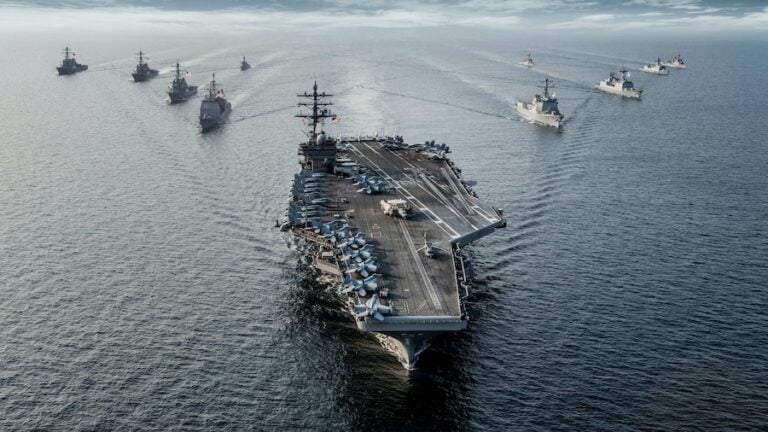
More than 3,000 participants from over 150 organizations recorded more than 2,000 flight hours. The event covered hundreds of multi-domain test objectives for the fleet and joint force.
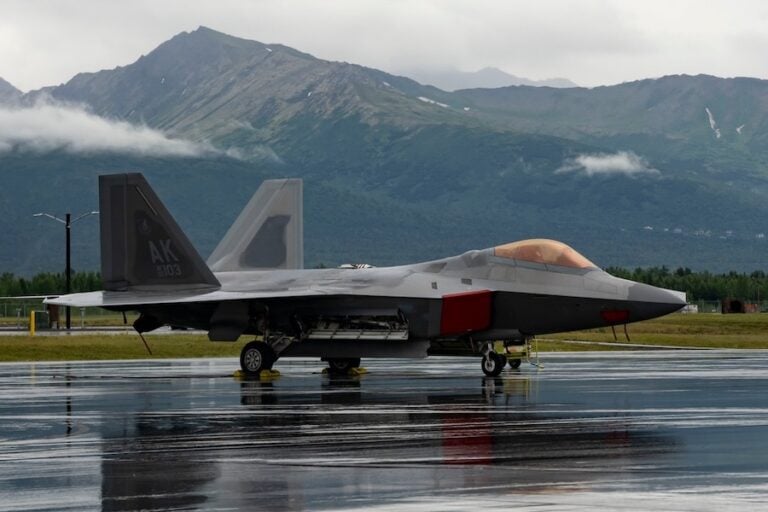
Gray Flag 2026 was the largest iteration to date, exceeding roughly 600 sorties in 2024 and more than 500 in 2025. A single test event launched 78 aircraft, another record for the program.
The Royal Australian Air Force, Royal Canadian Air Force and Royal Air Force joined U.S. Navy and Air Force test units. Surface and subsurface participants added further connections for the combined force to evaluate.
The central task was to establish whether data could move reliably between systems under operational conditions. Capt. Christopher Putre, commodore of Naval Test Wing Pacific, said simulations can miss faults that emerge only when aircraft exchange data in flight.
“You need all your lightning bolts from the various domains to reach each other in order to achieve success in a joint fight,” Putre said. “And until we test that in scenarios like this, we just don’t know it’s going to work.”
Naval Test Wing Pacific and Air Test and Evaluation Squadron 9 hosted the event with Naval Air Warfare Center Weapons Division. The division manages Gray Flag and operates the Point Mugu Sea Range, a 36,000-square-mile instrumented testing area.
“Our range, combined with other test and training ranges around us, gives us the space and instrumentation to test new systems the way the joint force will use them,” said Rear Adm. Keith Hash, the division’s commander. “We want to find the problems here, fix them here and make sure what we send to the fleet works when the warfighter needs it.”
For partner nations, the event also informs future procurement and upgrades. Royal Australian Air Force Wing Commander Trent Baldry, commanding officer of No. 1 Squadron, said Australia gained interoperability insights it could not obtain independently.
“We leave much more informed with respect to future capabilities that enable Australia to shape our requirements for future projects and future platform upgrades that increase our lethality and survivability,” Baldry said. His assessment linked the test results to decisions about future Australian capabilities.
Marine Lt. Col. Timothy Burchett, commanding officer of Air Test and Evaluation Squadron 31, said unfamiliar operating locations make network connections harder to maintain. Testing alongside partners allows participants to resolve those problems or develop workarounds before deployment.
“If we have done our jobs correctly at Gray Flag … aviators will start systems and be able to have solid interoperability with the Joint Force on the first try,” Burchett said. “Ideally, fleet aviators will directly see the fruits of Gray Flag every day; they just won’t realize it.”
Program manager Adam Madson said Gray Flag is the last point at which testers can resolve open questions and still change a system before delivery. Problems identified later can require new aircrew training and operational workarounds.
“If we don’t answer them here, our warfighter’s going to answer them in combat,” Madson said. “It will not be as lethal and it’ll be much more difficult to survive.”
Putre said a test that falls short remains useful if participants understand the cause and can identify an engineering fix. Analysts will use the event’s petabytes of data to inform the tactics aviators employ and the specifications engineers test against.