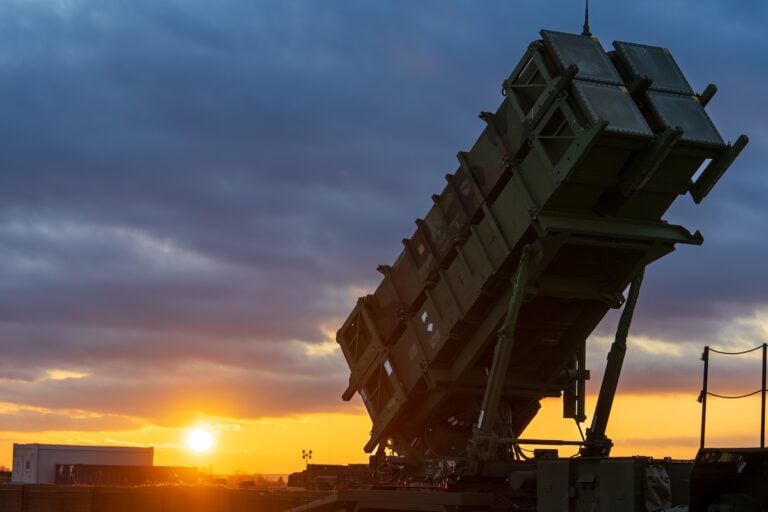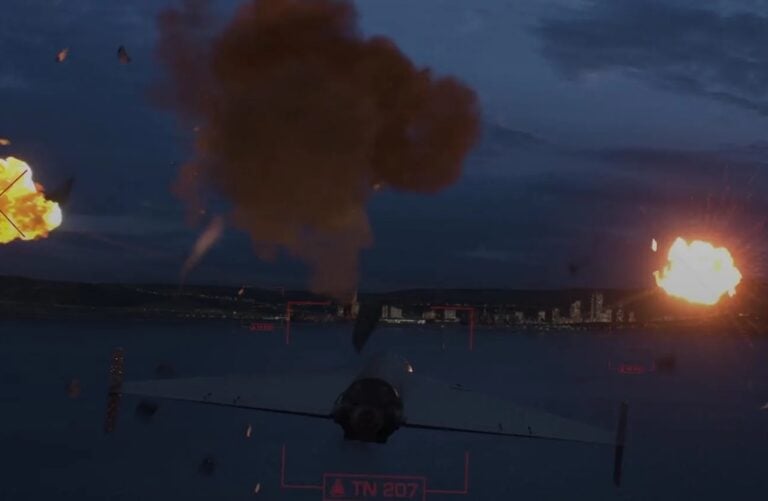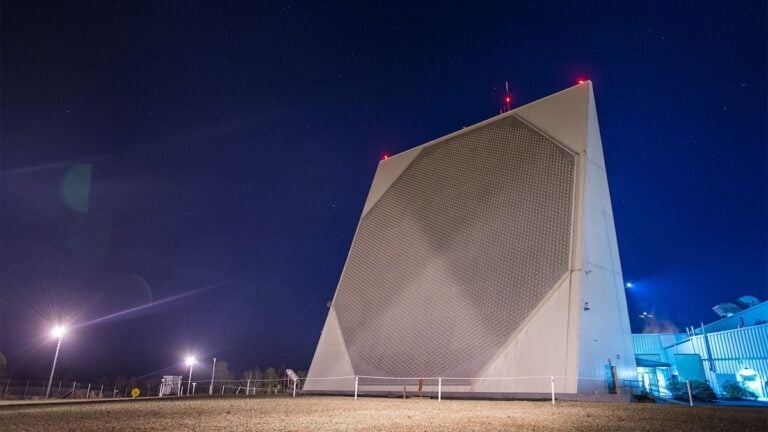

Iranian state media reported explosions in southern Iran, including in the port city of Bandar Abbas on the Strait of Hormuz. The reported U.S. target set included missile and drone launchers, ammunition depots, coastal radar sites monitoring the strait and small Iranian boats.
The strikes followed a preliminary agreement accepted by Iran and the United States on June 17. Iran later sought to maintain full control over the strait by ordering ships to use only a route designated by Tehran.
After the United States demanded a public statement from Tehran on reopening the strait, Iran’s Islamic Revolutionary Guard Corps declared that it would remain closed until further notice. That declaration, together with a night attack on the container ship Galaxy, was cited as the trigger for the latest U.S. strikes.
Iran responded by striking Sheikh Isa Air Base in Bahrain, Prince Hassan Air Base in Jordan, Ali Al-Salem and Ahmad al-Jaber military bases in Kuwait, and radar systems in Oman. Although U.S.-Iran exchanges are not new, the reported American use of maritime kamikaze drones marked a first in the history of such operations, according to CENTCOM.
Yesterday, using multiple one-way attack surface drones, CENTCOM forces successfully struck a submarine and ship maintenance facility in Iran. Three Corsair unmanned surface vessels hit the port at Bandar Abbas Naval Base, marking the first time American forces have employed sea… pic.twitter.com/bOM2kmgRxz
— U.S. Central Command (@CENTCOM) July 13, 2026
Three maritime kamikaze drones entered the port at the Bandar Abbas naval base. Footage from the area indicated that a Ghadir-class submarine was among the assets damaged.
The operation underscored how lessons from the war in Ukraine are shaping U.S. military planning, particularly in the use of uncrewed systems at sea. Ukrainian forces have used maritime drones effectively in combat, and the United States has begun applying similar concepts in its own operations.
CENTCOM has also used the Low-cost Uncrewed Combat Attack System, or LUCAS, during fighting with Iran. The system has been described as a U.S. counterpart to Shahed-136 drones.
The U.S. Navy has been building institutional structures for maritime autonomy for several years. In September 2021, it created Task Force 59 within the Bahrain-based Fifth Fleet to accelerate the use of uncrewed systems and artificial intelligence in naval operations.
In August 2025, Captain James A. Davenport took command of Task Force 59 with a mandate to move the experimental formation toward a more combat-focused role. The Navy also established Task Group 59.1, known as “The Pioneers”, to support the direct introduction of drones into fleet operations.
U.S. interest in maritime drones is driven not only by the Iran threat, but also by concerns over future operations in the Pacific. Large numbers of low-cost uncrewed surface systems could play a role in a potential conflict around Taiwan.
Washington launched the Replicator initiative in August 2023 to support mass production of thousands of low-cost autonomous air and maritime drones. In January 2024, it also started the PRIME programme to develop fast strike maritime drones.
U.S. officials identified the platform used as Saronic’s Corsair. In 2025, the U.S. Navy signed a $392 million contract with the Texas-based startup for mass deliveries of Corsair drones through 2031.
Corsair is a 24-foot, or 7.3-metre, uncrewed surface vessel with a range of more than 1,000 nautical miles, or about 1,850 kilometres. It can travel at more than 35 knots and carry up to 1,000 pounds, or about 453 kilograms, of payload.
The system is not a small disposable platform, with the value of a single drone estimated at more than $1 million. It is designed for autonomous route planning and swarm operations, supported by multi-channel satellite communications intended to resist electronic warfare interference.
Corsair’s modular design allows it to be adapted for different missions. In June, a Corsair was used by the U.S. Navy to recover two U.S. Army pilots who had entered the sea after an AH-64 Apache helicopter crash, demonstrating the same platform’s potential for search-and-rescue tasks.
The use of Corsair in both rescue and strike-related roles would place the platform at the centre of a broader shift in naval operations. It reflects the growing importance of modular uncrewed vessels that can switch between mission sets with changes in payload or configuration.
The Pentagon has also invested in a wider uncrewed systems ecosystem beyond Corsair. In July 2024, it signed a framework agreement worth $982.1 million with 88 companies to develop technologies for autonomous platforms.
That work includes universal plug-and-play interfaces that would allow drones to be quickly fitted with mission modules, including strike or reconnaissance packages. The Pentagon is also investing in AI-based navigation independent of GPS, vision systems, digital environments and a combat cloud.
Saronic’s Echelon software is intended to support swarm operations, allowing multiple drones to divide tasks during an attack. In such a scenario, some systems could draw attention and fire while others approach from different directions.
The United States is also pursuing larger uncrewed vessels that could operate as motherships for smaller drones, particularly over long distances in the Pacific. The Medium Unmanned Surface Vessel programme began in May 2026, with seven companies selected to develop final designs for medium autonomous vessels.
Saronic has invested $300 million in shipyard modernisation to support the construction of larger uncrewed vessels. Its Marauder project is a 55-metre, or 180-foot, platform intended to carry up to 150 tonnes of cargo and potentially serve as a mothership for smaller uncrewed systems.
Marauder has a declared range of 4,100 nautical miles, or about 7,600 kilometres, and a maximum speed above 25 knots. Its cargo deck can carry up to four 40-foot containers or eight 20-foot containers, giving it capacity for modular payloads and extended autonomous operations.