The vehicles were developed to technical requirements set by Brave1, Ukraine’s defence innovation cluster. Grant funding allowed the developers to progress from the initial concept to a finished prototype in less than six months.
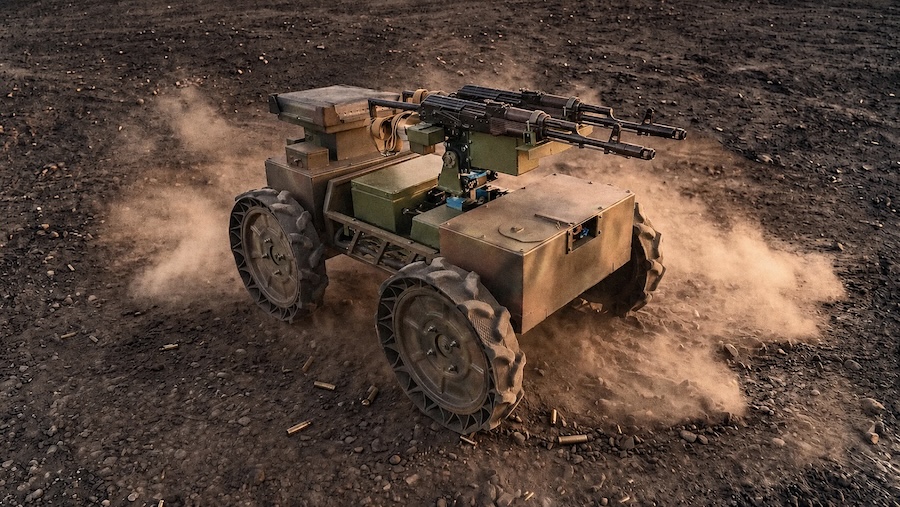
Using standard Kalashnikov rifles is intended to reduce production costs and allow the systems to be deployed at scale. Each vehicle uses a four-wheel chassis with airless tyres and a protected hull designed to withstand fragments, bullets and punctures while operating across difficult terrain.
The turret can carry two assault rifles simultaneously, increasing the volume of fire available during offensive and defensive operations against enemy infantry. Its modular design also allows the weapon station to be installed on other wheeled or tracked unmanned ground vehicles.
Several units of the Armed Forces of Ukraine are now assessing the systems under combat conditions. The Ministry of Defence said there were confirmed cases of successful use by Special Operations Centre “A” of the Security Service of Ukraine against enemy ambushes involving drones.
Ukraine’s Ministry of Defence is working to expand the frontline deployment of robotic systems. The vehicles are intended to perform the most dangerous tasks in areas exposed to direct fire, reducing risks to infantry and protecting military personnel.
Since the beginning of 2026, Ukrainian unmanned ground vehicles have carried out more than 100,000 frontline missions. Those operations were performed in place of Ukrainian military personnel, according to the ministry.