The Baltic Sea region is being transformed by three forces at once: Russia’s war against Ukraine, Finland and Sweden’s accession to NATO, and growing pressure on the Alliance’s eastern flank. Together, these developments have changed the basic geography of defence in Northern Europe.
For the Nordic and Baltic states, the Baltic Sea is no longer a space between separate national security policies. It has become a central NATO theatre, linking the High North, Poland, the Baltic states and the wider European reinforcement network. In a crisis, its ports, airfields, islands, seabed infrastructure and maritime routes would help determine how quickly allied forces could move, sustain themselves and defend exposed territory.
Carl Bildt, Sweden’s former Prime Minister and Foreign Minister, set the strategic frame clearly: “Russian aggression on Ukraine is the defining issue. The outcome will decide the future of European security.” His point reached beyond Ukraine alone. Russia’s war has forced Europe to think again about deterrence, readiness and the cost of underestimating long-term threats. Even if Moscow remains heavily committed in Ukraine, the Nordic-Baltic region cannot treat this as a pause in danger. It is a window for preparation.
That preparation begins with integration. Sweden’s accession to NATO, following Finland’s, has transformed the defence map around the Baltic Sea. It gives the Alliance greater operational depth, stronger access to the northern Baltic area and new possibilities for air and maritime coordination. But geography does not automatically produce security. The strategic value of Sweden and Finland inside NATO will depend on whether plans, command structures, logistics, intelligence and industrial capacity are brought together in practical ways.
The Baltic Sea is now both an advantage and a vulnerability. On paper, NATO’s position in the region has become stronger. In practice, the sea remains crowded, shallow, heavily trafficked and exposed to hybrid operations. Undersea cables, energy links and pipelines are difficult to monitor continuously. Commercial vessels, including ships operating in legal grey zones, can complicate attribution and response. Drones and electronic warfare add another layer of uncertainty, especially when hostile activity remains below the threshold of open armed attack.
This makes maritime domain awareness a strategic requirement, not a technical luxury. The region needs a clearer shared picture of what is happening above, on and below the surface. That requires integrating data from sensors, patrol vessels, coastal surveillance systems, satellites, cyber monitoring and intelligence networks into a common operational picture. Without that, NATO risks identifying hostile activity only after it has already created political pressure or caused operational damage.
The same logic applies in the air. Major General Vahur Karus, Chief of Staff of the Joint Headquarters of the Estonian Defence Forces, described the urgency in blunt terms: “If something happens tomorrow, I need to get weapons to my soldiers to fight back.” That sentence goes to the heart of eastern flank defence. Deterrence is not only about major platforms or long-term procurement plans. It is about whether forces have what they need, where they need it, when the first hours of a crisis begin.
Drone threats show how narrow that margin can be. Small unmanned systems can cross borders quickly, test national rules of engagement and force governments to make decisions in seconds. The question is not simply whether a drone can be shot down. It is whether the legal, operational and political framework allows a state to respond fast enough while keeping control of escalation. For countries on NATO’s frontier, that is already a frontline problem.
The discussion also pointed to a second lesson from Ukraine: resilience depends on the defence industrial base. European defence companies were shaped for decades by peacetime assumptions, limited stockpiles and long delivery cycles. That model is no longer adequate. The eastern flank needs ammunition, air defence, counter-drone systems, spare parts, repair capacity and software updates at wartime speed. A promise of delivery years from now does little for a commander facing a crisis tomorrow.
This is where the link between large defence companies and local industry becomes strategically important. Estonia’s defence technology sector is rather small, but its strength lies in agility, especially in software, autonomous systems and rapid adaptation. Leet Rauno Lember of Marduk Technologies captured this point when he said: “In software development, being small is being agile.” For a frontline state, agility is not a slogan. It is a form of resilience.
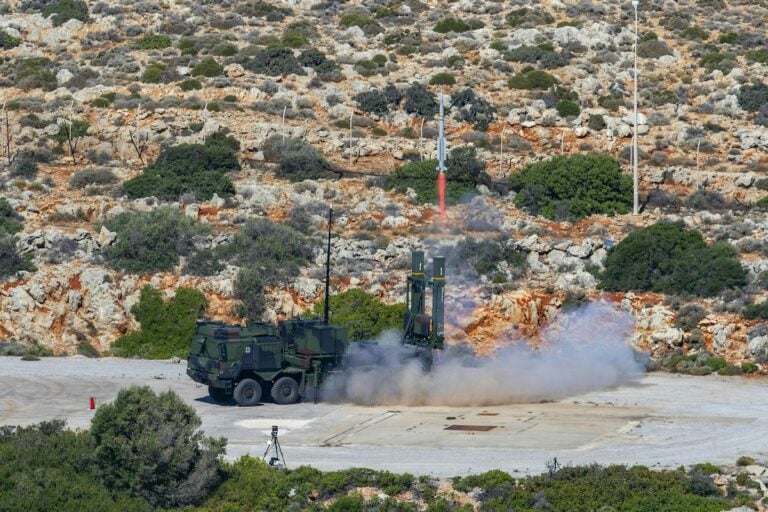
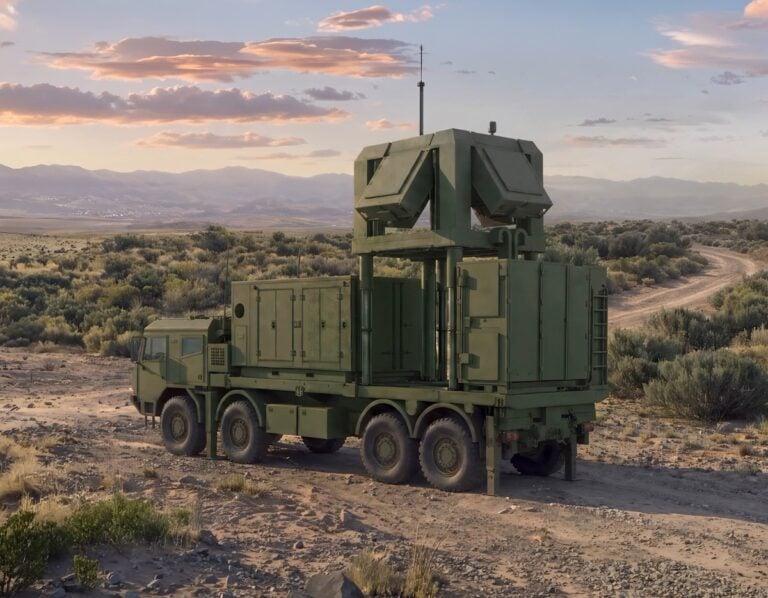
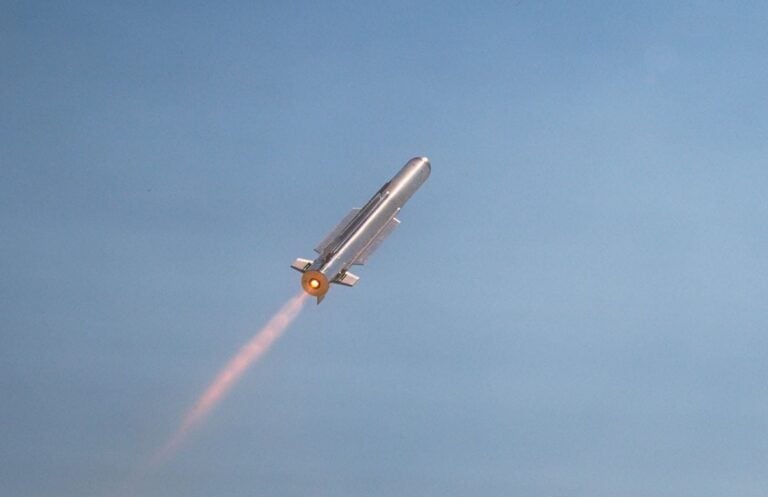
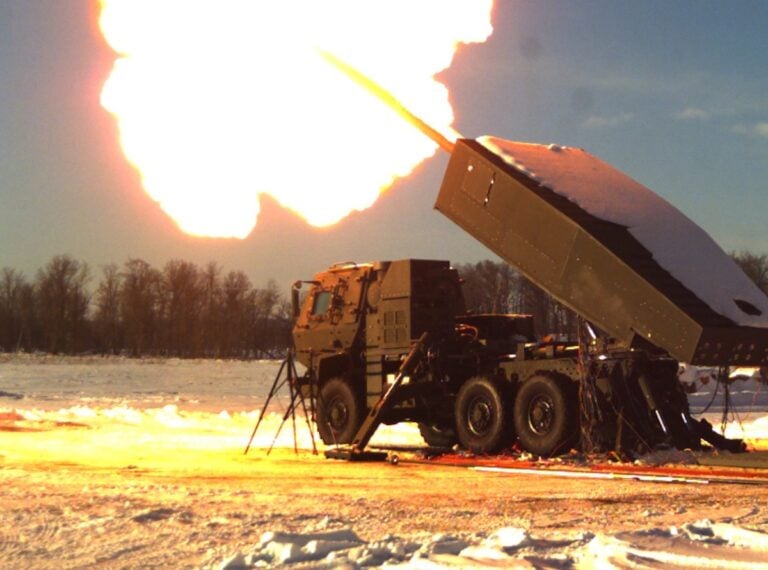
The same issue was taken up from the industrial side by Anders Carp, Deputy CEO of Saab. His contribution was strongest when framed not around individual products, but around the type of partnership the region needs: investment that strengthens local industry, supply relationships that hold when logistics are tested, and the ability to maintain and adapt capability close to where it will be used. In the discussion on counter-drone and short-range air defence, mobile systems such as MSHORAD were relevant less as stand-alone purchases than as examples of how sensors, command-and-control and effectors must be integrated into a broader NATO air-defence architecture.
The point is wider than any single system. Capabilities such as short-range air defence, counter-drone solutions, coastal surveillance and patrol vessels matter because they contribute to a layered defence posture. NATO’s eastern flank needs the ability to detect early, decide quickly, respond proportionately and continue operating after the first disruption. That requires systems that are interoperable, easy to maintain and usable by national forces under pressure and in all kind of environment.
For Sweden and Estonia, the strategic logic is especially clear. Sweden brings geography, naval and air capabilities, industrial depth and access to the central and northern Baltic Sea. Estonia brings frontline experience, a sharp threat perception, cyber and software strengths, and a strong incentive to move quickly. Together, they reflect the wider Nordic-Baltic task: turning proximity into operational partnership.
Björn Nobel, a retired Swedish naval officer, underlined the maritime dimension of this task. The Baltic Sea is not only a line on the map. It is the main corridor through which reinforcement, sustainment and allied credibility would have to move. Ports, sea lanes and naval support cannot be improvised after a crisis begins. They need to be exercised, protected and connected in advance.
The broader conclusion is that deterrence in the Baltic region can no longer be built in separate national compartments. Land defence in Estonia, maritime security around Gotland, air defence over the eastern flank, protection of undersea infrastructure and industrial mobilisation are all parts of the same problem. If one layer is weak, the others become more exposed.
The most important message from Tallinn was therefore not about one event, one company or one capability. It was about the need to close the gap between political commitment and operational readiness. NATO’s northern enlargement has created a stronger strategic position, but it has also raised expectations. The Baltic Sea region must now turn that position into credible defence.
That means integrating forces, strategies and industries before the next crisis, not during it. It means treating hybrid pressure as part of the deterrence problem. It means giving commanders practical options in the first minutes and hours of a crisis. And it means recognising that the defence of NATO’s eastern flank now begins as much in the Baltic Sea as it does on land.
The panel included Carl Bildt, former Swedish Prime Minister and Foreign Minister; Major General Vahur Karus, Chief of Staff of the Joint Headquarters of the Estonian Defence Forces; Col. (Ret.) Björn Nobel, former officer in the Swedish Navy; Leet Rauno Lember, COO of Marduk.