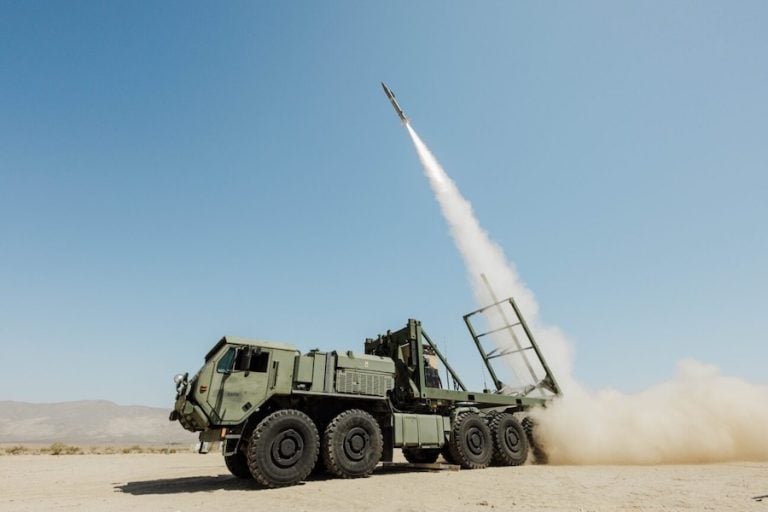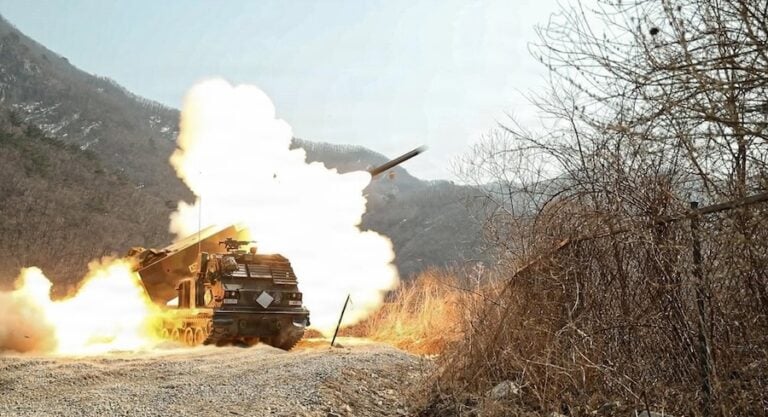

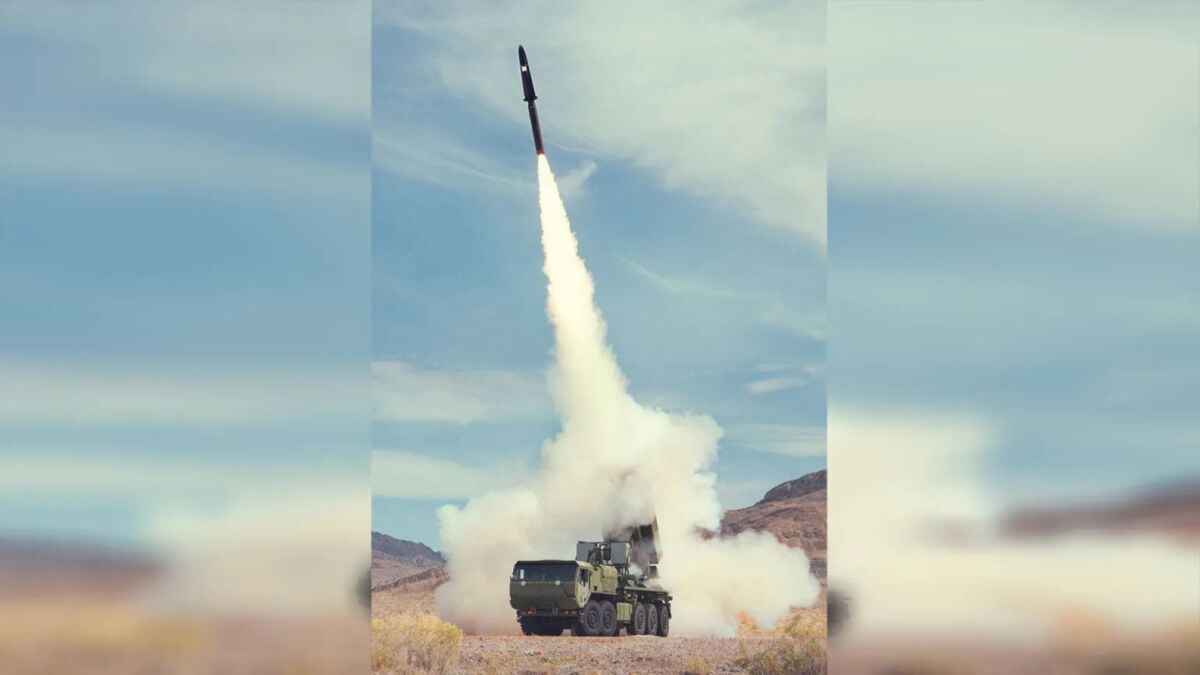
The earlier Blackbeard GL concept called for adapted canisters from the MFOM ammunition family, which includes GMLRS, ATACMS and PrSM. The new configuration raises questions about compatibility with M142 HIMARS and M270 MLRS, but the photograph does not establish whether either launcher could fire the missile.
A dedicated launcher could make Blackbeard GL a competing system to missiles supplied by Lockheed Martin. The photograph suggests progress toward a production configuration, although it does not confirm a serial production date.
Castelion announced a U.S. Navy production delivery order worth up to $200 million in mid-September. It covers manufacture, assembly, testing and delivery of an initial Blackbeard lot, following 50 Early Operational Capability weapons ordered in June.
The order was issued by Portfolio Acquisition Executive Aviation through its Future Capability Development and Integration Aviation Rapid Capabilities Cell. It follows a separate production framework agreement announced earlier this year with the Department of War.
That framework provides for a guaranteed minimum of 500 Blackbeard missiles annually once testing and validation are complete. It also establishes a pathway to purchase thousands of additional weapons.
In late September, the Navy reported testing Blackbeard aboard an F/A-18E/F Super Hornet at Naval Air Station Patuxent River, Maryland. The aircraft carried two test articles, neither of which was released or live-fired.
The missile is intended to give carrier-based fighters a responsive, high-speed strike capability against targets in contested anti-access and area-denial environments. The Navy also seeks to expand its available weapons inventory through lower-cost, high-volume production.
Blackbeard is described as a two-stage design with a booster wider than the weapon’s forward section. That forward section appears to be an unpowered hypersonic glide vehicle, with an X-shaped tail and longitudinal surfaces that may support gliding flight.
No new performance figures accompanied the ground-launcher photograph. Earlier reports suggest speeds above Mach 5 and a range of around 800 kilometers or less, but those estimates remain uncertain.
Castelion’s development work on the system is expected to be completed in 2027. Production under the Department of War framework remains dependent on completing testing and validation.