GCAP is designed to provide future combat air capability for partner nations in Europe and the Indo-Pacific. It is also intended to contribute to wider global security and create partnering and export opportunities for other nations.
The programme is more than a next-generation aircraft project. It is a strategic industrial collaboration intended to sustain and grow sovereign combat air skills and capabilities across the three partner countries.
GCAP is expected to create and secure tens of thousands of highly skilled jobs across the UK, Italy and Japan. Its wider industrial and economic impact is expected to span decades while supporting national combat air industries.
The programme brings together the governments of the three countries and their respective industries around shared military and industrial objectives. It aims to deliver capability able to defeat future threats beyond 2040.
GCAP is managed through the GCAP International Government Organisation, known as GIGO. The GCAP Agency is the trinational government entity empowered by the partner nations to manage, coordinate and execute all phases of the programme.
The GCAP Agency represents the defence ministries of Italy, Japan and the UK. It has placed the first international contract with Edgewing to deliver the programme on behalf of the three nations.
Edgewing is the industrial lead for GCAP and is accountable for the design and development of the combat aircraft. It is an international joint venture created by BAE Systems, Leonardo and Japan Aircraft Industrial Enhancement Co. Ltd, with each company holding 33.3% ownership.
Edgewing will remain the design authority for the aircraft throughout its life. Its work will include aircraft engineering, airworthiness and certification.
The company is headquartered in Reading in the UK, where work is already under way. Edgewing is also establishing additional sites in each of the three partner countries to support development of the aircraft.
BAE Systems, Leonardo and Mitsubishi Heavy Industries are described as custodians of their nations’ combat air capabilities. As lead systems integrators, they will bring together people, expertise, infrastructure and systems for development and integration of the next-generation combat air system.
GCAP is related to, but not the same as, Tempest. GCAP is the international collaborative programme between the UK, Japan and Italy, while Tempest is the UK name for its next-generation combat aircraft to be delivered through GCAP.
Team Tempest is the UK partnership involving the Ministry of Defence, BAE Systems, Rolls-Royce, Leonardo UK and MBDA UK. The Team Tempest partners provide UK expertise into GCAP across combat air systems integration, propulsion, sensors, electronics, avionics and weapons.
A consortium involving Leonardo in the UK and Italy, Mitsubishi Electric Corporation in Japan and ELT Group in Italy is developing integrated sensing, non-kinetic effects and communications systems for the GCAP fighter. The capability is known as ISANKE and ICS and is being delivered through GCAP Electronics Evolution.
Rolls-Royce, IHI and Avio Aero have formed a consortium to design and develop the power and propulsion system for GCAP. This will provide both propulsive power and an integrated source of electrical power for the aircraft’s higher power loads.
The Excalibur flight test aircraft is not the GCAP fighter itself. The 757-based flying laboratory, being developed by Leonardo UK and 2Excel, is part of the UK Future Combat Air System project but will be used to test technology being developed for GCAP.
The UK Combat Air Flying Demonstrator is also separate from the GCAP aircraft. It is a complementary UK-funded programme led by BAE Systems to help industry transition from fourth- and fifth-generation platforms to sixth-generation capability.
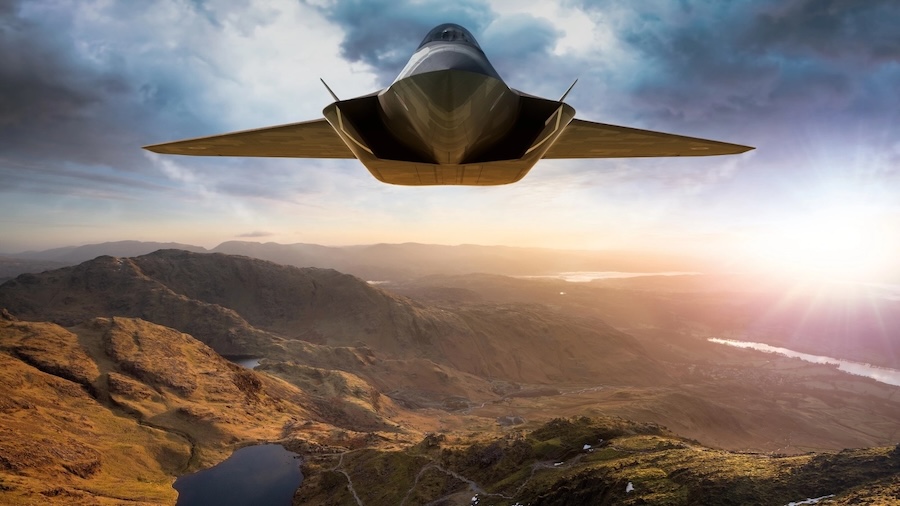
The full-scale aircraft replica shown at DSEI and Farnborough is a realistic concept model of the future GCAP fighter. Final decisions on the aircraft’s name will be taken later in the programme and separately by each nation or air force.
GCAP currently covers the fighter jet and its systems. The aircraft is being designed to sit at the heart of a system of systems and to integrate with uncrewed aircraft, although responsibility for accompanying drones has not yet been determined.