The ship holds NATO command ship duties until mid-2027 and would lead a multinational naval force during a global crisis. A command staff has spent several weeks aboard, familiarising itself with the carrier and establishing how it would operate if called upon.
Training this autumn is split between UK waters and the eastern Atlantic. It will prepare Queen Elizabeth for more complex exercises in 2027, including NATO’s Steadfast Defender, as the carrier works towards taking over flagship duties from HMS Prince of Wales.
Before flying resumed, the crew had to demonstrate its ability to handle emergencies both on the flight deck and below decks. Drills included responding to an aircraft crash, recovering a pilot and tackling an engine-room fire with casualties.
A Commando Wildcat from 847 Naval Air Squadron at Yeovilton became the first aircraft back aboard following the dry-dock re-certification period. Maritime Wildcats from 815 Naval Air Squadron, maritime Merlins from 814 Naval Air Squadron and Commando Merlins from 845 Naval Air Squadron subsequently joined the flying programme.
The helicopters practised launches, recoveries and refuelling with engines running, putting the aircraft handlers, flying control teams and bridge personnel through their paces. Three pilots earned deck landing qualifications during the training.
Daytime helicopter certification is the first major step towards embarking an air wing of F-35B Lightning II stealth fighters, helicopters and drones. Gunnery crews also practised machine-gun firing to test their accuracy, reactions and night-vision skills.
Queen Elizabeth was commissioned into the Royal Navy on 7 December 2017, following a construction contract signed in May 2008, keel laying in July 2009 and launch in July 2014. Sections were built at six UK shipyards before final assembly at Rosyth Dockyard on the Firth of Forth.
The Queen Elizabeth class displaces 70,600 tonnes and has flight decks measuring 280 metres by 73 metres, with an air group of 40 aircraft including F-35B fighters and helicopters. The Royal Navy operates two carriers of the class: Queen Elizabeth and Prince of Wales.
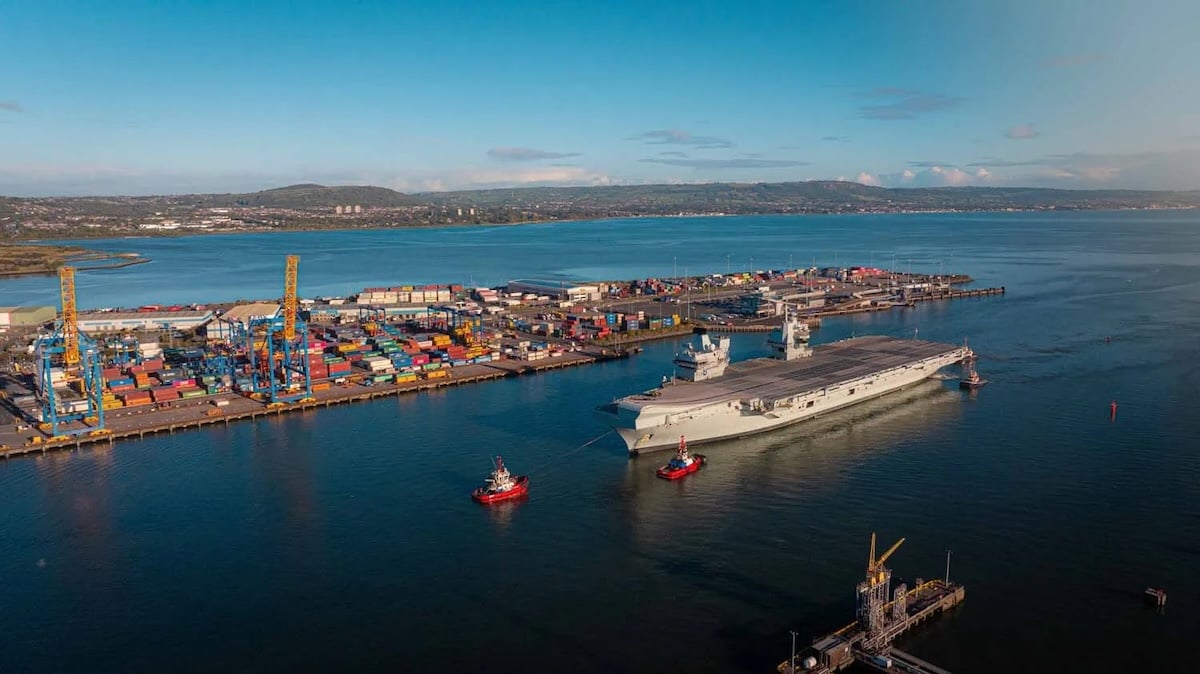
The carrier recently paused training to visit Belfast, becoming the first Royal Navy aircraft carrier to call at the city since HMS Centaur in 1965. It welcomed cadets, Royal Navy Association members and families from the Army’s Northern Ireland-based 38th Brigade.
“It has been a huge honour for us to be the first Queen Elizabeth-class carrier to visit Belfast and is a real proof of concept for future visits,” said Captain Claire Thompson, the ship’s commanding officer. “We will definitely strive to get back within a shorter timeframe than the previous 61-year gap between aircraft carriers.”