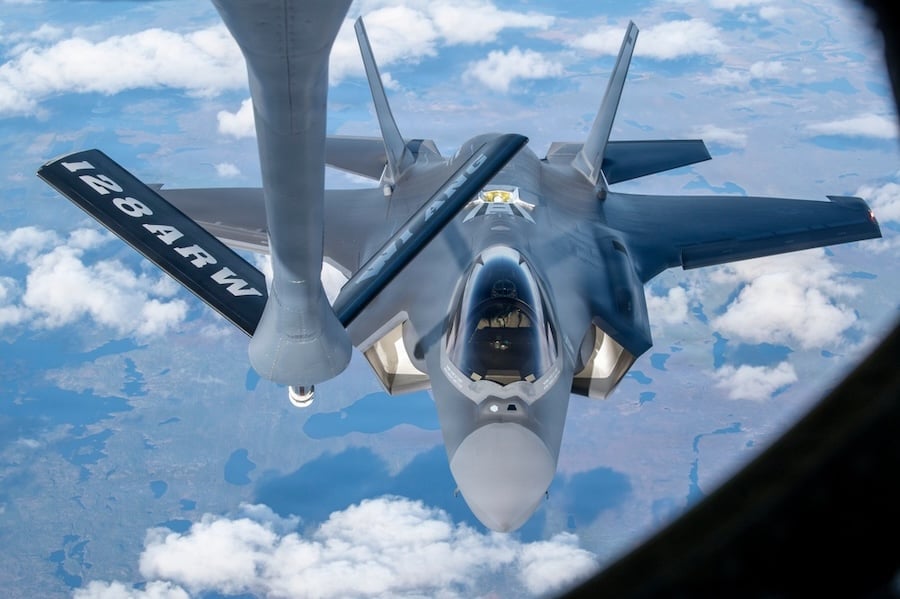
P40 raises cooling capacity from about 32 kilowatts to 40 kilowatts through software changes and targeted improvements to liquid cooling. Honeywell said the upgrade responds to rising thermal demand from more capable sensors, mission systems and onboard processing.
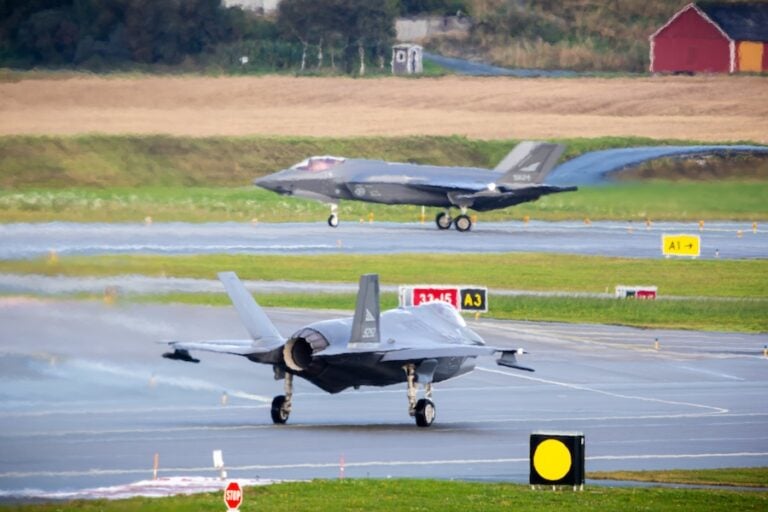
The upgrade can be installed alongside the F-35’s planned Engine Core Upgrade. This would allow operators to add cooling capacity during an already scheduled maintenance event.
“Operators need additional cooling capacity and improved readiness on a timeline that matters,” said Matt Milas, president of Defense and Space at Honeywell Aerospace. “P40 delivers both by building on the proven PTMS architecture already operating across the global F-35 fleet.”
Honeywell said P40 would provide additional thermal capacity several years before a replacement architecture could be developed, qualified and fielded. The company is positioning the upgrade as the first stage of a phased modernization plan that could eventually increase capacity to 62 kilowatts and beyond.
The existing PTMS performs 14 mission- and safety-critical functions on the F-35. These include auxiliary and emergency power, engine starting, environmental control and thermal management.
The system has accumulated more than 1 million flight hours across the global F-35 fleet. Honeywell said replacing the deeply integrated architecture would require extensive redesign, qualification, airframe integration and fleetwide transition work.
P40 is also expected to improve system reliability. Honeywell and the aircraft’s original equipment manufacturer analyzed nearly 1 million flight hours to identify the causes of non-resettable in-flight shutdowns attributed to Honeywell.
Corrective measures incorporated into P40 are projected to reduce those events by about 30%. Further reliability initiatives are intended to improve performance and reduce maintenance requirements across the fleet.
The upgrade retains the repair and support infrastructure already used by F-35 operators and partner nations. This includes qualified maintenance facilities, existing tooling and technical expertise.
Honeywell said retaining the current architecture would reduce certification, technical and schedule risks while limiting transition costs and operational disruption. It would also preserve fleet commonality as operators add cooling capacity in phased increments.