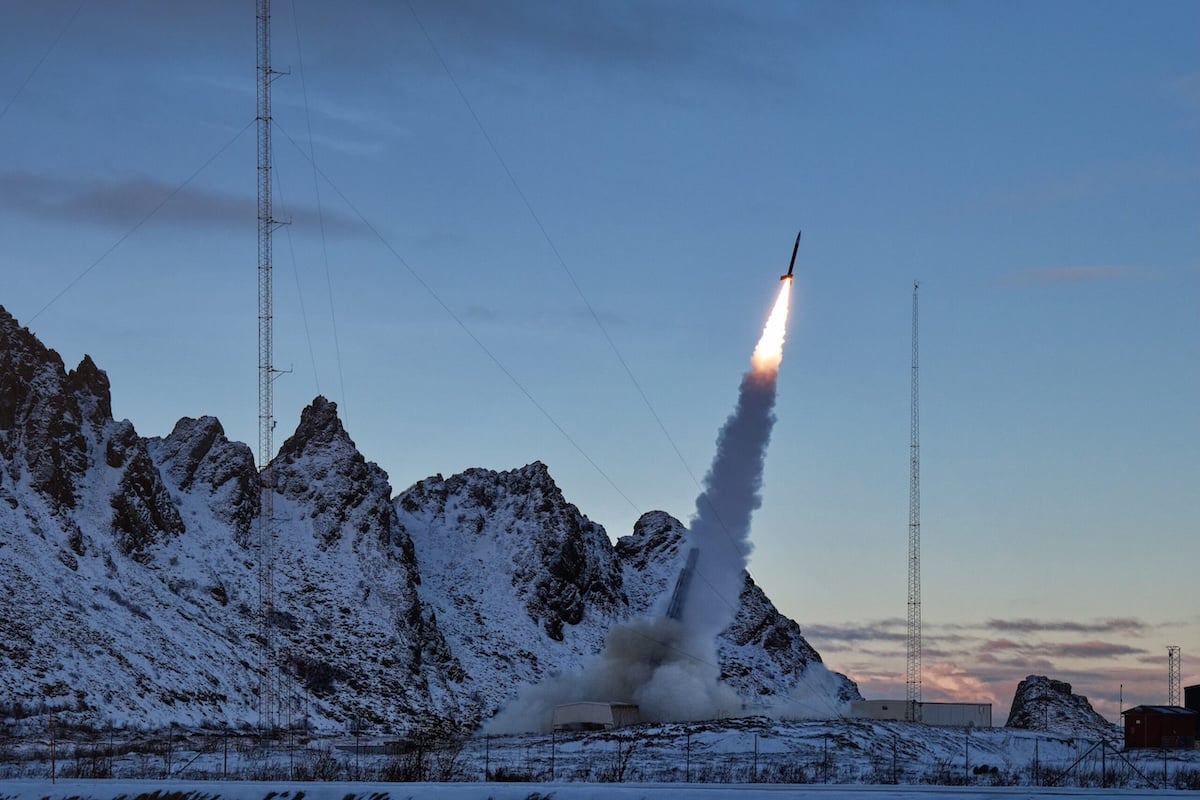
Lightspeed and General Catalyst co-led the Series B round, with participation from existing investors including Plural and 201 Ventures. The financing, announced on 2 November, follows a February flight test of the company’s HS-1 prototype.
Hypersonica said the prototype exceeded Mach 6 over a range of more than 300 kilometres, making it the first privately funded European defence company to reach that milestone. The company also said its development model reduces costs by more than 80% compared with conventional approaches.
“Series B marks our transition from demonstration to delivery,” co-founders Dr Philipp Kerth, chief executive, and Dr Marc Ewenz, chief technology officer, said in a joint statement. “This funding will accelerate development, increase testing cadence, support European reindustrialisation and help ensure Europe has access to sovereign capability developed and produced in Europe.”
Since the test flight, Hypersonica has expanded its engineering team, deepened engagement with governments and strengthened European industrial partnerships. It develops, owns and controls its technology in Europe, with the aim of supplying European allies with capabilities free of US International Traffic in Arms Regulations restrictions.
The company cited an initial £770 million over four years allocated to the UK-German Deep Precision Strike programme under Britain’s Defence Investment Plan. It also highlighted a NATO-led multinational initiative announced in July that envisages £37 billion of investment in deep precision strike capabilities over the next decade.
“Hypersonica is redefining how advanced defence capability gets built,” said Alexander Schmitt, a partner at Lightspeed. “The team pairs deep technical expertise with exceptional speed of execution, and the strength of our support reflects our confidence in both the technology and their ability to deliver.”
The new capital will fund more frequent tests and help build the technology and manufacturing capacity needed for the programme. Hypersonica said its goal remained to develop and produce hypersonic strike systems in Europe for European and allied customers.
“Strategic autonomy begins with the ability to build critical technologies at speed, at scale and at a fraction of the cost of traditional systems,” said Jeannette zu Fürstenberg, president and managing director at General Catalyst. “That is exactly what Philipp, Marc, and the Hypersonica team are doing.”