
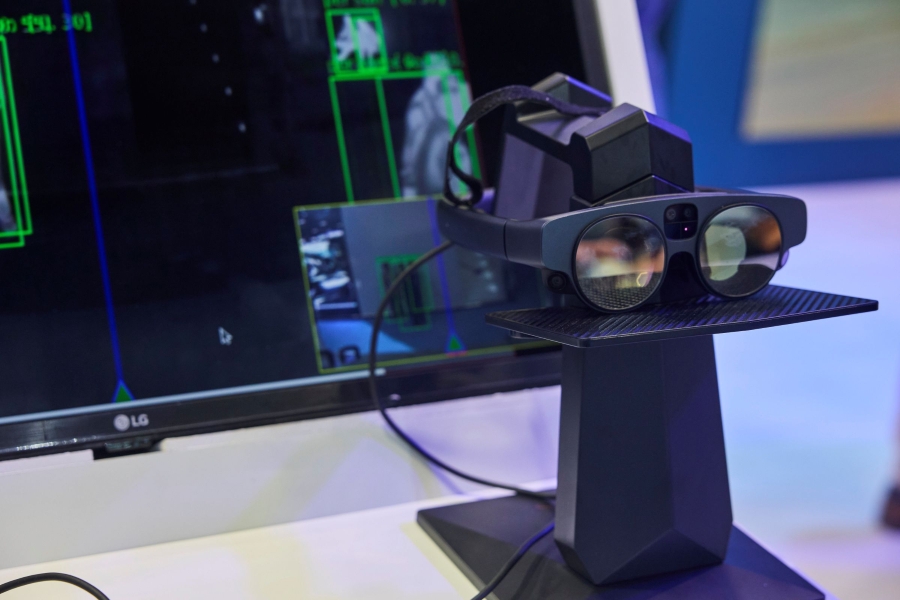
The system is designed to improve situational awareness and crew survivability in complex operating environments, including urban areas. It allows personnel to monitor external threats without relying only on periscopes, viewfinders or internal display screens.
Images captured by the vehicle’s cameras are projected through the glasses and supplemented with information from the mission system. Indra said this creates a continuous, coherent and real-time 360-degree view of the vehicle’s surroundings.
Information from different sources can be combined into a single panoramic image or distributed across multiple configurable virtual screens. The company said the approach reduces the need for crews to interpret fragmented or dispersed imagery from separate displays.
The interface can also adapt the information shown to the role of each crew member, including the driver, vehicle commander and gunner. It can further adjust the data presented according to the phase of an operation, with the aim of reducing cognitive load and supporting decision-making under fatigue or stress.
Indra said the capability represents a significant step in the digitalization of the combat station. The system combines external imagery, mission data and a human-machine interface within a single visual environment intended to improve safety, effectiveness and situational understanding.
The technology forms part of Indra’s strategy to develop systems for the next generation of European main battle tanks and to modernize armored vehicles already in service. The company expects future armored vehicles to operate as connected nodes within broader networks rather than as isolated platforms.
Indra said this networked approach will form part of a wider system of systems designed to improve battlefield effectiveness. The augmented-reality technology reflects the company’s vision of future armored vehicles as connected, intelligent platforms centered on the combatant.