The European defence group is framing its presence around integration, industrial partnerships and global security. It said the current geopolitical environment is increasing demand for systems that can operate across domains and use artificial intelligence to detect and counter threats.
Leonardo said business continuity, growth and stronger industrial capacity are central to its industrial plan. The company also pointed to its established UK footprint, where it employs nearly 10,000 people and works with a significant domestic supply chain.
Lorenzo Mariani, Chief Executive Officer and General Manager of Leonardo, said: “We are experiencing a period of profound transformation in the international landscape, one that requires an increasingly robust, innovative and responsive industrial capability.” He added: “Strengthening production capacity, increasing supply chain resilience, accelerating the development of new technologies and investing in skills are all essential to sustaining the sector’s growth and addressing evolving security requirements.”
“Leonardo is meeting this challenge by combining the expansion of its industrial base with ever stronger international cooperation.” Mariani said: “Innovation, speed of execution and strategic partnerships are key enablers for developing the capabilities demanded by today’s environment and contributing to global security.”
At Farnborough, Leonardo is presenting a portfolio designed for operational environments shaped by hybrid threats. The company said its focus is not only on platforms, but on integrated capabilities that collect, share and exploit data for faster decisions.
That approach is built around linking platforms, sensors, systems and operational capabilities inside sovereign architectures. Leonardo said it will also remain open to partnerships that create the scale needed for quality, responsiveness and competitiveness.
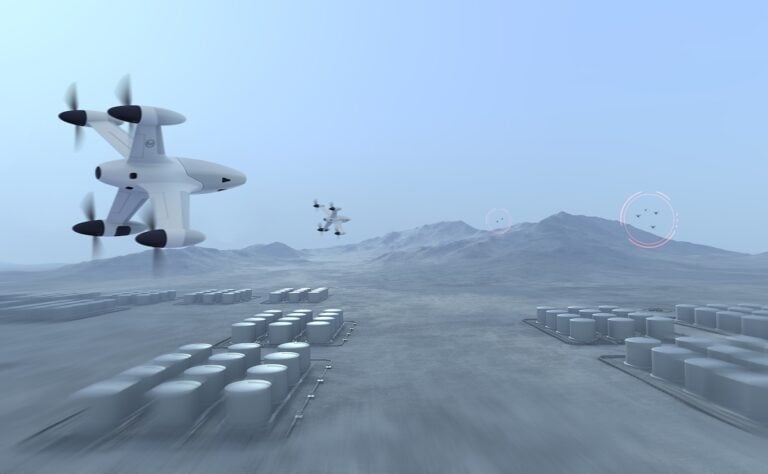
The air domain will be one of the main areas of focus. Leonardo will show programmes and technologies including Eurofighter Typhoon, the Global Combat Air Programme, the M-346 Block 20 and M-345 trainers, the AW149 helicopter and the Proteus autonomous helicopter demonstrator.
The company will also highlight uncrewed systems, counter-UAS technologies and Collaborative Combat Aircraft concepts. Its partnership with Turkish aerospace company Baykar through the LBA Systems joint venture is part of that wider future air ecosystem.
In the land domain, Leonardo is presenting its expanded industrial position through Leonardo Rheinmetall Military Vehicles and the recent acquisition of IDV. Its portfolio includes armoured vehicles, artillery, radar, helicopters and command, control and communications systems designed to operate as a connected force.
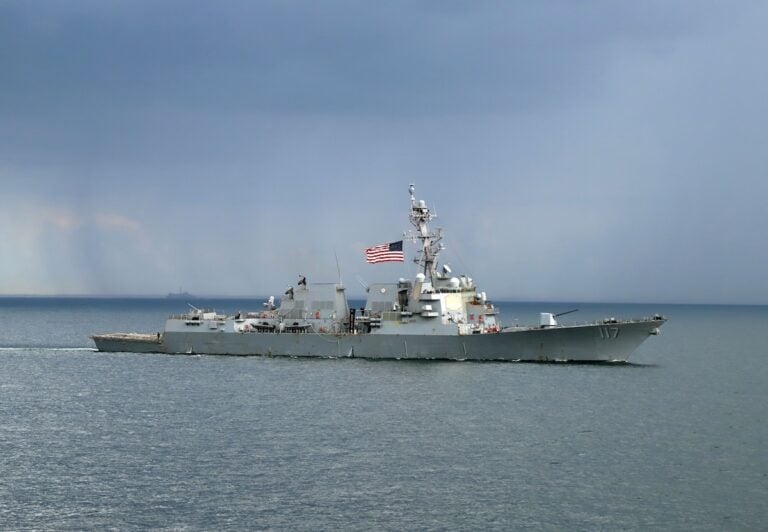
The maritime display will focus on next-generation sensors and Combat Management Systems. Leonardo said its naval offer also includes unmanned systems, embarked helicopters, naval guns, guided munitions, radar and command-and-control systems.
Space is being presented as a strategic growth area for the group. Leonardo said its work includes space surveillance, in-orbit services and a proprietary Earth observation constellation for civil and defence users.
That constellation is intended to speed the acquisition and distribution of information. It will use onboard artificial intelligence, in-space data processing and direct satellite-to-satellite communications, according to the company.
Leonardo will also promote the “Michelangelo Dome” as the clearest expression of its multi-domain model. The architecture connects sensors, command-and-control systems and effectors within a single operational ecosystem.
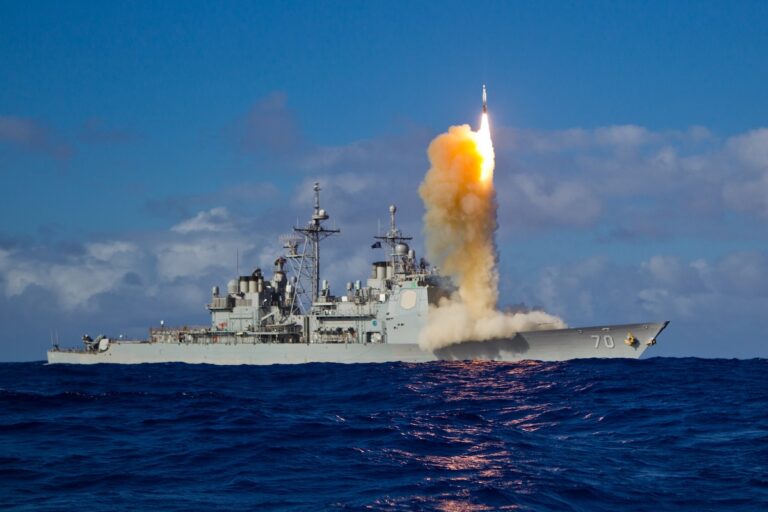
The system is designed to integrate air and missile defence capabilities into a scalable structure. Leonardo said it supports coordinated operations across all domains and improves responses to evolving threats.
The Farnborough display places Leonardo’s industrial message alongside its technology portfolio. The company is using the show to link production capacity, international cooperation and integrated defence systems at a time when armed forces are seeking faster delivery and more resilient supply chains.