
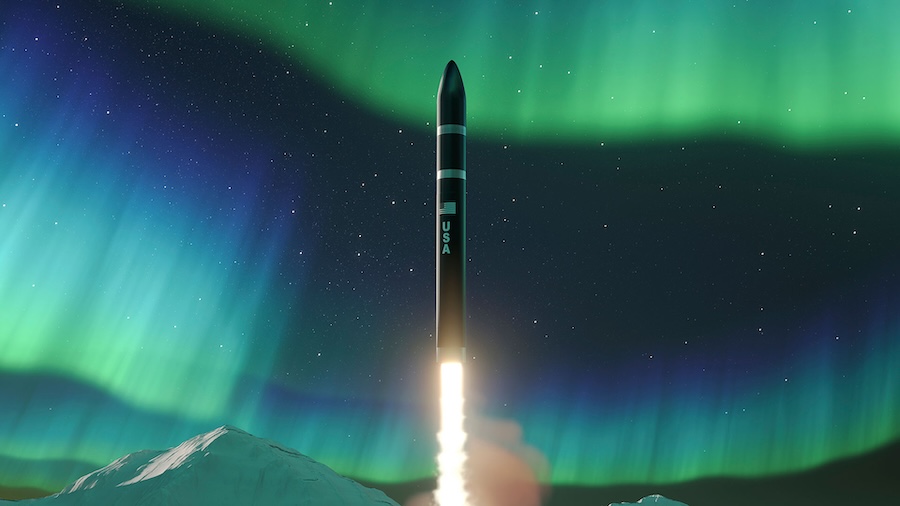
The company said NGI remains on track for fielding by 2030. The interceptor is being developed for the Ground-Based Midcourse Defense architecture.
Engineers fitted the motor case with a carbon-fiber-reinforced water vessel. They then pressurized the structure beyond expected launch levels.
The case sustained the required induced loads before failure. The result validated the composite structure’s strength-to-weight ratio.
Lockheed Martin said the test confirmed the case can survive extreme launch conditions. The structure must also support the thrust needed to place the interceptor’s payload into orbit.

“This successful burst test is a significant milestone on the path to CDR and brings us closer to fielding NGI by 2030,” said Christopher Jewell, vice president, Lockheed Martin NGI. “It proves our advanced motor architecture can withstand the harsh conditions of flight and still perform with the precision required to help protect the nation.”
Lockheed Martin is using a “born digital” development model for NGI. The approach is designed to shorten design, fabrication and validation timelines.
The company said work that once required years of physical iteration can now be completed within months. That process is intended to support faster development and production.
Lockheed Martin is also investing millions of dollars in manufacturing capacity in Alabama. The spending covers dedicated facilities, production lines, tooling and plant layouts.
The company is incorporating advanced manufacturing methods into the new capacity. It said the investments are designed to meet urgent production demand.
Lockheed Martin is also drawing on suppliers across the United States. The company said the national supply chain will support NGI delivery.
NGI is intended to increase U.S. defensive firepower against ballistic missile threats. Lockheed Martin described the interceptor as a key part of a next-generation homeland missile defense system.