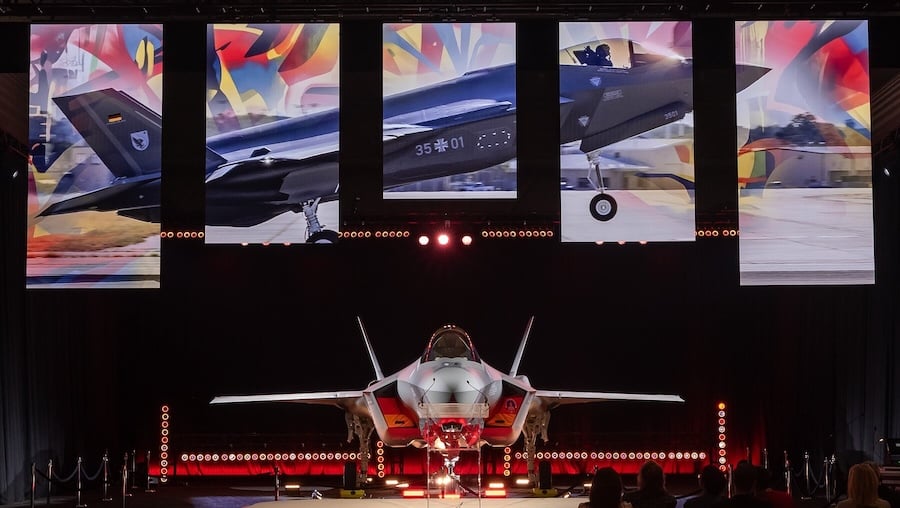
German and U.S. government and military officials attended the rollout ceremony alongside Lockheed Martin employees and industry partners. Germany expects to receive its first aircraft this year and plans to reach full operational capability in 2029.
“This is the beginning of a new era for the German Air Force: the new F-35A fighter jet is the world’s most advanced combat aircraft,” said Boris Pistorius, German Minister of Defense. “It is characterized by its stealth capabilities, close integration with other platforms, and exceptionally powerful sensor technology.”
Pistorius said the F-35A’s sensors can collect and rapidly combine large volumes of information into a common operational picture. He also linked the aircraft’s value to the shared standards, technology and procedures used across the international F-35 fleet.
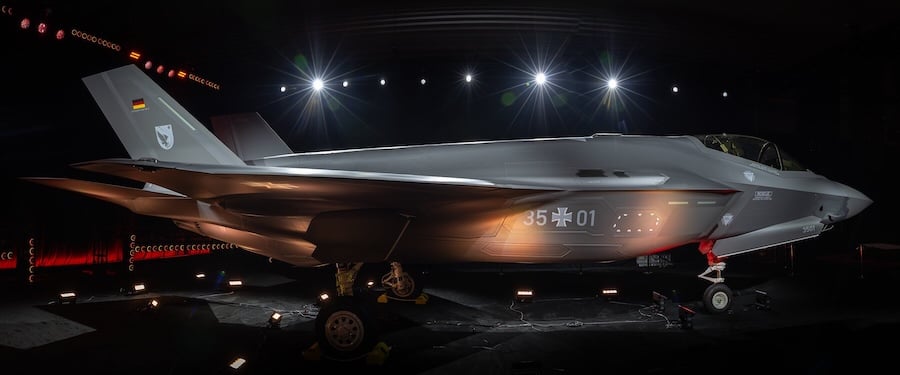
Germany is one of 20 countries that have selected the aircraft, including 13 in Europe. The government expects the platform to strengthen national air power while improving interoperability and deterrence across NATO.
“With the F-35, the German Air and Space Force is receiving a modern, proven and highly capable 5th Generation fighter jet,” said Lt. Gen. Holger Neumann, Chief of the German Air and Space Force. “It will not only bring significant changes in our Air and Space Force but will also influence how we think, command and fight.”
The first eight German F-35As will be delivered to Ebbing Air National Guard Base in Arkansas, where pilot training is scheduled to begin this fall. Aircraft will remain in the United States during the initial training phase before the first jets transfer to Germany.
“The F-35 is more than a fighter aircraft,” said OJ Sanchez, president of Lockheed Martin Aeronautics. “It is a strategic capability that enables allies to operate together, adapt faster and stay ahead of emerging threats.”
German industry has participated in the F-35 program since 2001 and remains part of its international supply chain. Lockheed Martin said it is considering additional work for German companies in manufacturing, maintenance, training, research and development.
More than 1,355 F-35s are now operational worldwide, with the fleet recording over one million flight hours. The aircraft operates from 42 bases, while 12 countries currently fly it from bases on their own territory.