

The work is part of DARPA’s Technologies for Heat Removal in Electronics at the Device Scale program, known as THREADS. Meeting the Phase 2 target would raise power density to about 10 times the program’s original level.
Radio-frequency systems often operate below their maximum output to avoid overheating, which limits performance and can shorten component life. Diamond conducts heat five times faster than copper and removes it more effectively than silicon carbide or gallium nitride.
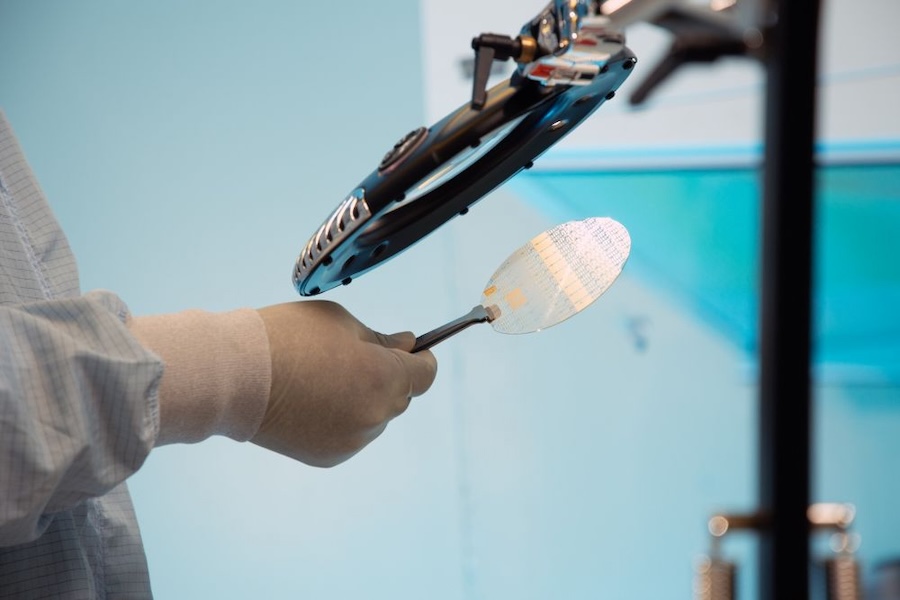
Northrop Grumman embeds microscopic diamond structures into chips at its Microelectronics Center to draw heat away from radio-frequency circuits. The approach allows devices to operate at higher power without thermal throttling.
“Temperature has long capped what microelectronics can do, even Gallium Nitride (GaN), which is a standard today. Embedding diamond directly into chips works like a turbocharged cooling system,” said Ben Heying, director of microelectronics at Northrop Grumman’s Space Park Foundry.
“It keeps the chips cool so we can crank up the power without risk of burnout. This breakthrough lets Northrop Grumman’s diamond-cooled chips push beyond traditional heat limits and unlocks a new generation of fast, reliable RF electronics,” Heying said.
Northrop Grumman worked with Stanford University to grow a diamond layer inside microscopic channels on the back of each device. Those channels carry heat away from hotspots while the chip operates at maximum power.
The company said its open-access model will make the technology available to other participants across the U.S. semiconductor industry. Northrop Grumman began investing in diamond-based microelectronics research in 2019.
Higher power density can produce stronger radio-frequency signals from smaller components for military communications and satellite links. Improved cooling can also reduce equipment size and weight while increasing speed, reliability and operating life.
Northrop Grumman designs, fabricates, assembles, tests and packages millions of microelectronic devices each year for defense and commercial systems. The company said its domestic production supports the security and sustainability of the U.S. semiconductor supply chain.