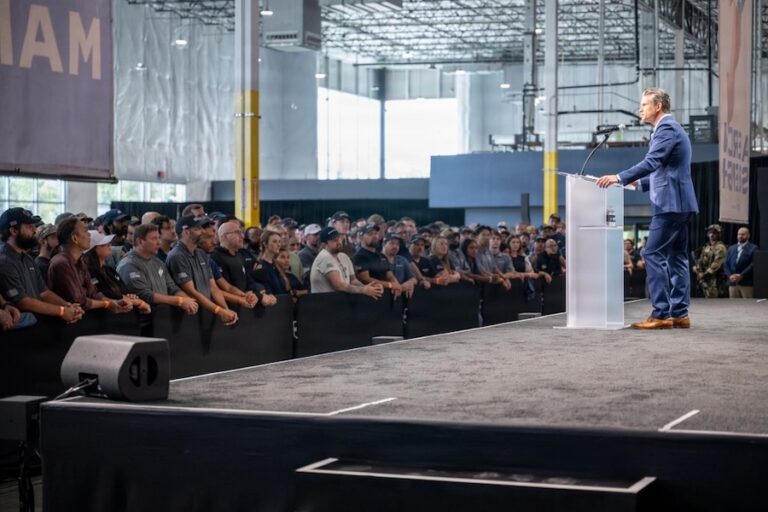
Hegseth established the short-term project through a memorandum signed last month. The proposed functional combatant command would lead the joint force in unmanned autonomous warfare.
“Project Agincourt is the end state of something we focused on since Day 1,” Hegseth told Owen West, whose Direct Reporting Portfolio Manager for Unmanned Systems leads the project. Hegseth said $1 billion in drone-dominance funding had already gone directly to operators in the field.
Hegseth blamed Pentagon bureaucracy in part for the failure to make drones inexpensive and widely available across the force. He said acquisition reforms and industry incentives were advancing, but military users and technical experts would need to work together to improve the equipment.
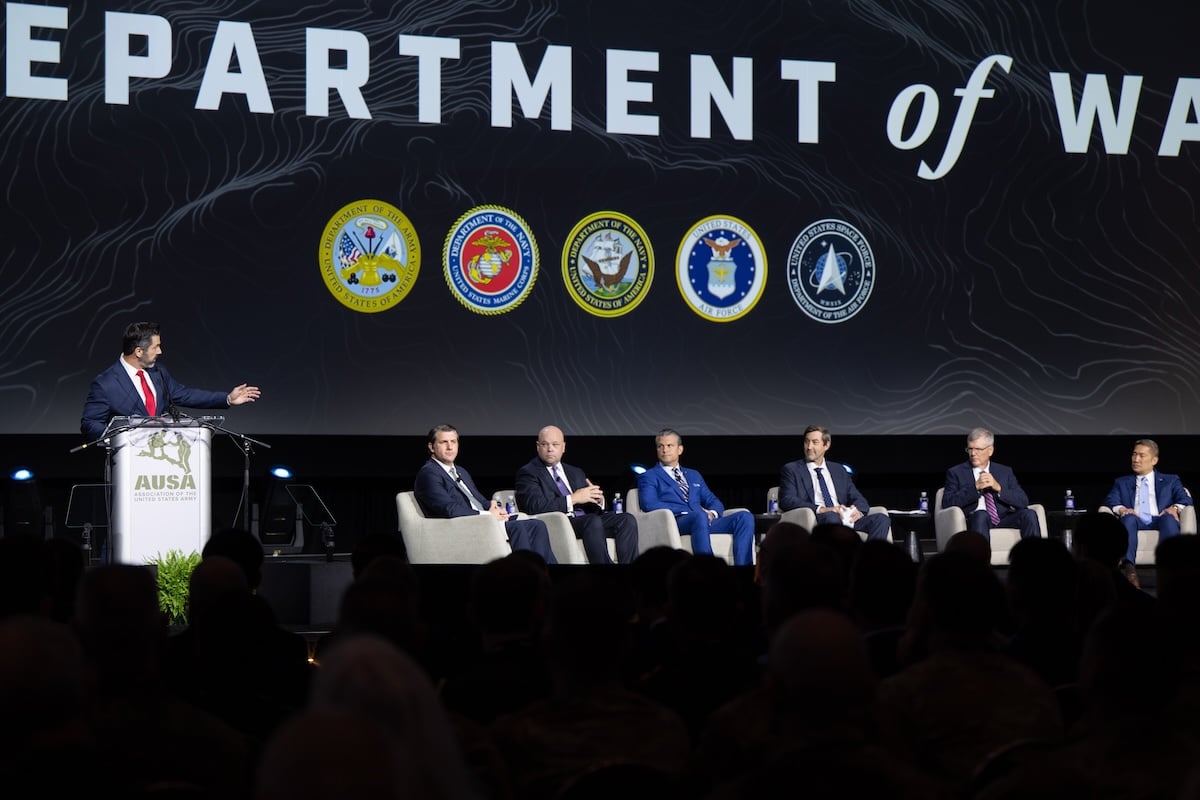
The Army, Navy, Air Force, Marine Corps and Space Force are pursuing autonomous warfare, alongside the combatant commands. Hegseth said the new command would help their systems operate together in contested environments.
“These services are not fighting us on that concept; they believe in it,” he said. He pointed to U.S. Southern Command’s autonomous warfare unit and U.S. Central Command’s use of autonomous surface systems.
“This Autowarcom is what’s going to create that multidomain, that domain synthesis that you need so that, from space to what we’re doing sub-sea in autonomy, is able to work together in a contested environment,” Hegseth said. The command remains the intended outcome of Project Agincourt.
Acting Army Secretary Adam Telle said the service had announced the creation of its Futures and Autonomous Systems Command, or Fascom, the previous day. It is intended to coordinate Army efforts while autonomous capabilities are pushed into operational units.
“This is our way to make sure that we take all of the great work that’s been happening with the resources that we have today, and we centralize it,” Telle said. “We’re pushing autonomy down into our units, but when it comes to having and making sure that the left hand in the Army knows what the right hand of the Army is doing, this happens at Fascom; then Fascom feeds up into Autowarcom.”
Telle said Fascom would work with the other services to increase purchasing power. It would also share practical lessons on autonomy.
Acting Navy Secretary Hung Cao cited the recovery of two Apache pilots and underwater mine clearance as examples of unmanned systems in use. Hegseth said autonomous surface systems rescued the pilots off Oman in June.
“In the Strait of Hormuz, we used the Corsair … to recover two Apache helicopter pilots,” Cao said. “Then, we also used the unmanned underwater vehicles to demine that area.”
Cao said the Theodore Roosevelt Carrier Strike Group deployed on October 8 with an unmanned surface vessel. He argued that such vessels would be easier to build because they do not need the systems required to accommodate and sustain crews.
Air Force Secretary Troy Meink said crewed aircraft would remain dominant in the service, with autonomous systems taking a growing role. Autonomous fighters are already being integrated into experimental operational units at Creech Air Force Base, Nevada.
“There’s no question though that there’s a shift coming,” Meink said. “It’s adaptability, scalability and affordability; the only way we’re going to meet the threat is with autonomous systems.”
Depending on how comparisons are made, some autonomous systems could deliver combat power at one-fifth to one-tenth of the cost of alternatives, Meink said. The Air Force is therefore concentrating on rapid production, scale and lower costs.
Source: U.S. Department of War.