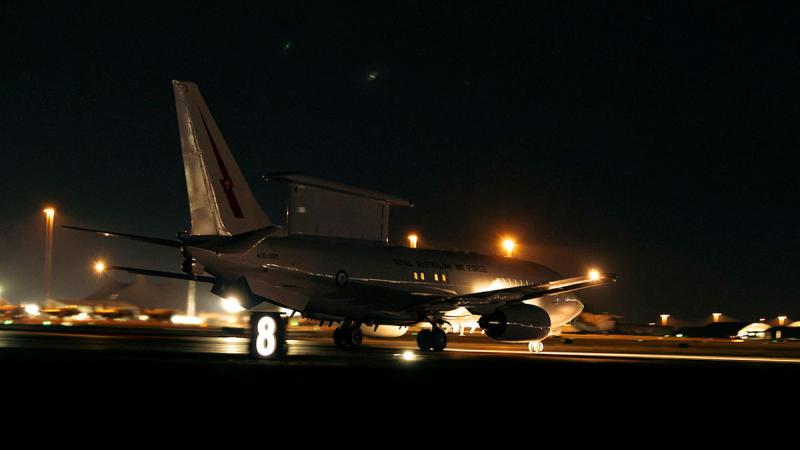
Operated by No. 2 Squadron, the E-7A worked alongside the Japan Air Self-Defense Force E-2D, the Republic of Singapore Air Force G550 and Australia’s 114 Mobile Control and Reporting Unit.
The RAAF said the Wedgetail provided situational awareness while helping coordinate aircraft from multiple nations safely and effectively.
“The E-7A works side by side with our partner nation’s airborne early warning and control aircraft, including the Japan Air Self-Defense Force E-2D and Republic of Singapore Air Force G550, as well as ground-based air battle management units such as 114MCRU,” Squadron Leader Daniel Price, No. 2 Squadron’s Exercise Pitch Black Detachment Commander, said.
The cooperation allowed different airborne and ground-based capabilities to contribute to a common operating picture.
Price described the combination of the E-7A, E-2D and 114MCRU as one of the exercise’s main strengths. “Integration looks a lot like working as a command and control ‘constellation’ alongside the JASDF E-2D and 114MCRU, capitalising on each unit’s unique systems and platforms,” Squadron Leader Price said.
Data links were used to combine information from airborne and ground-based sensors into a clear and tactically useful picture. The RAAF said this allowed coalition forces to make timely and informed decisions as missions developed.
The integration also improved as participating forces completed more missions together. “Operations become more streamlined with every mission conducted. You learn to trust the expertise of your partners, refine how you work together and ultimately become a more effective warfighting package,” Squadron Leader Price said.
Mission planning and post-mission debriefs provided another venue for improving cooperation between the Wedgetail crew and coalition partners. “These periods allow us to better understand how our coalition partners assess tactical problems, undertake missions and how we can best support one another.”
Price also highlighted the personnel required to keep the E-7A available for its airborne command-and-control role. “Behind every mission is a dedicated team of maintainers, engineers, logisticians, planners and support personnel whose work ensures the capability is ready to fly.”
“The E-7A team is dedicated, diligent and incredibly proud of the role they play in enabling mission success,” Price said. The RAAF said the exercise also strengthened professional relationships between Australian personnel and international partners.
“The relationships and professional networks built throughout exercises like Pitch Black cannot be underestimated,” Price said. “Training side by side and spending time with our international partners develops trust, understanding and confidence in each other’s capabilities, something that simply can’t be replicated in a classroom or virtual environment.”
Exercise Pitch Black was held from July 20 to August 7, primarily in northern Australia. The exercise gave the E-7A repeated opportunities to operate within an airborne and ground-based command-and-control network alongside international partners.