The Navy said the ceremony will take place in Whittier, Alaska, with the ship subsequently homeported in Norfolk, Virginia. The destroyer’s entry into service adds to a broader SPY-6 rollout that Raytheon expects to equip more than 50 ships over the next decade.
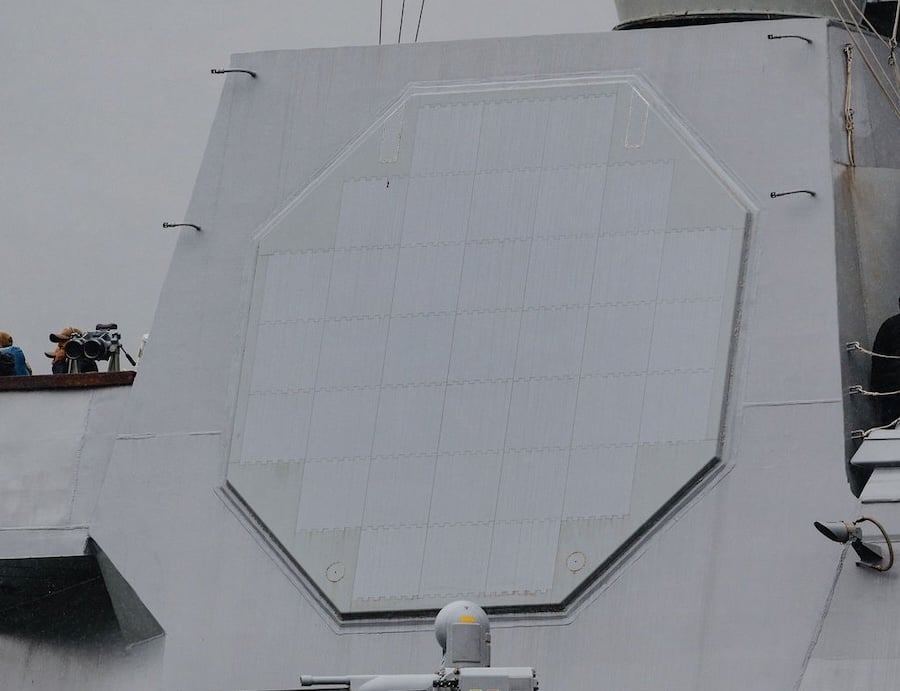
Designed for Flight III Arleigh Burke-class destroyers, SPY-6(V)1 has four array faces providing continuous 360-degree coverage. Each face contains 37 radar modular assemblies.
Raytheon said the system delivers greater detection range, increased sensitivity and more accurate threat discrimination than legacy radars. Flight III ships also incorporate expanded electrical power and cooling capacity to support the radar and associated capability upgrades.
“Equipped with cutting-edge systems and capabilities, USS Ted Stevens is ready to answer our Nation’s call to counter aggression and safeguard our interests by providing a powerful advantage at sea,” said Acting Secretary of the Navy Hung Cao. “As we welcome another formidable Arleigh Burke-class destroyer to America’s Fleet, this warship will carry forward the ideals that its namesake spent his entire life defending from the cockpit to the Senate floor.”
The SPY-6 family supplies targeting information and threat data to support the Navy’s weapons, including all Standard Missile variants. Raytheon said SPY-6(V)1 is also designed to operate against jamming, clutter and electronic warfare threats.
The radar family uses common hardware and software across its variants. Its modular construction allows arrays to be configured for different ships while improving reliability and reducing maintenance costs, according to Raytheon.
Each radar modular assembly is a self-contained antenna housed in a two-foot-by-two-foot-by-two-foot box. Combining these assemblies allows the Navy to scale the radar to a ship’s mission requirements.
SPY-6 systems are being integrated onto Flight III destroyers, frigates, aircraft carriers and amphibious warships. They are also being fitted to existing Flight IIA destroyers and aircraft carriers.
Raytheon said the radar family is in full-rate production following nearly a decade of testing in at-sea and maritime environments. Systems already operating at sea provide the foundation for its planned expansion across seven classes of Navy ships.
USS Ted Stevens is named for the late Alaska senator, a decorated World War II Army Air Corps pilot who served in the Senate from 1968 to 2009. The Navy said the choice of Whittier recognises both his legacy and Alaska’s maritime ties to the service.