Raytheon’s Advanced Technology team will develop and evaluate signal- and data-processing algorithms and integrate targeted software changes. The upgrades will undergo laboratory and field testing before being prepared for operational use.
“Modernizing fielded radar systems with software-first upgrades is one of the fastest and most cost-effective ways to deliver mission-ready capability,” said Colin Whelan, president of Advanced Technology at Raytheon. “These enhancements will enable naval operators to detect smaller objects at greater distances and classify targets more quickly, providing the fleet with faster, more informed decision‑making.”
The program builds on Raytheon’s work in software-defined apertures and earlier Office of Naval Research initiatives, including ASPIRE and STORM. Those efforts established hardware and software foundations for next-generation radar capabilities.
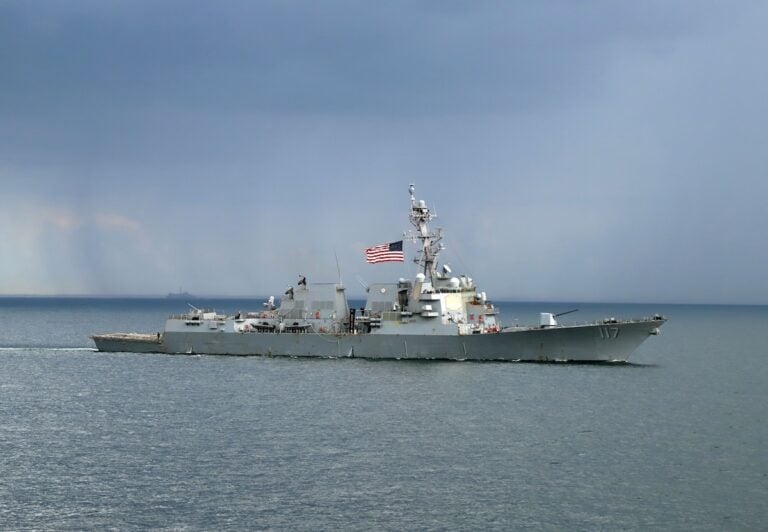
SPY-6 supports U.S. Navy air and missile defense across seven ship classes, according to Raytheon. The company says the radar family can support simultaneous defense against ballistic, cruise and hypersonic missiles, hostile aircraft and surface ships.
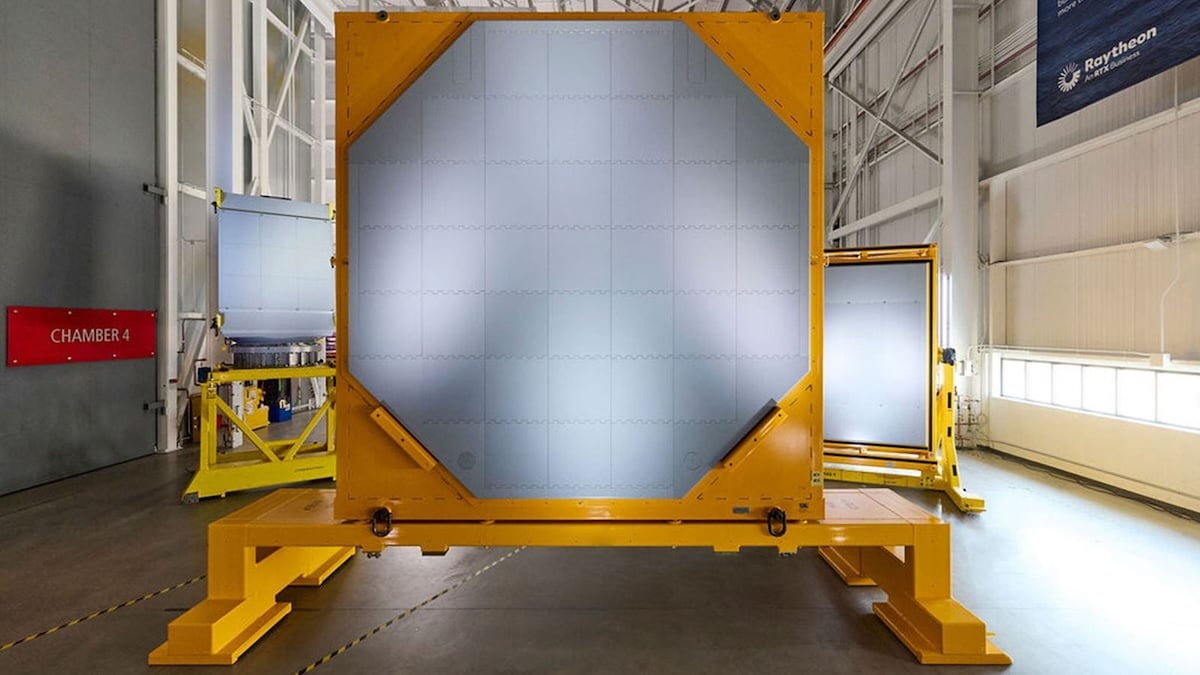
Its variants share hardware and software and are built from radar modular assemblies. Each assembly is a self-contained radar antenna housed in a two-foot cube, with multiple units combined to meet a ship’s mission requirements.
The SPY-6(V)1 for Arleigh Burke-class Flight III destroyers has four array faces with 37 assemblies each. The SPY-6(V)4 for Flight IIA destroyers uses four faces with 24 assemblies each.
The SPY-6(V)2 uses a rotating array for amphibious assault ships and Nimitz-class aircraft carriers. The SPY-6(V)3 has three fixed arrays for Ford-class carriers and guided-missile frigates.
Raytheon says the radars provide targeting and incoming-threat data to support naval weapons, including all Standard Missile variants. Shared components and modular construction are intended to improve reliability and reduce maintenance costs.
Work on the software upgrades will take place at Raytheon facilities in Portsmouth, Rhode Island, and Andover, Massachusetts. Alongside longer detection range, the program aims to increase radar sensitivity and improve overall system efficiency.