The Series 4000 completed two 720-hour durability tests before receiving certification for autonomous applications. The engine can provide up to 4,300 kW of propulsion power or 3,000 kWe of electrical generation and is available in eight-, 12-, 16- and 20-cylinder V-configurations.
The Series 2000 was approved following component testing and thousands of hours of field operations. Rolls-Royce offers the engine in 10-, 12- and 16-cylinder V-configurations, with propulsion output of up to 1,939 kW.
The certifications meet National Defense Authorization Act requirements cited by Rolls-Royce for engines used in unmanned systems. Qualifying power systems must operate without human intervention or preventive and corrective work on their main propulsion, fuel and oil systems, supporting deployments of up to 30 days without maintenance.
Scott Hanson, vice-president of governmental sales at Rolls-Royce Power Systems in North America, said: “The certification of our engines for unmanned operations further demonstrates the reliability and advanced technology of our mtu Series 4000 and 2000 marine propulsion systems. For decades, mtu engines have been trusted to provide reliable, mission-ready power for our crews at sea.”
Hanson linked the approval to the growing role of unmanned ships in naval planning. “As autonomous missions become increasingly important to naval strategy, we are proving that we can deliver the power systems, long-endurance capability and technology required for the new operational demands of unmanned vessels.”
The U.S. government views autonomous surface vessels as a way to increase fleet capacity, broaden operational options and keep sailors away from hazardous environments. Their ability to conduct extended missions depends on propulsion systems that can operate reliably for long periods without onboard maintenance personnel.
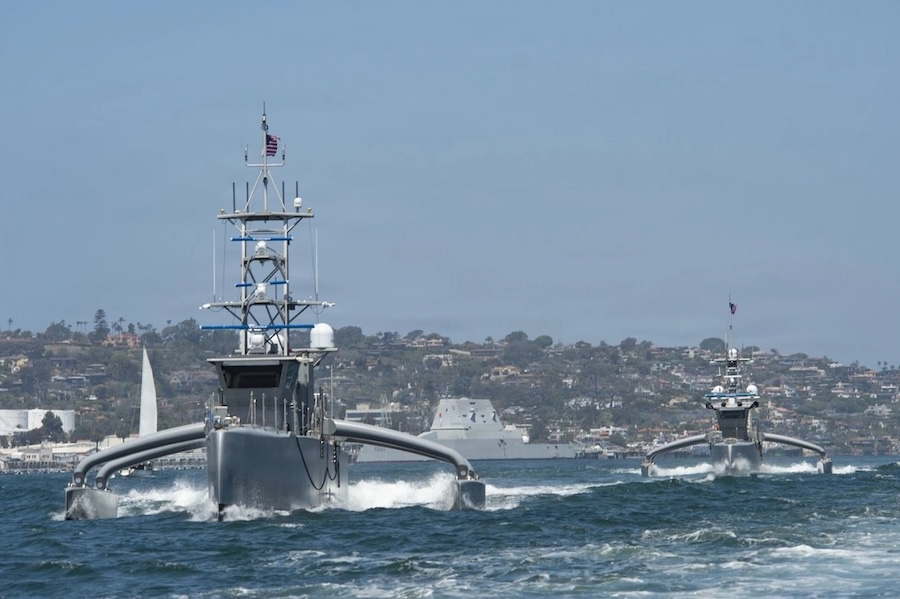
The Navy deployed *Sea Hunter* and *Seahawk* earlier this year as its first division of unmanned surface vessels. *Sea Hunter*, powered by two *mtu* 12V 2000 engines, has recorded tens of thousands of operational hours since its christening in 2016.
The Navy’s approval process places particular emphasis on the validation of control systems, cybersecurity and safety-critical functions. Those requirements are intended to support the safe and reliable deployment of autonomous technologies across surface, aerial and subsea operations.
The certification also extends Rolls-Royce’s role in U.S. military unmanned systems beyond aviation, where its engines already power the RQ-4 Global Hawk and MQ-4C Triton. The company recently supported test flights of the Navy’s AE 3007N-powered MQ-25A Stingray, which autonomously completed taxiing, take-off, flight manoeuvres and landing.