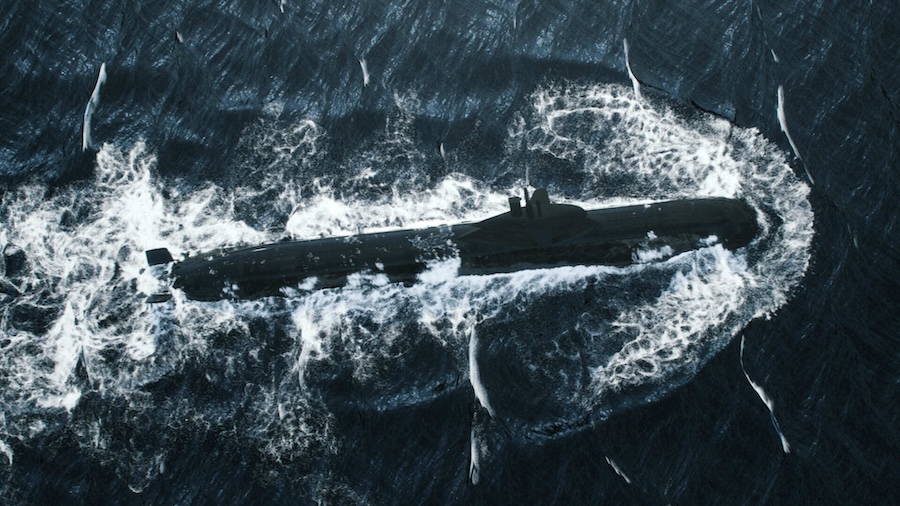
“We have really good progress on the A26 submarine program in Sweden,” Johansson said during Saab’s second-quarter 2026 earnings call. He made the comment while outlining new investment across the company’s submarine operations in Sweden and Poland.
The A26 remains the central Swedish submarine programme within Saab’s growing naval portfolio. Johansson did not provide further details on its schedule, but described its development in positive terms alongside the company’s expanding international workload.
Poland has contracted Saab for three submarines that are due to be delivered over the coming years, Johansson said. He described the award as a major breakthrough and one of the contracts that defined the quarter.
“They have now contracted us for three submarines that will be delivered in the next few years,” Johansson said. He added that the order represented both an industrial success and an increase in underwater capability from a Baltic security perspective.
The Polish and Swedish programmes are pushing Saab to increase submarine production capacity at its Karlskrona shipyard. The company is also bringing more facilities into use at Landskrona, where additional submarine work will be carried out.
“Now the contract on the submarines for Poland, in combination with the Swedish contract, of course, means that we are ramping up production capacity both in Karlskrona,” Johansson said. Saab is also expanding capability at its second shipyard in Landskrona, he added.
The Polish programme will include industrial cooperation and the development of local shipyard capacity. Johansson said creating facilities on both sides of the Baltic would strengthen resilience and reduce dependence on a single production location.
“It will also entail industrial collaboration with Poland,” Johansson said. “We will have shipyard capabilities on both sides of the Baltic Sea, which makes lots of sense in terms of security and redundancy going forward.”
Saab expects its naval contracts to cover the investments required to establish the Polish industrial structure. Johansson said the company would invest in a shipyard in Poland but would not finance that work separately from the contracted programme.
The contract also includes an advance payment and a schedule designed to support the rapid expansion of shipyard capacity. Saab has not disclosed the value or proportion of the advance payment.
“It’s a good advance payment and a payment schedule that supports our quick ramp-up of shipyard capacity and all that,” Johansson said. “We’re not going to act like a bank related to that contract, that much I can say.”
Johansson said Saab’s order intake of more than SEK 68 billion was dominated by the Polish submarine contract. The award also contributed to what he described as a large backlog for the company’s naval business.
The chief executive presented the Polish selection as evidence of Saab’s position in conventional submarines. He described the company’s capability as state of the art and said the award showed that Saab was pursuing the right approach in the sector.