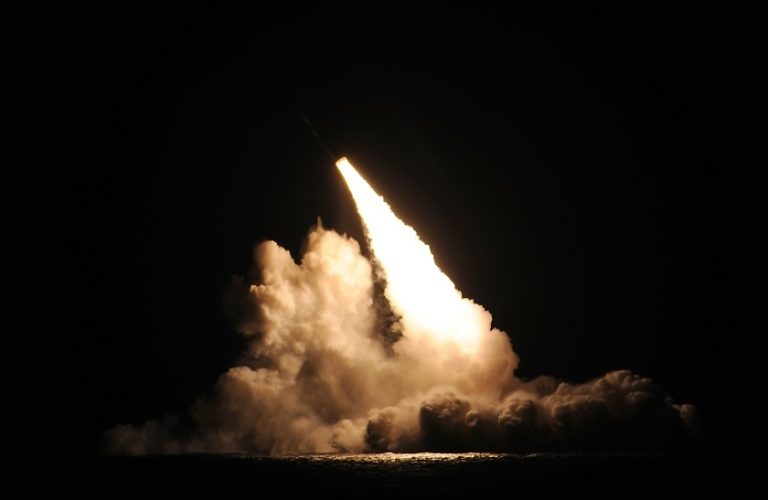

The warhead is being developed for the sea-based leg of the U.S. nuclear triad alongside a reentry vehicle that will protect and carry it. Sandia is responsible for designing the W93’s nonnuclear components and serves as lead systems integrator for U.S. nuclear weapons programs.
“The Atrax sounding rocket flight test is helping us improve credibility and confidence in our modeling and simulation tools in preparation for the W93 warhead,” Sandia aerospace engineer Ross Wagnild said. “Getting confidence in our toolset earlier allows more time to inform the design of components.”
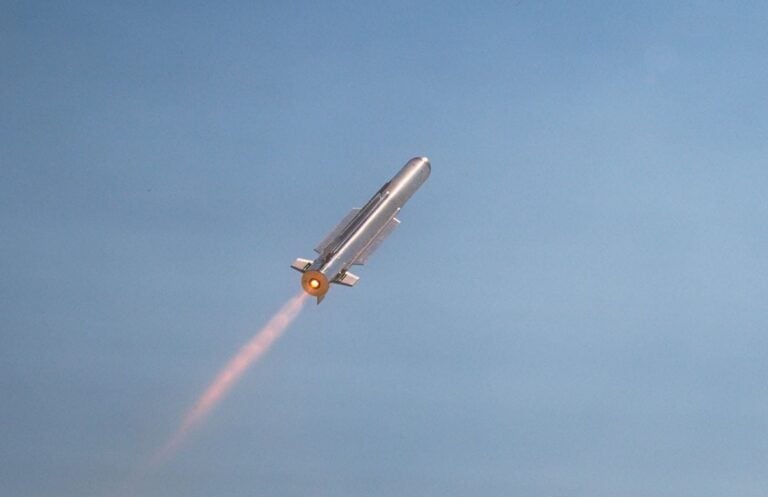
Sounding rockets provide suborbital flights for scientific instruments and experiments without requiring the scope of a full weapon-system test. Atrax focused on reentry, where aerodynamic forces and structural responses interact in complex ways that are difficult to reproduce on the ground.
“Vibration during reentry is a mechanical environment challenging to some of our components,” said Peter Coffin, a Sandia engineer who analyzes structural dynamics. “This test helps us understand our models so that we can better predict those environments as we move forward on new vehicles.”
The flight measured aerodynamic loads and the internal mechanical vibrations they generate, replacing assumptions with real-world data. The test also reduced uncertainty in the models used to evaluate the conditions experienced by components during reentry.
The work drew on simulation capabilities developed through the National Nuclear Security Administration’s Advanced Simulation and Computing program. Ground testing and diagnostic development were supported by the agency’s Engineering and Technology Maturation program.
“There are a number of different physics that happen in a series that get us from launching a rocket off the ground toward a target and then the system actually functioning at the target,” Wagnild said. “We model those various physics in a reentry environment.”
The Atrax dataset will allow engineers to make component decisions earlier in development, when design changes are less costly and easier to implement. “The goal is to help us better evaluate the survivability of nonnuclear components of our weapon systems,” Wagnild said.
“If you understand what your environments are earlier, you can more precisely design your components,” said Kelsey Forsberg, who works in nuclear deterrence at Sandia. “You can design components to the right environment.”
Earlier NNSA investments in the High Operational Tempo Shot program and the Enzo demonstrator helped prepare Sandia for the Atrax test. The flight took place about two years before the first scheduled W93 program flight test, closing data gaps before development of the system architecture.
Sandia completed Atrax within about 18 months of receiving funding, partly because the test article did not need to replicate the final fielded system. The mission prioritized environmental data collection rather than the precision or accuracy expected from a regular program flight test.
“The system we flew for this test didn’t have to look like the system we’re intending to field,” Forsberg said. “We focused on relevant reentry vehicle characteristics to cut down the timeline to get the test done.”
Engineers equipped the reentry vehicle with sensors measuring external aerodynamic loads, going beyond the internal vibration instruments typically used in such tests. The data will allow researchers to compare thermal, fluid and structural models and identify where the software requires improvement.
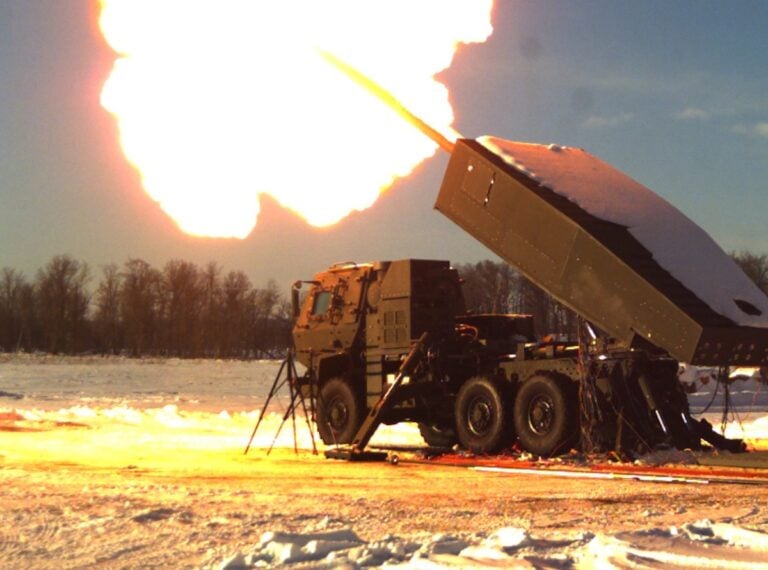
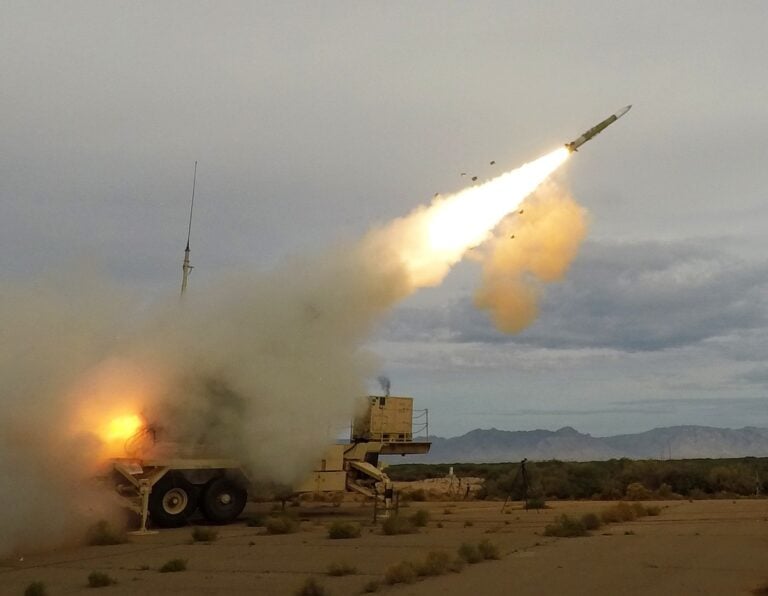
Atrax also tested a new reentry vehicle, a three-stage sounding rocket and a new separation system. Those technologies added technical demands to both the flight and the effort to collect usable data.
“It demonstrated that it worked,” Coffin said. “It gave us good data without damaging the reentry vehicle.”
Sandia expects the results to support work beyond the W93 program by providing the wider hypersonic research community with additional flight data. The dataset may improve hypersonic modeling and build confidence in modern sensor packages for other high-speed vehicles.