
The program will be named the “Jang Bogo N Project,” after South Korea’s first submarine. The name reflects the legacy of the Jang Bogo-class submarine and a next-generation model using nuclear-powered propulsion and advanced new technologies.
The ministry said nuclear-powered submarines would provide significantly enhanced operational capabilities compared with conventional diesel submarines. These include extended submerged endurance and superior mobility.
“Nuclear-powered submarines possess significantly enhanced operational capabilities compared to conventional diesel submarines, including extended submerged endurance and superior mobility. As such, they constitute a critical asset in responding to DPRK submarine-based nuclear and missile threats,” the policy document said.
?「대한민국 핵추진잠수함 개발 기본계획」 발표
국방부는 5월 26일(화)에 「대한민국 핵추진잠수함 개발 기본계획」을 발표했습니다.
「대한민국 핵추진잠수함 개발 기본계획」은 대한민국이 핵추진잠수함을 체계적으로 개발하기 위한 추진 방향을 국내·외에 최초로 제시하는 문서로서 주요 내용은… pic.twitter.com/jkVjS3soQt
— 국방부 (@ROK_MND) May 26, 2026
South Korea said the submarines will be developed and constructed entirely within the Republic of Korea. The ministry described the programme as a national strategic project requiring the mobilisation of domestic capabilities in nuclear power, shipbuilding and defence industries.
The formal announcement follows Washington’s approval last autumn to support South Korea’s request for nuclear fuel. Seoul needs U.S. support to acquire fuel for the submarines under the 2015 Atomic Energy Peaceful Uses Agreement.
The additional report said the United States is expected to help with fuel but is not likely to share reactor technology with South Korea. South Korea has said it will work in close communication with the United States during the process of securing and managing low-enriched uranium for submarine propulsion.
The submarine reactor will use low-enriched uranium. It will be developed for long-cycle operation to minimise the need for nuclear fuel replacement.
South Korea said the platform and propulsion system will draw on technologies accumulated in the country’s civilian nuclear power and shipbuilding sectors. The ministry said this approach is intended to ensure a high level of reliability and safety.
The first nuclear-powered submarine is planned to be launched in the mid-2030s. The ministry said the boat is expected to enter service after the late 2030s.
The submarines are intended to counter North Korea’s growing submarine-based nuclear and missile threat. South Korea’s Ministry of National Defense highlighted their potential role in tracking North Korean submarines from the moment they leave port.
In the event of conflict, South Korean forces expect this capability to help neutralise Pyongyang’s subsurface strike systems before launch. The submarines are also expected to carry precision strike missiles in support of South Korea’s “Korea Massive Punishment and Retaliation” plan.
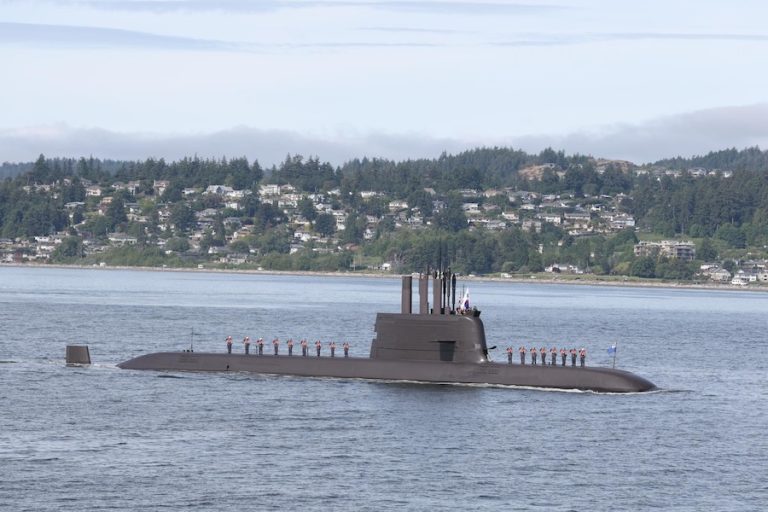
South Korea currently operates a fleet of European-derived and domestically designed conventional attack submarines. Its newest conventional submarines have vertical launch systems capable of carrying cruise and ballistic missiles for strikes against targets in North Korea.
Seoul says the range, speed and endurance of conventional submarines are not sufficient to meet the emerging North Korean missile submarine threat. North Korea has recently shown new submarine and surface combatant designs equipped with submarine-launched ballistic missiles and other long-range strike systems.
The ministry said South Korea will transparently and firmly fulfil its nuclear non-proliferation obligations based on the trust of the international community. It said the country does not possess nuclear weapons in any form and will not develop them.
South Korea also plans to establish, jointly with the International Atomic Energy Agency, a safeguards system applicable to nuclear-powered submarines. The ministry said nuclear safety and security will be upheld throughout the project.
All radioactive waste generated from nuclear-powered submarines will be managed safely and systematically under relevant laws and regulations. The full life cycle of the submarines will be managed from design and construction through operation, maintenance, fuel management and dismantlement.
The ministry described the programme as a national industrial development project lasting more than 40 years, including about 10 years of construction and more than 30 years of operation. It said the project is expected to create more than 40,000 stable and high-quality jobs.
The government said technologies and infrastructure accumulated through the programme will spread across related industries. The Ministry of National Defense said it will mobilise national capabilities to make the nuclear-powered submarine project a historic milestone for South Korea’s maritime security.