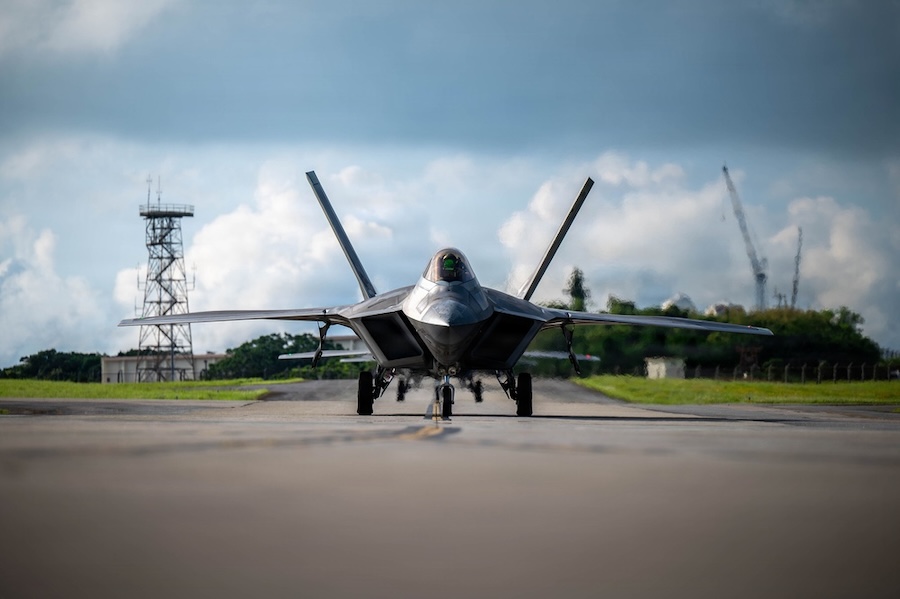
The F-22 operations were a central element of Beverly Beach 26-1, conducted from Aug. 3 to 5, 2026. The Air Force said the Raptors maintained constant airpower during the event, reinforcing Kadena’s role as a forward platform for projecting U.S. combat capability in the Pacific.
“Our mission is deterrence through strength, exercises like Beverly Beach demonstrate what this Wing brings to the fight,” said Chief Master Sgt. Will Cupp, 18th Wing command chief. “Kadena is the hub of airpower in the Pacific, and this exercise has shown why we’re worthy of that title.”
Keeping the fighters airborne required logistics and maintenance units to operate under simulated contingency conditions. The 18th Logistics Readiness Squadron conducted forward arming and refueling point operations, allowing aircraft to receive fuel while their engines remained running and return to flying operations more quickly.
Aircrews, maintainers and fuel personnel worked together during the refueling operations while maintaining required safety procedures. Personnel from the 718th Aircraft Maintenance Squadron also supported the flying mission while preparing the installation and its aircraft for Typhoon Dolphin.
The wider readiness test covered base defense, emergency response, medical support and dispersed operations. Security forces and civil engineers responded to simulated incidents involving ground ammunition and downed drones, while medical personnel practiced receiving, stabilizing and preparing casualties for aeromedical evacuation.
The 33rd Rescue Squadron also relocated to a simulated austere site and established rescue operations without traditional infrastructure. The scenario tested agile combat employment skills designed to allow U.S. forces to reposition and continue operating from dispersed locations during a contingency.
For the first time, personnel who normally live off base remained at Kadena for the duration of Beverly Beach to support operations around the clock. The 18th Force Support Squadron provided accommodation, transport and meals to personnel working continuous shifts.
“Exercise Beverly Beach was designed to put our training to the test, and every member of Team Kadena rose to the challenge,” said Brig. Gen. John Gallemore, 18th Wing commander. “Our Airmen stand at the tip of the spear, and this exercise has shown that we remain disciplined, fit, and trained; we’ve demonstrated our enduring resilience, constant readiness and our dedication to defending this base and Japan.”
Kadena is the largest U.S. installation in the Asia-Pacific region and provides a forward base for integrated and deployable combat power. The Air Force said the lessons from Beverly Beach 26-1 will help refine Kadena’s ability to maintain air operations, respond to contingencies and project U.S. airpower across the Indo-Pacific.