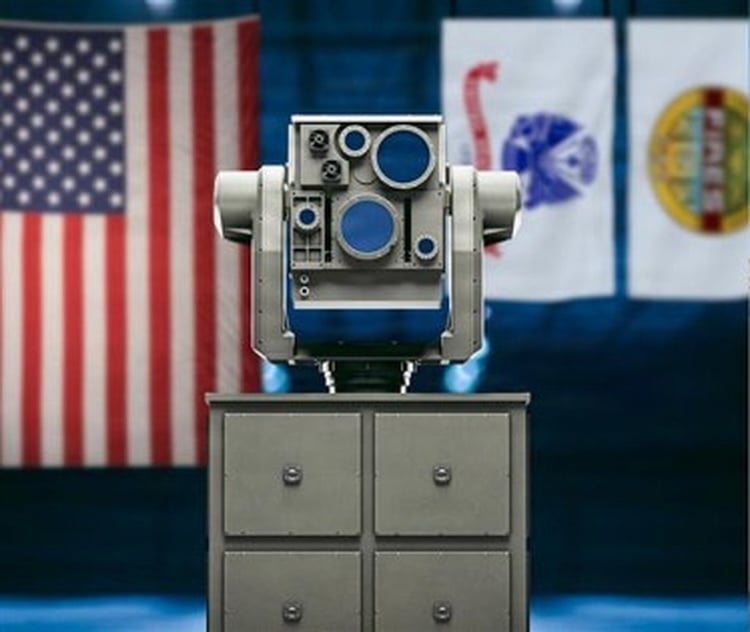
E-HEL uses electrical power to generate a lethal laser beam against unmanned aircraft. Its magazine replenishes through the system’s power supply, reducing the need to use more expensive missile interceptors against every target.
The weapon is intended to operate alongside other sensors and effectors rather than replace existing defenses. It will give commanders another layer of protection for critical assets and maneuver forces.
“This first of its kind directed energy program will enable our formations to defeat unmanned systems and dominate from the outset,” said General Christopher LaNeve, Vice Chief of Staff of the Army. “Pairing human ingenuity with advanced technology is what ensures our Army will continue to outpace America’s adversaries.”
E-HEL is designed for use at permanent bases, semi-fixed tactical sites and on mobile combat vehicles. That flexibility will allow the Army to deploy the weapon for both installation defense and battlefield operations.
“The key to successfully countering all levels of drones is a layered defense of sensors and effectors,” said Under Secretary of the Army Mike Obadal. “AV and the Army have worked for years to develop directed energy solutions, and we are proud to give our soldiers a decisive edge against drone threats.”
The system has a modular open architecture built around 11 major interfaces. It is not tied to a single vehicle or platform, allowing the Army to adapt it for different operational needs.
The open design will also make it easier to integrate new technology as it becomes available. The Army expects that approach to support upgrades without requiring wholesale replacement of the weapon system.
“The E-HEL program is an example of how the Army has successfully utilized MOSA, a key element of acquisition reform, as part of our efforts to field technology quickly with an interface to upgrade in the future,” said Brent Ingraham, Assistant Secretary of the Army for Acquisition, Logistics and Technology and Army Acquisition Executive. “Directed energy weapons have been considered S&T projects, and I’m proud that the Army is moving at speed and scale to deliver this first time capability.”
Moving E-HEL from prototype development into production gives the Army a foundation for wider adoption of directed-energy weapons. The service will continue refining the system as it approaches operational fielding and prepares to counter changing aerial threats.