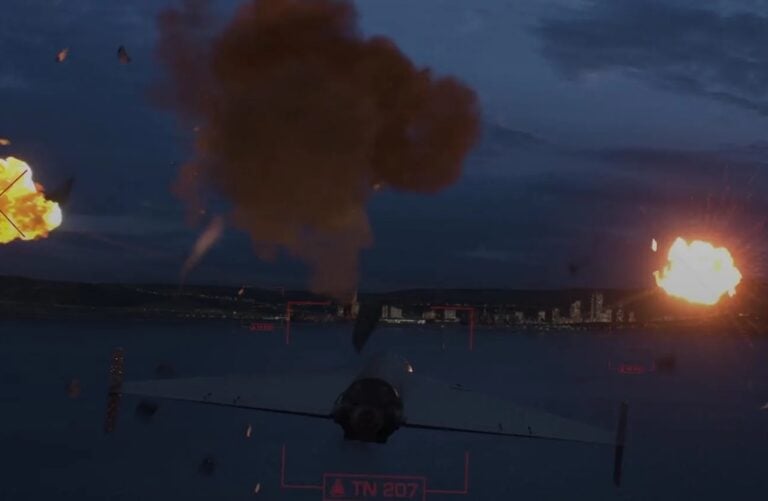
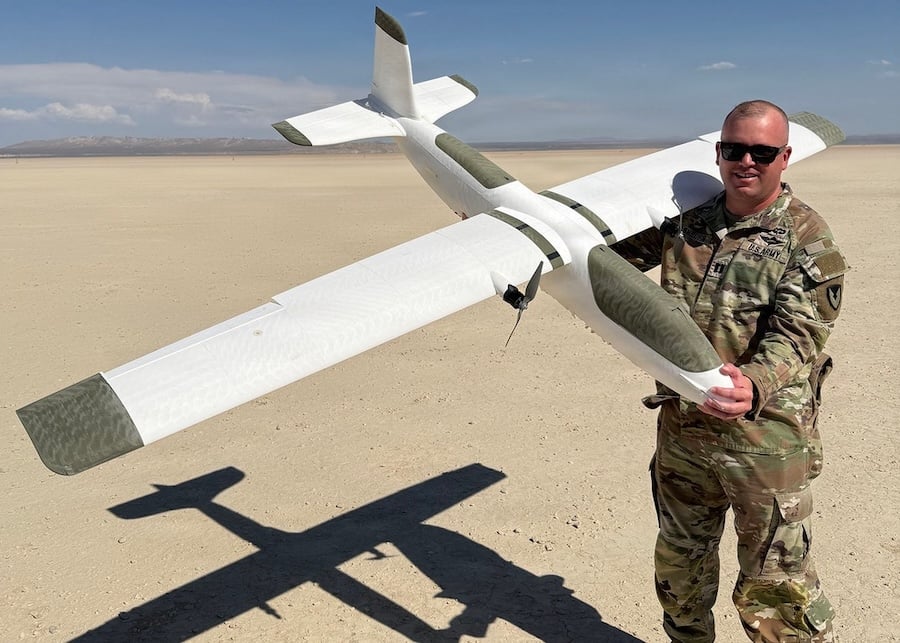
The independently battery-powered aircraft was software-designed and 3D-printed for the agency’s “Game of Drones” event. The Army described the flight as a world record for a drone in its category.
The two motors were among the first units produced at a new manufacturing facility at Tobyhanna Army Depot in Pennsylvania. The production line formally opened on June 30, little more than two weeks before the record flight.
“AMC manufactured two 3115 sized brushless disc current (BLDC) motors to take part in ‘Game of Drones,’” said Army Capt. Lee Washburn, Army Materiel Command’s military liaison for advanced manufacturing of small uncrewed aircraft systems. “This capability to produce BLDC motors domestically, and within the Army’s Organic Industrial Base, is brand new as the ribbon cutting of the facility was only held on June 30, 2026.”
Army Materiel Command is using the military’s government-owned depots, arsenals and ammunition plants to expand domestic production of small-drone components. The command wants those parts approved for the Defense Contract Management Agency’s Blue List and made available to both the U.S. military and industry.
The program extends beyond motors produced at Tobyhanna. Army facilities also manufacture drone frames, batteries and circuit cards through a network spanning Pennsylvania, Illinois and Texas.
Rock Island Arsenal-Joint Manufacturing and Technology Center produces drone frames, while Red River Army Depot makes batteries. Tobyhanna manufactures circuit cards alongside its brushless direct-current motors.
“‘Game of Drones’ was proof that industry and the government can work together in creative ways to create exceptional results,” said Jon Strzelec, Army Materiel Command’s advanced manufacturing lead for small uncrewed aircraft systems. “The event showcases exactly what the Army set out to do – provide opportunities for industry to partner with the Army and let the Army leverage the innovation and technical depth of industry.”
The command plans to use further events to test its components under realistic conditions and refine them for military users. Its production effort is also expanding into drone bodies, battery systems, circuit-card assemblies and molded parts such as propellers.
The Blue List identifies uncrewed systems and components that meet Department of War requirements. Responsibility for the list moved from the Defense Innovation Unit to the Defense Contract Management Agency in 2025.
“We must ensure that our wartime supply chains remain available. We cannot become dependent upon adversary-controlled manufacturing,” said Air Force Col. Dustin Thomas, commander of DCMA Unmanned Systems Experimental. “To that end, we need components from trusted sources that will continue to exist during conflict.”
“When it began, the Blue List was primarily focused on blue listing platforms, and later it began to blue list specific components. When DCMA took over the Blue List, we made a big push to shift to components,” Thomas said. “The reason to focus on components is that we can reduce our effort, manpower, and workload on drones that already have components that have gone through the Blue List process.”
The component-level approach is intended to avoid repeating the full assessment process for every new drone platform. DCMA said the change would help preserve access to trusted systems beyond the opening phase of a conflict.