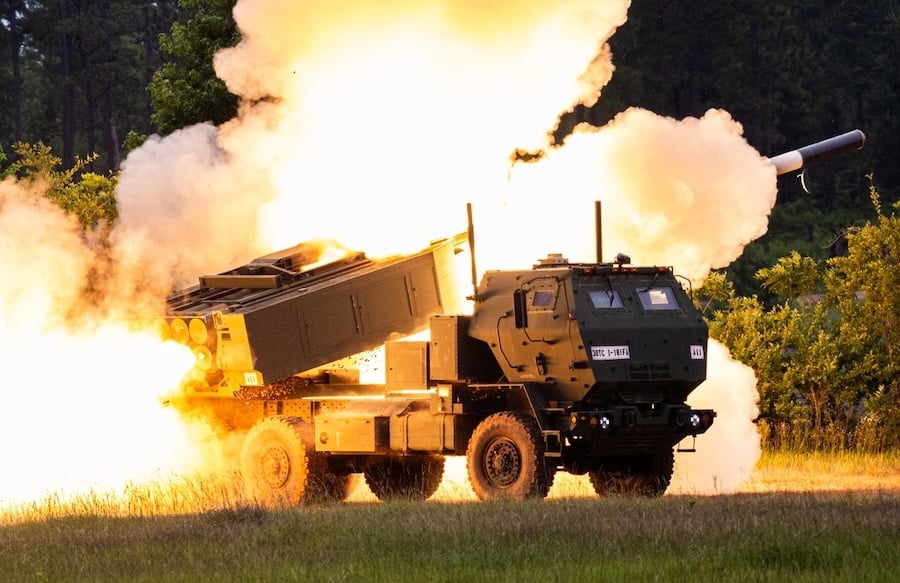
Rather than selecting a complete launcher from a single supplier, the Army is pursuing a modular acquisition strategy. The design will combine an autonomous mobility platform with separate munitions pallets that can be developed by specialized partners.
Georgia Tech will serve as the Weapon Systems Integrator during an estimated 36-month period. It will oversee systems engineering, interface integration, modeling and simulation, and integrated testing across the prototype components.
The institute will also lead the acceptance test plan and physical testing needed to make the independently developed components function as a unified system. That work will take place before the delivery of CAML Increment Zero prototypes.
Additional awards are expected in the coming months, including a contract for the Autonomous Mobility Platform. The Army also anticipates issuing further prototype agreements for other CAML components under the competitive development effort.
“The Army is moving with urgency to deliver adaptable, survivable, and scalable Fires capabilities to Soldiers,” said Lt. Gen. Frank Lozano, Portfolio Acquisition Executive Fires. “CAML gives us a pathway to experiment with modular launcher concepts, learn quickly, and make informed decisions at the speed of relevance.”
The Army said separating the mobility platform from the munitions payloads would allow it to assess technologies from several technical partners. The approach is intended to improve tactical flexibility and survivability while expanding commanders’ options across the multi-domain battlefield.
CAML remains a prototype demonstration and the agreement does not represent a production decision. Data from live-fire field demonstrations, virtual simulations and direct Soldier experimentation will guide future decisions on requirements, software integration, production and potential tactical fielding.