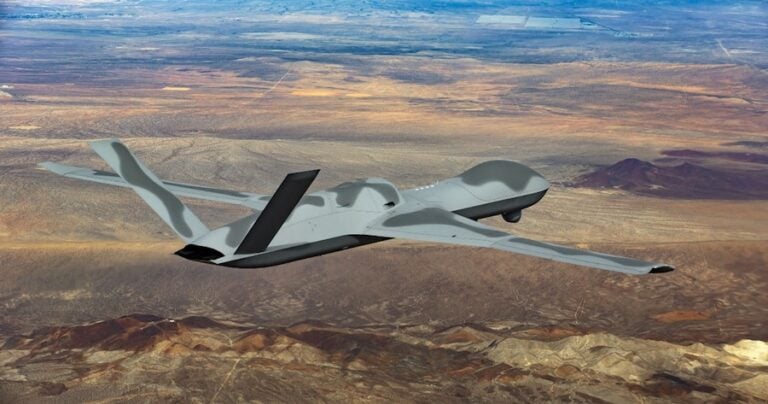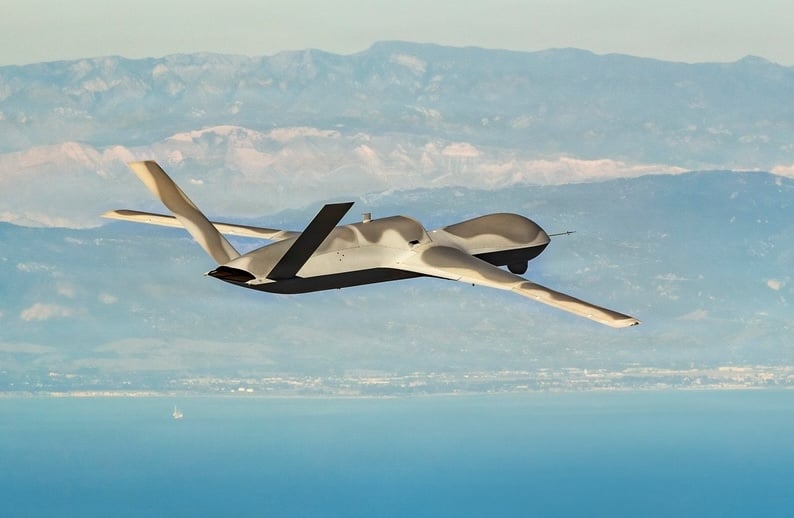
Collaborative Autonomy Mission Planning, or CAMP, was demonstrated during Gray Flag 2026 at California’s Point Mugu Sea Range in September. The Navy used a General Atomics Aeronautical Systems MQ-20 Avenger as a surrogate aircraft for the end-to-end test.
The Strike Planning and Execution Systems team, known as PMX-281, developed a mission plan, sent it to the aircraft and reviewed the results after execution. The test showed how operators could direct autonomous platforms through an established military planning process rather than using separate instructions for each aircraft.
Mission planners use the Collaborative Mission Planning Continuum to define roles, tasks, timing, authorities and operational restrictions. CAMP converts those force-level decisions into information that an autonomous aircraft can interpret and carry out within a broader battle plan.
“This demonstration showed how we can connect the way operators plan missions today in the CMPC with the way autonomous aircraft will execute those missions,” said Capt. Todd “Toby” Keith, PMX-281 program manager. “That can reduce the burden on our operators, improve interoperability and help bring collaborative autonomy closer to operational use.”
The Navy is seeking an approach that can operate across different platforms and autonomy systems. A common planning framework would allow personnel to focus on the mission rather than manually adapting instructions for individual aircraft.
PMX-281 is managed by the Program Acquisition Executive for Munitions and develops systems used to define how aircraft participate in military operations. CAMP adds a digital connection between those planning tools and aircraft equipped with autonomous capabilities.
The project also supports the Navy’s goal of creating open and interoperable autonomy systems. Such standards are intended to allow crewed and uncrewed platforms to exchange mission information and operate together as part of a larger force.
CAMP builds on the Navy’s Experimental Platform for Intelligent Combat initiative, known as EPIC. That program has tested autonomous vehicle control, mission behaviors and coordinated flight operations using surrogate aircraft in live, virtual and constructive environments.
The technology could eventually connect aircraft, weapons and other autonomous effectors to the same force-level plan. Each participant could receive defined roles, timing, authorities and limitations through a common digital workflow.
The Navy said that connection between planning and execution will become more important as weapons and platforms gain greater autonomy. CAMP is intended to provide the planning layer needed to employ those systems within existing operational structures.