
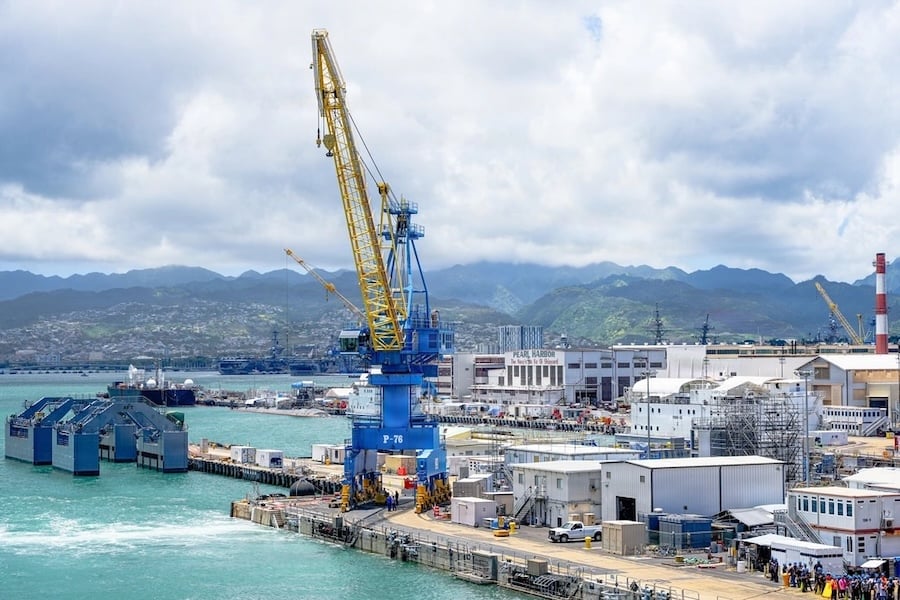
The shipyards maintain the Navy’s nuclear-powered submarines and aircraft carriers, making their infrastructure essential to keeping vessels available for operations. Yet some projects supporting maintenance and equipment functions have been deferred into the 2070s or later, according to Navy officials interviewed by GAO.
The Navy launched the Shipyard Infrastructure Optimization Program in 2018 to address deteriorating facilities and insufficient capacity to support newer ships. GAO now estimates that executing current plans will cost more than $200 billion and could take at least another 50 years.
The Navy has divided the work into three overlapping blocks, prioritizing projects with more clearly defined scopes. The first, spanning approximately fiscal 2026 through 2042, includes dry docks, piers and the first new waterfront production facility at each shipyard.
The second block runs approximately from fiscal 2038 through 2079 and covers the remaining waterfront production facilities and supporting projects. A third block, expected to begin around fiscal 2074, includes logistics complexes, specialized repair shops and administrative facilities, continuing through the end of the program.
Those dates remain rough estimates, and the Navy intends to revisit them as construction progresses. Dry-dock and pier upgrades will also continue beyond 2042, rather than finish with the first block.
Developing the plans has taken years longer than the Navy expected, with design changes, additional projects and unforeseen conditions repeatedly altering the work required. Some facilities are more than a century old, and decades of deferred maintenance have added to the difficulty of assessing their condition and planning replacements.
Construction must proceed while the yards continue maintaining submarines and carriers. GAO said changes to one project’s timing, scope or cost can affect others, requiring the Navy to manage interdependent work across Norfolk, Portsmouth, Pearl Harbor and Puget Sound.
The extended schedule also raises a policy question: whether infrastructure planned today will still meet the fleet’s needs when it is completed. GAO found that program requirements approved in 2023 relied on operational data and analysis from 2017 through 2022, before subsequent changes to projects, costs and construction timelines.
The Navy’s oversight framework does not specify periodic reviews to confirm that those requirements remain relevant or annual assessments of the program’s readiness, affordability and sustainability. GAO warned that the omission risks committing limited resources to facilities that may be outdated or unnecessary by the time they enter service.
The Navy agreed with GAO’s recommendations to establish those reviews and clarify responsibilities for managing construction alongside shipyard operations. The findings appear in the September 25 report, Naval Shipyards: Complete Information Needed for Decision-Making on Multibillion-Dollar, 50-Year Infrastructure Program.