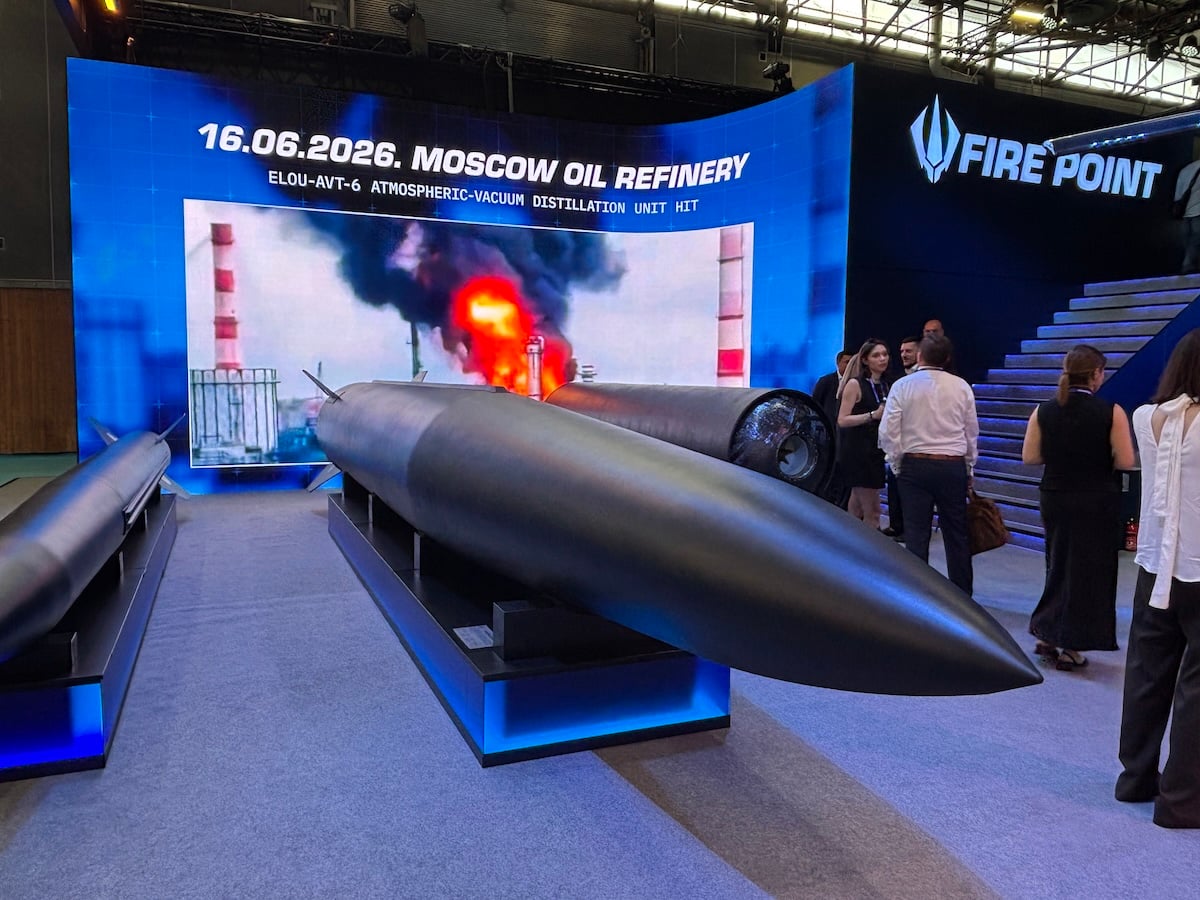
The missile underwent at least 15 tests before its combat debut, according to the source report. Its first test took place on 28 February 2026.
Several hours before Zelenskyy’s announcement, the General Staff of the Armed Forces of Ukraine reported strikes carried out overnight on 30 September–1 October. One of those targets may have been attacked with the FP-7, but the report does not confirm which weapon was used.
The General Staff said Ukrainian forces hit a facility near Donetsk used to store, prepare and launch attack drones. A Russian drone command post was also struck near Pokrovsk in the Donetsk region.
Ukrainian tactical ballistic missile. FP-7. First combat use. Thank you for the result. Next up: production. Glory to Ukraine! https://t.co/IxdjVg51c1
— Volodymyr Zelenskyy / Володимир Зеленський (@ZelenskyyUa) October 1, 2026
Other reported targets were a missile and artillery weapons depot near Verkhnokamianka in the Luhansk region and a concentration of Russian weapons and military equipment near Tymoshivka in the Zaporizhzhia region. Separately, the General Staff confirmed that a 23 September attack had completely destroyed drone warehouses belonging to the Rubikon unit near Volnovakha.
The FP-7 was initially described as having an operational range of up to 200 kilometres, with later statements putting its range at 300 kilometres. The report lists a maximum speed of approximately 1,500 metres per second and a warhead weighing about 150 kilograms.
Flight duration can reach 250 seconds. Estimated accuracy is approximately 14 metres circular error probable when the missile is launched from a ground platform.
According to the report, the FP-7 uses a simplified design derived from the 48N6 interceptor employed by the S-400 Triumf air and missile defence system. Fire Point has incorporated a carbon-fibre airframe and modern electronics into the design.
The FP-7’s solid-fuel motor ignites directly in the launcher, using a hot-launch method. The missile travels along an inclined guide rail rather than launching vertically.
The report says Ukrainian-made solid fuel and this launch arrangement may allow faster combat employment and better concealment. Fire Point says its launchers can be disguised to resemble ordinary trucks.
The report estimates the FP-7’s cost at half that of an American MGM-140 ATACMS ballistic missile, while carrying a larger warhead. It gives neither a monetary figure nor the ATACMS variant used for the comparison.
At the 34th MSPO exhibition in Kielce, Fire Point executive director Iryna Terekh said the missile’s combat debut was a “matter of weeks, not months”. The company displayed missile mock-ups at the exhibition.
Fire Point is developing the FP-7.x interceptor from the FP-7 as part of the pan-European Freyja missile defence project. The work falls within a 10-country anti-ballistic coalition that Poland recently joined.
The company is also completing development of the FP-9 operational ballistic missile, with a declared range of 855 kilometres. The report mentions unconfirmed information about an unsuccessful ballistic missile attack on Moscow on 30 June, without establishing that the FP-9 was involved.