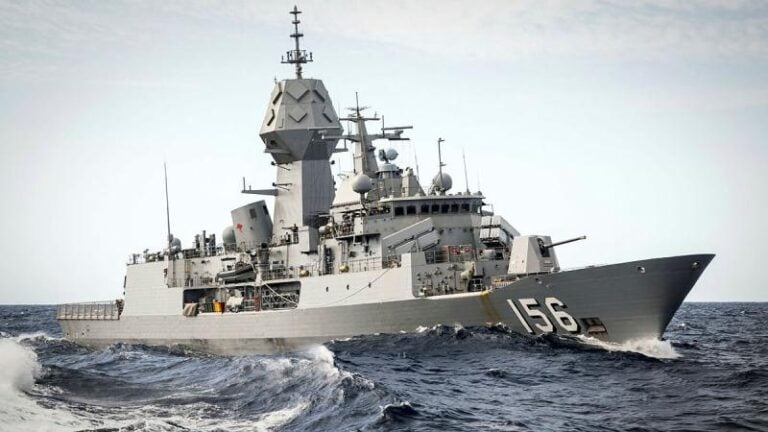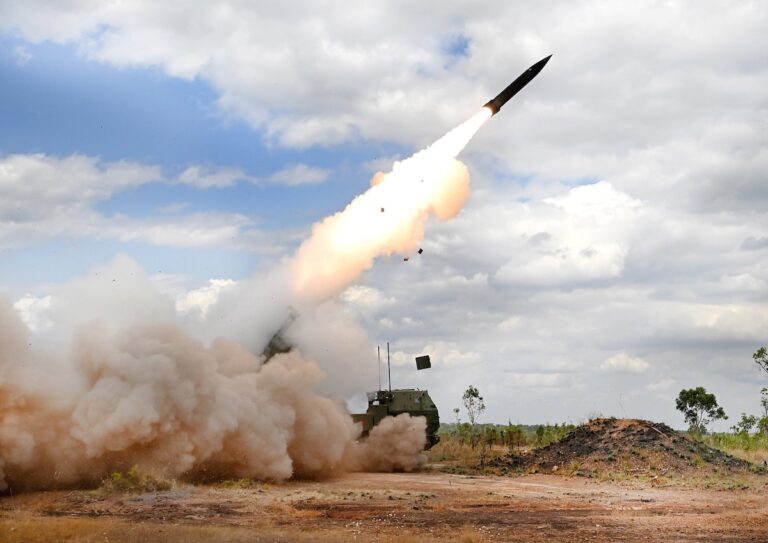
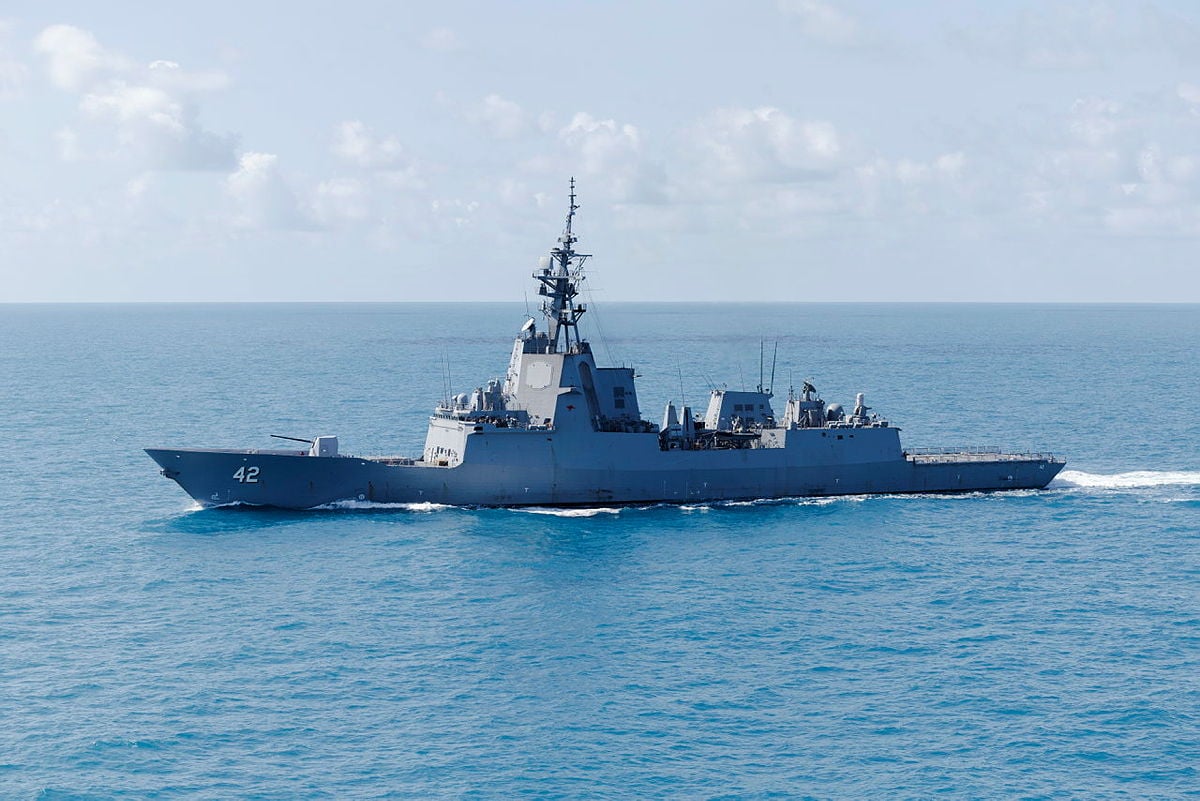
Sydney fired a Naval Strike Missile during Exercise Rim of the Pacific, or RIMPAC. Its embarked MH-60R Seahawk helicopter also conducted a Hellfire missile engagement.
The ship participated in Pacific Dragon, Pacific Vanguard and Nichi-Gou Trident as well as RIMPAC. It operated with forces from the United States, Japan, Canada, New Zealand, South Korea, Spain, Chile, Italy and Indonesia.
“HMAS Sydney’s deployment demonstrated Australia’s ongoing commitment to working with our regional partners to support a secure, stable and prosperous Indo-Pacific,” said Fleet Commander Rear Admiral Anita Williams. “The ship’s company operated alongside allies and partners throughout the region, strengthening professional relationships and demonstrating Navy’s ability to contribute to collective maritime security.”
After the exercises, Sydney met the Anzac-class frigate HMAS Stuart in the South China Sea. The Navy said the ships conducted regional presence activities and exercised rights and freedoms in accordance with international law.
The destroyer completed 17 replenishment-at-sea operations, including two helicopter resupply activities. These provided fuel, food and other supplies to sustain operations across thousands of nautical miles.
Sydney entered service on 18 May 2020 as the third and final Hobart-class destroyer. Built in Australia by the Air Warfare Destroyer Alliance, the class is based on Navantia’s F100 frigate design.
The ship combines the Aegis Combat System with an AN/SPY-1D(V) phased-array radar and a 48-cell Mk 41 Vertical Launch System. Its air-defence weapons include SM-2 and Evolved Sea Sparrow missiles.
The Navy says the class can engage aircraft and missiles at ranges exceeding 150 kilometres using its radar and SM-2 capability. It provides air defence for accompanying ships, land forces and coastal infrastructure.
Sydney’s other equipment includes a 5-inch Mk 45 gun, MU90 torpedoes and hull-mounted and towed-array sonars. Phalanx, two 25 mm Bushmaster guns on Typhoon mounts and Nulka active missile decoys provide close-range protection.
The ship displaces 7,000 tonnes at full load and carries approximately 180 personnel. It has a top speed exceeding 28 knots and a stated range of 4,500 nautical miles at 18 knots.
Commanding Officer Commander Hayden Jenkins said operating with regional partners helped personnel strengthen their skills and ability to work together at sea. He highlighted the live weapons engagements during RIMPAC.
“Participation in high-end warfighting exercises throughout the deployment demonstrated Sydney’s readiness, lethality and warfighting capability,” Jenkins said. “This included the successful firing of a naval strike missile and a Hellfire missile engagement by Sydney’s embarked MH-60R Seahawk helicopter during RIMPAC.”