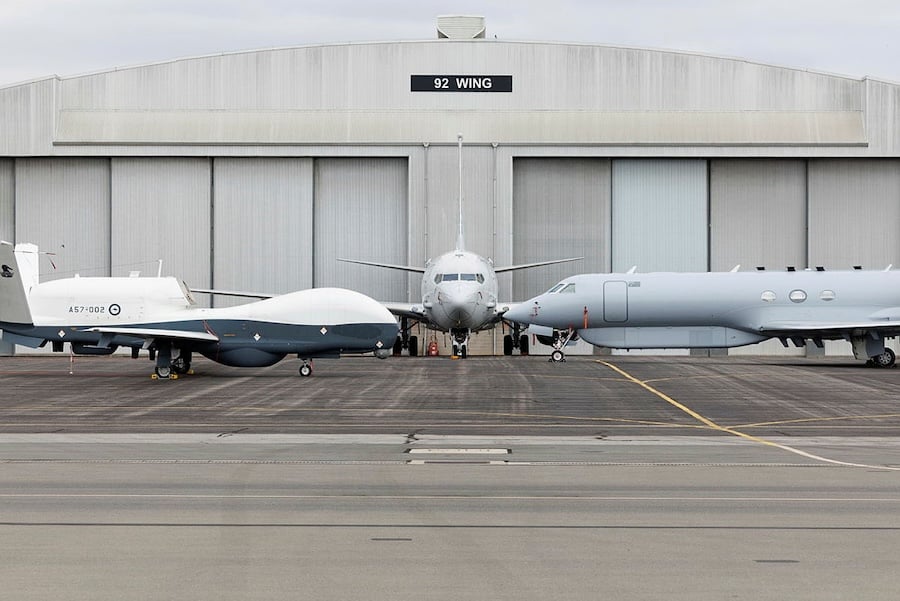
The MQ-4C fleet is now contributing to persistent intelligence, surveillance and reconnaissance operations, the Australian Government said. Its entry into operational service represents a significant expansion of the RAAF’s capacity to monitor activity across Australia’s region and identify emerging threats.
The aircraft is based at RAAF Base Tindal in the Northern Territory and operated by Number 9 Squadron at RAAF Base Edinburgh in South Australia. Northrop Grumman Australia provides support for operations conducted from the two bases.
The Triton is part of a broader investment in complementary crewed and uncrewed aircraft under the 2026 National Defence Strategy. The government said the fleet would support persistent surveillance, intelligence collection, maritime patrol and electronic warfare across Australia’s primary area of military interest.
The operational milestone comes as Australia strengthens its ability to monitor the maritime approaches surrounding the continent. Triton will operate alongside the RAAF’s P-8A Poseidon maritime patrol aircraft and MC-55A Peregrine intelligence and electronic warfare platform.
Australia received its 14th and final P-8A Poseidon in May, completing a fleet used for maritime patrol, anti-submarine warfare and anti-surface warfare. The first of two P-8As upgraded with Increment 3 Block 2 enhancements has also arrived, maintaining interoperability with the United States Navy while providing improved operational capability.
The remaining 12 P-8As will be upgraded in Australia with support from Boeing Defence Australia and local industry partners. The work will take place at the recently opened A$200 million Deep Maintenance and Modification Facility at RAAF Base Edinburgh, building domestic capacity to maintain and upgrade the fleet.
The MC-55A Peregrine has also reached Initial Operational Capability after completing operational testing and evaluation. Three aircraft have been delivered, with the fourth and final platform expected to arrive later this year.
The concentration of the Triton, Poseidon and Peregrine programmes at RAAF Base Edinburgh is increasing South Australia’s role in the country’s air intelligence and surveillance enterprise. The government said the base supports advanced defence capabilities, skilled employment and an increasingly sophisticated sovereign defence industry.
Acting Prime Minister and Defence Minister Richard Marles said Edinburgh was becoming one of Australia’s most important centres for advanced defence capability. “South Australia is central to this effort. RAAF Base Edinburgh is becoming one of the most important hubs for advanced Defence capability in the country, supporting our national security and highly skilled Australian jobs.”
Marles said the government’s spending programme would also create further opportunities for domestic companies. “The Albanese Government is investing approximately $5.5 billion over the decade to continue to enhance the ADF’s air intelligence, surveillance and reconnaissance and maritime patrol and response capabilities that will create additional opportunities for Australian industry well into the future.”
Chief of Air Force Air Marshal Stephen Chappell said personnel from the military, public service and industry had worked together to bring the aircraft into service. “Our people have been at the heart of delivering the air intelligence, surveillance and reconnaissance capability for Australia, demonstrating exceptional skill, professionalism and dedication in bringing these complex systems into service.”
“The achievements announced today mark a significant step forward in Air Force capability, delivering persistent, long-range maritime surveillance that strengthens our ability to protect Australia’s interests and deliver highly effective air power as part of the integrated, focused force,” Chappell said. The Triton’s achievement of Initial Operational Capability is the central element of that expansion in persistent, long-range surveillance.