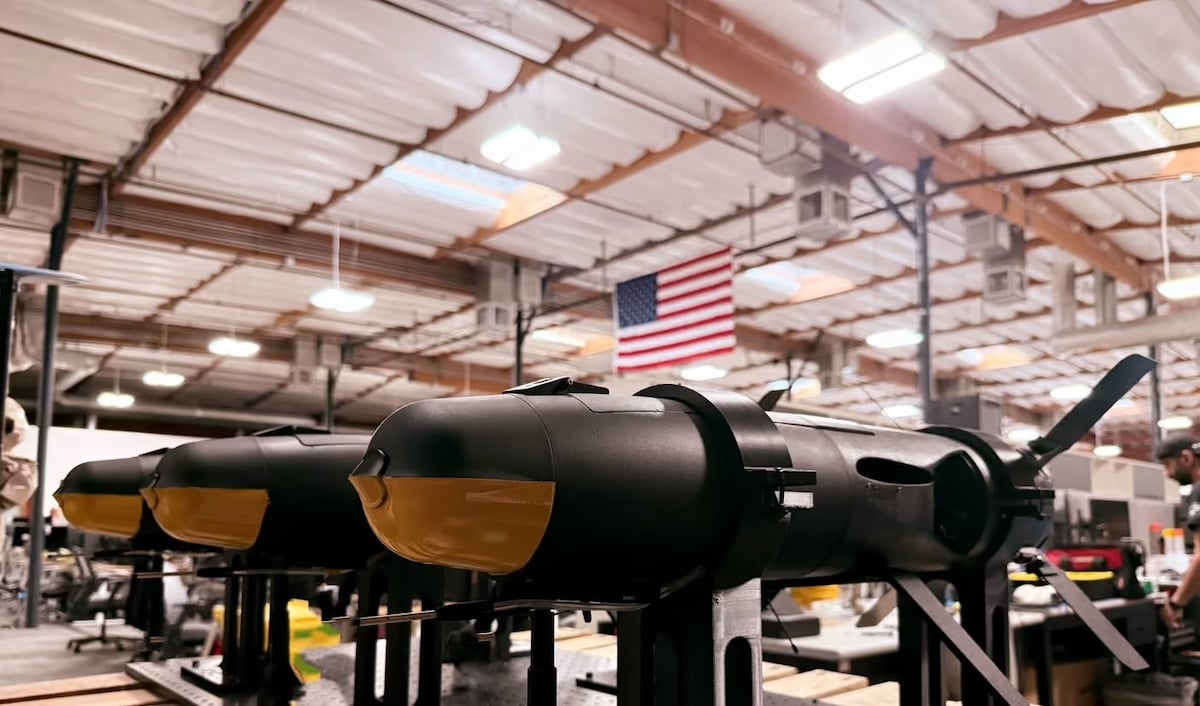
The family includes the man-portable Mk 0 and the faster, more maneuverable Mk 1 for multitube launchers. Both are designed to defend against Group 1–3 unmanned aircraft and one-way attack threats.
VESPID uses an electric ducted fan and commercial off-the-shelf drone electronics. CHAOS says the interceptor weighs less than 12 pounds, launches in under five seconds and can engage targets up to 10 kilometers away in under 100 seconds.
Thrust vector control enables maneuvering against targets attempting to evade interception. The weapon destroys its target through direct impact rather than an explosive warhead.
“The United States and its allies require more than expensive, exquisite systems that take years to develop and are produced in limited quantities,” said Dr. Bo Marr, co-founder and chief technology officer of CHAOS Industries. “We need effective interceptors that can be built quickly, fielded broadly, and employed at a cost that makes sense against threats arriving at scale.”
CHAOS has not disclosed a unit price. Its manufacturing architecture is designed to support expansion to 50,000 interceptors annually as customer demand grows.
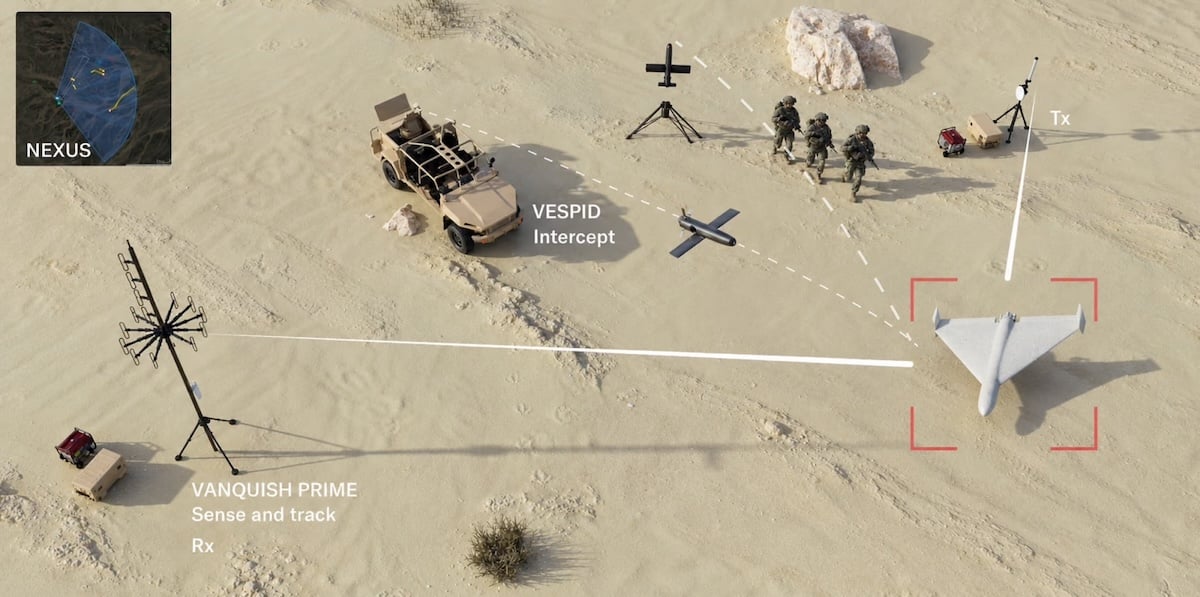
During the midcourse phase, VESPID receives guidance from CHAOS radars or an external command-and-control system. A direct-to-radar datalink narrows the area the terminal seeker must search and, according to the company, improves resistance to jamming.
The interceptor then switches to a commercial long-wave infrared seeker with AI-enabled target acquisition and guidance. CHAOS says engagement requires no operator input after launch and does not depend on GPS.
VESPID can integrate with existing sensors, command systems and launch platforms. Its connection to CHAOS’ NEXUS command-and-control system is intended to coordinate responses to drone swarms.
The family is interoperable with CHAOS’ multistatic radars, including VANQUISH PRIME systems. When paired with a CHAOS radar, the interceptor’s datalink signal also helps NEXUS distinguish it from hostile aircraft.
The Mk 0 can be assembled in under a minute without special tools. It launches vertically under electric fan power from the ground or a truck bed, with its battery and wings removed for transport.
The Mk 1 uses a tubular launcher with a pyrotechnic launch cartridge. CHAOS says a 10-round trainable launcher is available and gives an engagement velocity of 150 meters per second, or more than 300 miles per hour.
A planned version would carry more than 100 interceptors in a 20-foot ISO container. That configuration is intended for integration with uncrewed ground or surface vehicles.
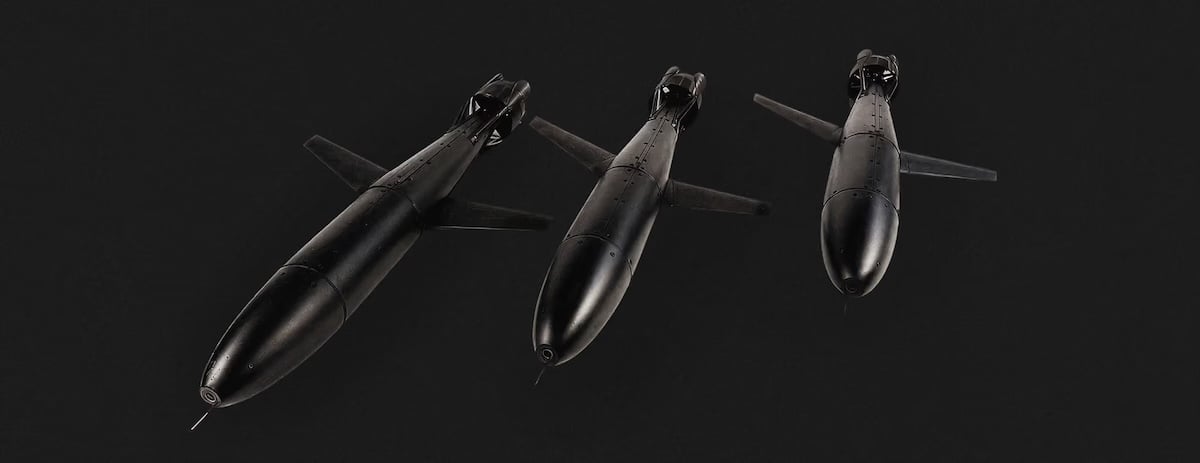
CHAOS is relying on commercial components and simplified assembly to support high-volume production. The company’s stated aim is to give forces enough affordable interceptors to sustain protection against repeated drone attacks.
“Affordability and the ability to rapidly replace capability are not secondary considerations,” Marr said. “They are operational advantages.”
The company announced VESPID on October 12 and scheduled the Mk 1’s first public display aboard a Forterra MESA vehicle at AUSA 2026 in Washington. Founded in 2022, CHAOS manufactures its systems in the United States and has raised $1 billion from investors including 8VC, Accel and Valor Equity Partners.