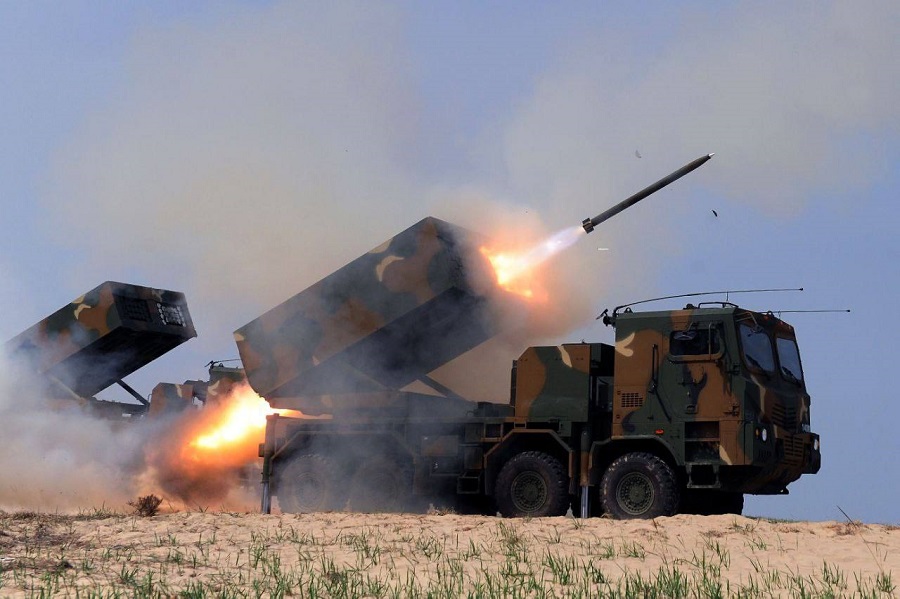
“It was selected because it is compatible with NATO standards, affordable and much more lethal, and it meets all our needs,” Anušić told Croatian public broadcaster HRT. “Chunmoo has a range of more than 300 km and Croatia will have that capability.”
Anušić said the maximum range could reach 500 km and that the launchers could carry rockets with calibres of up to 607 mm. He did not provide a specific delivery schedule but described the planned delivery period as very short.
“The delivery time is very short and, at this moment, this weapon system fully equalises the balance of power in the region,” Anušić said. Croatia intends to operate Chunmoo alongside the American HIMARS system rather than rely on a single long-range rocket artillery platform.
“Both systems are compatible in operation and we will have different capabilities,” he said. “We will simplify maintenance and equipment support, and in this way we will have a backup in the event of any problem with operation or the procurement of spare parts.”
Anušić said sourcing systems from more than one manufacturer reflected a wider NATO approach to maintaining military equipment and supply chains. “This is how not only we, but all NATO countries operate. They have several manufacturers in the same armament segments to make operations easier,” he said.
Croatia is also preparing to upgrade its Rafale combat aircraft from the F3-R standard to F4 under an agreement signed in Paris last December. Dassault Aviation will conduct the modernisation, while Croatian communications company Odašiljači i veze will participate in the programme.
“Last December, we signed an agreement in Paris and we are starting that process with Dassault Aviation, which manufactures the Rafale. We will also include our company, Odašiljači i veze, in that process,” Anušić said.
The minister said the F4 upgrade would substantially expand the aircraft’s capabilities while allowing the Croatian squadron to remain operational during the work. “An aircraft at the F4 standard is incomparable with one at the F3 and F2 capability level. These are the highest-quality detection, targeting and engagement systems,” he said.
Thales will lead the associated communications work alongside Odašiljači i veze, adapting ground-based and airborne systems to the new Rafale standard. Croatia is also continuing a separate programme to modernise and digitise its ageing military radar network.
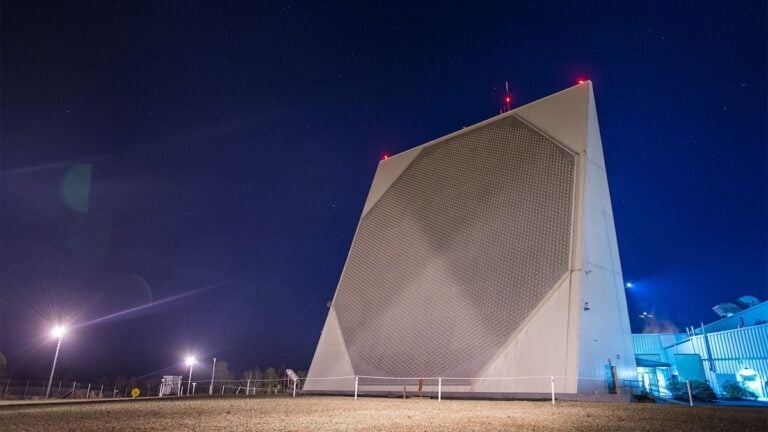
“We began modernising the radar systems a few years ago and will complete the work soon. We must fully digitise all our radar systems, which are outdated,” Anušić said.
The Defence Ministry is separately preparing hangar infrastructure for Croatia’s firefighting aircraft. “We must prepare and secure hangars for our Canadair aircraft and Air Tractors. Croatia will receive two new Canadairs in 2028 and they must be housed somewhere,” he said.
Anušić said Europe’s security environment required investment in intelligence protection and resilience against hybrid warfare, alongside conventional weapons. “Croatia needs to work on this and we are preparing for something we will face in the future. I sincerely hope we will not, but if any threat arises, we must be ready,” he said.